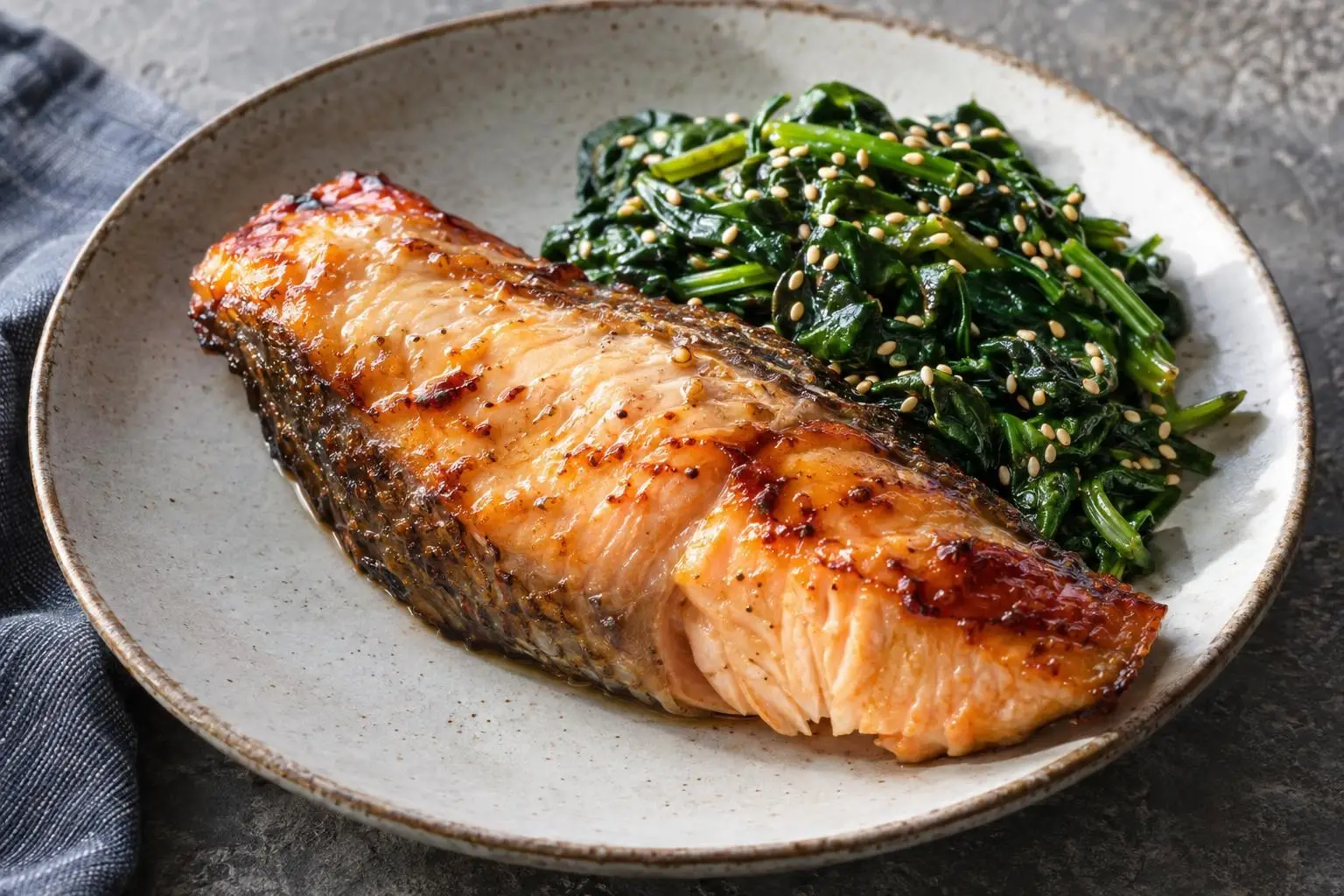
Miso-glazed salmon with sesame greens
Moist, gently flaking salmon with a thin, glossy miso glaze, served with tender sesame spinach. Adding the glaze towards the end of roasting gives light caramelisation without scorching the miso.
Advert
Let’s get cooking.
Cook mode
Scale servings, tick off ingredients, and run step timers without losing your place.
Servings
Originally developed for 2 servings.
Ingredient checklist
Method
- No timer needed
Heat the oven to 220°C conventional / 200°C fan, with a shelf in the upper-middle position. Mix the miso, mirin and initial 5 ml glaze water until smooth, then taste before any contact with fish. If this base already tastes quite salty, add 5 ml water instead of the soy sauce; otherwise add the 5 ml soy sauce. The finished glaze should spread easily; add an extra 2.5 ml water only if needed. Wash and thoroughly drain the spinach, remove any tough stalks and divide into two 150 g batches.
- No timer needed
Grease the tray, or its foil lining, with the neutral oil. Check the salmon for pin bones, pat dry without washing and place skin-side down with at least 3 cm between the fillets. Wash your hands and clean raw-fish contact surfaces and utensils before handling the greens or serving equipment.
- 08:00
Once the oven is fully heated, roast the salmon unglazed for 7–9 minutes; about 8 minutes is a useful first check for the stated thickness. The outside should have turned opaque while the thickest centre remains underdone. Check thinner fillets earlier.
- No timer needed
While the salmon first roasts, heat the dry frying pan over medium heat for about 1 minute. Add the sesame seeds and toast for 1–2 minutes, shaking frequently, until fragrant and pale golden. Immediately tip them into a small bowl.
- 03:00
Remove the tray, spread the glaze thinly over both fillets and return to the oven. Avoid leaving pools around their bases. Roast for approximately 4–6 minutes, checking the glaze after 3 minutes. The salmon is done when the thickest centre is opaque and separates easily into flakes; surface browning alone is not a doneness check. If the centre is still translucent, cook in further 1–2-minute increments, loosely shielding the tops with foil if the glaze is already dark enough. Do not overcook the fish to chase darker browning. Any glaze left after contact with a brush used on undercooked fish must be discarded, not used as a finishing sauce.
- No timer needed
While the glazed salmon finishes, reheat the same frying pan over medium-high heat. Add the first 150 g spinach and the 15 ml wilting water only if the leaves are dry. Cover for about 1 minute, then turn the leaves and add the remaining 150 g spinach as space opens up. Cook for 3–4 minutes from adding the first leaves, turning as needed, until all the spinach is wilted and tender. Check the salmon glaze during a covered or briefly unattended stage. Drain the spinach in the colander, pressing lightly with a spoon to remove excess liquid without squeezing it dry. Return to the warm pan off the heat and toss with the toasted sesame oil.
- 02:00
Remove the cooked salmon and let it stand for 2 minutes. Meanwhile, divide the greens between two plates and scatter the toasted sesame seeds over them. Add the rested salmon using a clean fish slice and serve immediately. If the greens need longer, remove finished salmon rather than leaving it in the oven to keep warm.
Chef tips
- Start with chilled, fully thawed salmon. If using frozen fish, thaw in the fridge beforehand and follow the pack's use-by instructions; this schedule starts with thawed fillets.
- Wait until the oven is fully heated before loading the fish. A slower-preheating oven will extend the schedule.
- Thickness matters more than weight. Remove each fillet when its centre is opaque and flakes easily, even if the glaze remains fairly pale.
- If the glaze darkens before the centre is cooked, loosely shield the tops with foil and continue in 1–2-minute increments.
- Drain spinach thoroughly before dressing. A smaller frying pan needs more batches and extra time.
- Taste the miso, mirin and water base before choosing soy sauce or replacement water; soy sauce cannot be removed once mixed in.
Equipment check
- Oven
- Shallow metal baking tray, approximately 30 × 20 cm
- Foil, optional for lining the tray or shielding the glaze
- 28 cm frying pan with a lid
- Small mixing bowl and small bowl for toasted seeds
- Measuring spoons
- Spoon or pastry brush
- Colander
- Fish slice
- Clean serving utensils
Nutrition per serving
- Calories490
- Protein40 g
- Carbs12 g
- Fat30 g
Tags
Behind the dish.
Overview
Aim for moist, gently flaking salmon beneath a thin savoury-sweet glaze, alongside tender spinach with a restrained toasted-sesame flavour. Roast the fish unglazed first, then coat it for the final few minutes. Drain the greens before dressing them and add the sesame oil off the heat.
Ingredient notes
Choose mild white miso and salmon fillets of similar thickness. Miso and cooking mirin vary in salt and sweetness: mix and taste the miso, mirin and initial 5 ml water before adding either the soy sauce or its water replacement. If that base already tastes quite salty, choose water. Sweetened mirin-style seasoning can substitute but may brown faster; plain rice vinegar is not a direct substitute.
Contains fish, soya and sesame. Standard soy sauce contains wheat, and some misos contain barley. For a gluten-free version, choose labelled gluten-free miso, tamari in place of soy sauce, and suitable mirin; check all labels.
Serving & storage
Serve immediately as a light main course for two. The spinach gives approximately 120–160 g cooked and drained greens. Chill leftovers promptly in shallow portions and refrigerate within 2 hours at 5°C or colder. Use within 48 hours or freeze sooner. Reheat only once, until steaming hot throughout; the salmon will become firmer.
Related recipes

Yakisoba with Pork and Cabbage
◷ 42 mineasy
Springy wheat noodles, thinly sliced pork and cabbage with a little bite, tossed in a tangy-savoury yakisoba sauce. Cooking two separate portions keeps a domestic frying pan hot enough to fry rather than steam.
Oct 17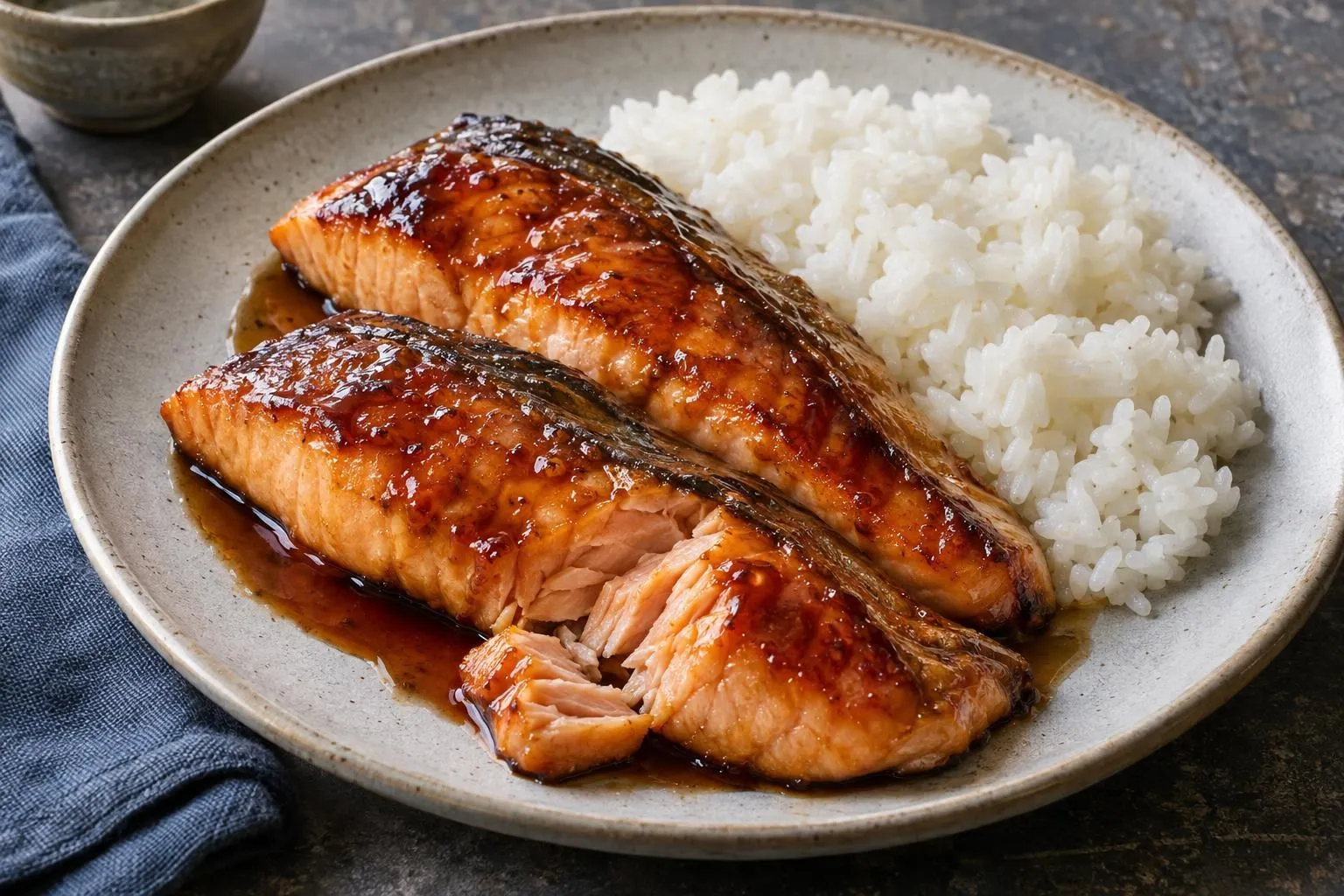
Teriyaki salmon with a glossy soy–mirin glaze
◷ 24 mineasy
Pan-seared salmon finished in a thin, glossy Japanese soy, mirin and sake glaze. Gentle simmering keeps the fish moist, while a separate final reduction prevents overcooking.
Oct 14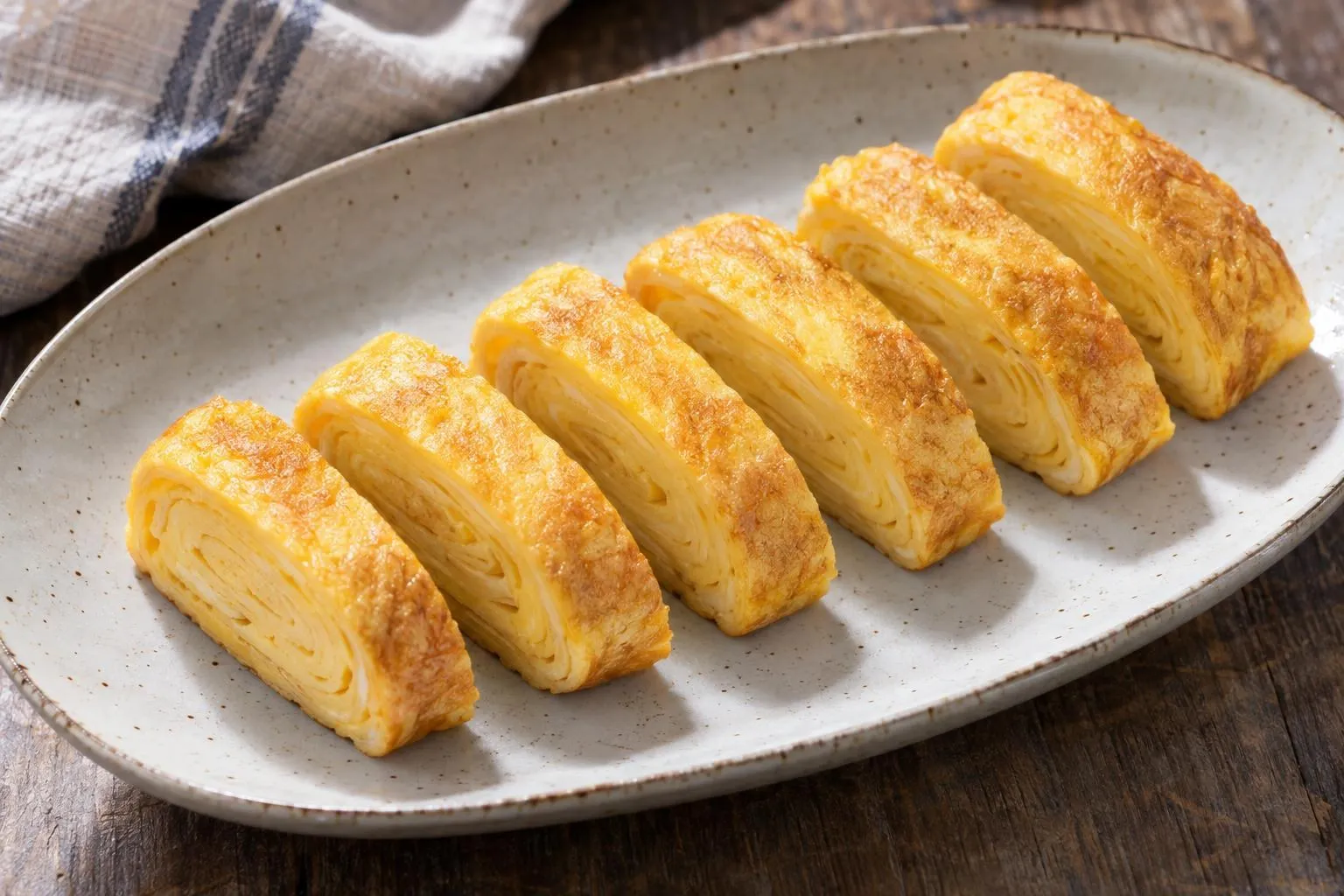
Tamagoyaki in a Round Pan
◷ 23 minmedium
A gently sweet-savoury Japanese rolled omelette with tender, fully cooked folds. Four thin layers are cooked and rolled in a regular nonstick frying pan, then cut into thick slices.
Oct 3