Tamagoyaki in a Round Pan
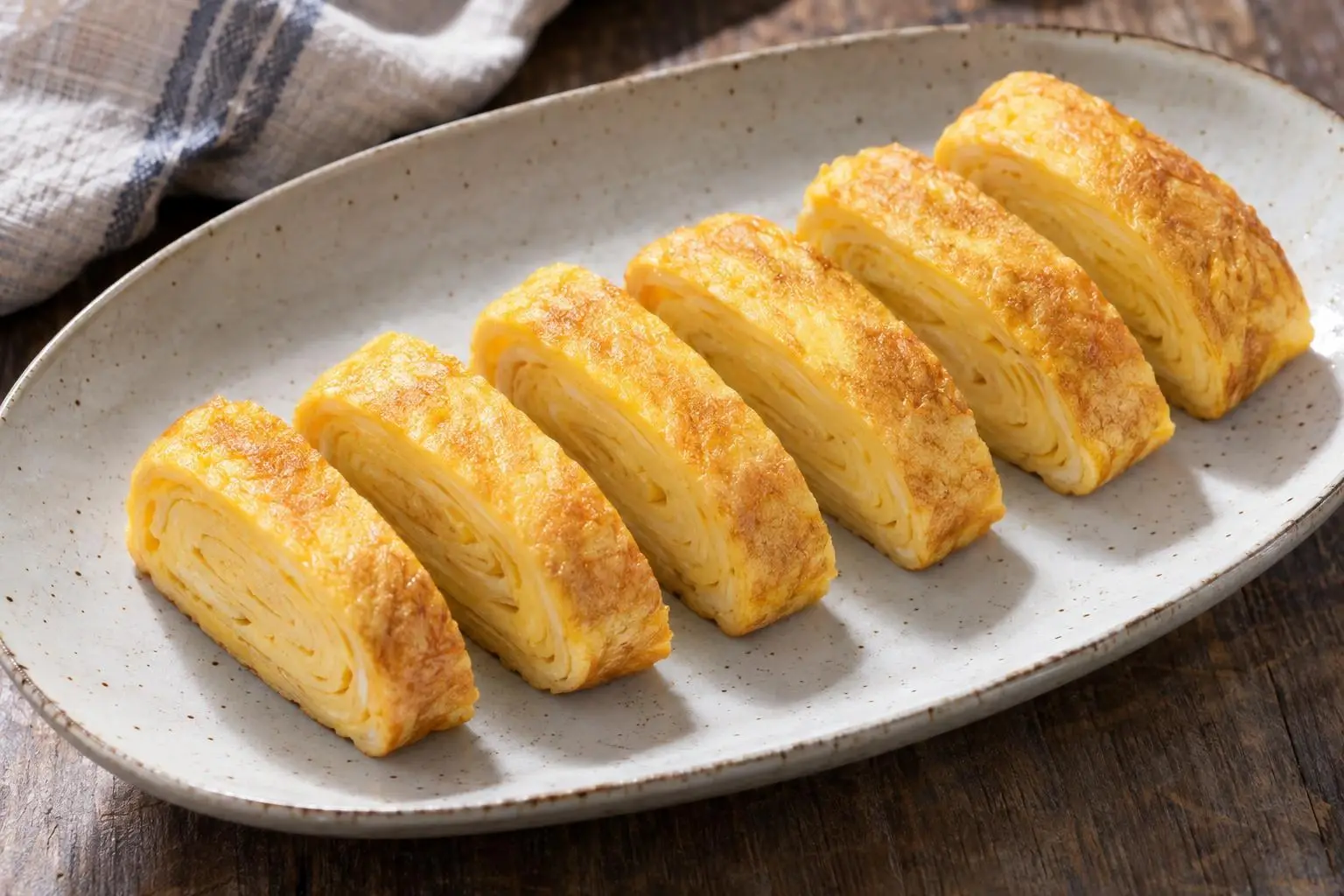
A gently sweet-savoury Japanese rolled omelette with tender, fully cooked folds. Four thin layers are cooked and rolled in a regular nonstick frying pan, then cut into thick slices.
Advert
Let’s get cooking.
Cook mode
Scale servings, tick off ingredients, and run step timers without losing your place.
Servings
Originally developed for 2 servings.
Ingredient checklist
Method
- No timer needed
Stir the sugar, mirin, soy sauce and water together in a mixing bowl until the sugar dissolves. Add the eggs and gently beat until the whites are thoroughly broken up, without making the mixture frothy. If strands of white remain, pass through a fine sieve. Transfer to a jug for pouring.
- 01:30
Heat the pan over medium-low heat for about 90 seconds. While it heats, put the measured oil in a small dish and have the brush and spatula ready. Brush the base with about one-quarter of the oil (1.25 ml), reserving the rest for the next three layers. The egg should set gently on contact, not sizzle loudly.
- 01:00
Stir the egg mixture and pour in one-quarter, approximately 55–60 ml. Tilt the pan to cover the base. Cook for 45–75 seconds, checking at 60 seconds: the underside should release and the top should be mostly set but still tacky, with no loose puddle. Fold the far edge towards you in three or four turns to form a short log, then push it to the far side. Guide the curved edges inward as you fold; an untidy first layer can be enclosed by the others.
- 01:00
Brush the exposed pan with another quarter of the oil, stir the mixture and add another quarter. Briefly lift the existing roll so fresh egg flows underneath it, then tilt to spread the remainder. Cook for 45–75 seconds, checking at 60 seconds, until mostly set but tacky; roll the log towards you over the new layer and return it to the far side. Repeat twice more, using all the remaining oil and egg mixture to make four layers in total. If the egg browns before its surface sets, lower the heat or briefly lift the pan off the hob.
- 01:00
Reduce the heat to low and gently cook the roll on its first broad side for 1 minute, then turn and cook the other broad side for 1 minute. Insert a thin-probe thermometer from an end into the centre: it should reach 75°C and remain there for 30 seconds. Continue gentle cooking and turning if necessary. The centre should be set and tender, with no liquid egg; avoid scorching the sweetened exterior.
- 02:00
Transfer to a clean chopping board and rest for 2 minutes. Cut across the roll into six thick slices and serve three per person, without an added sauce.
Chef tips
- Use the specified small pan: a much larger cooking base spreads the egg too thinly to roll reliably.
- If a layer sticks, let its base set a little longer before lifting. Use a flexible spatula rather than scraping with metal.
- A dry surface makes layers separate; a loose puddle can leave a wet centre. Aim for mostly set, slightly tacky egg before every roll.
- For four servings, make two separate batches rather than doubling the mixture in the same pan.
- Wash hands and clean any utensils or surfaces contaminated by raw egg; use a clean board and knife for the cooked roll.
Equipment check
- 20 cm nonstick frying pan with an undamaged surface and approximately 15–17 cm flat cooking base
- Flexible, heat-resistant silicone spatula
- Silicone pastry brush
- Mixing bowl and fork or whisk
- Measuring jug
- Small dish for oil
- Clean chopping board and knife
- Thin-probe food thermometer
- Fine sieve, optional
Nutrition per serving
- Calories190
- Protein13 g
- Carbs7 g
- Fat12 g
Tags
Behind the dish.
Overview
This tamagoyaki is made without dashi and serves two as a modest breakfast. Moderate heat and four thin layers give tender folds with only faintly golden edges. Roll each layer when its surface is mostly set but still tacky: this helps the layers bond without trapping a pool of raw egg. A round pan naturally produces slightly tapered ends.
Ingredient notes
Use ordinary Japanese soy sauce, or shoyu, rather than Chinese light soy sauce. Hon-mirin and mirin-style seasonings vary in sweetness and salt; choose a product without added salt where possible. Brief cooking does not reliably remove all alcohol. Without mirin, replace its 10 ml with an extra 10 ml water and increase the caster sugar to 10 g total.
Contains eggs and soya; ordinary soy sauce also contains wheat. For a gluten-free version, use certified gluten-free tamari and check the mirin label. Check seasoning labels for a vegetarian formulation.
Serving & storage
Serve three slices per person, without an added sauce. For the softest texture, eat immediately. Cool leftovers promptly in shallow portions and refrigerate within 2 hours at 5°C or colder. Use within 48 hours or freeze sooner; freezing can make the folds less tender. Reheat only once, until steaming hot throughout; short, covered microwave intervals help limit rubberiness.
Related recipes
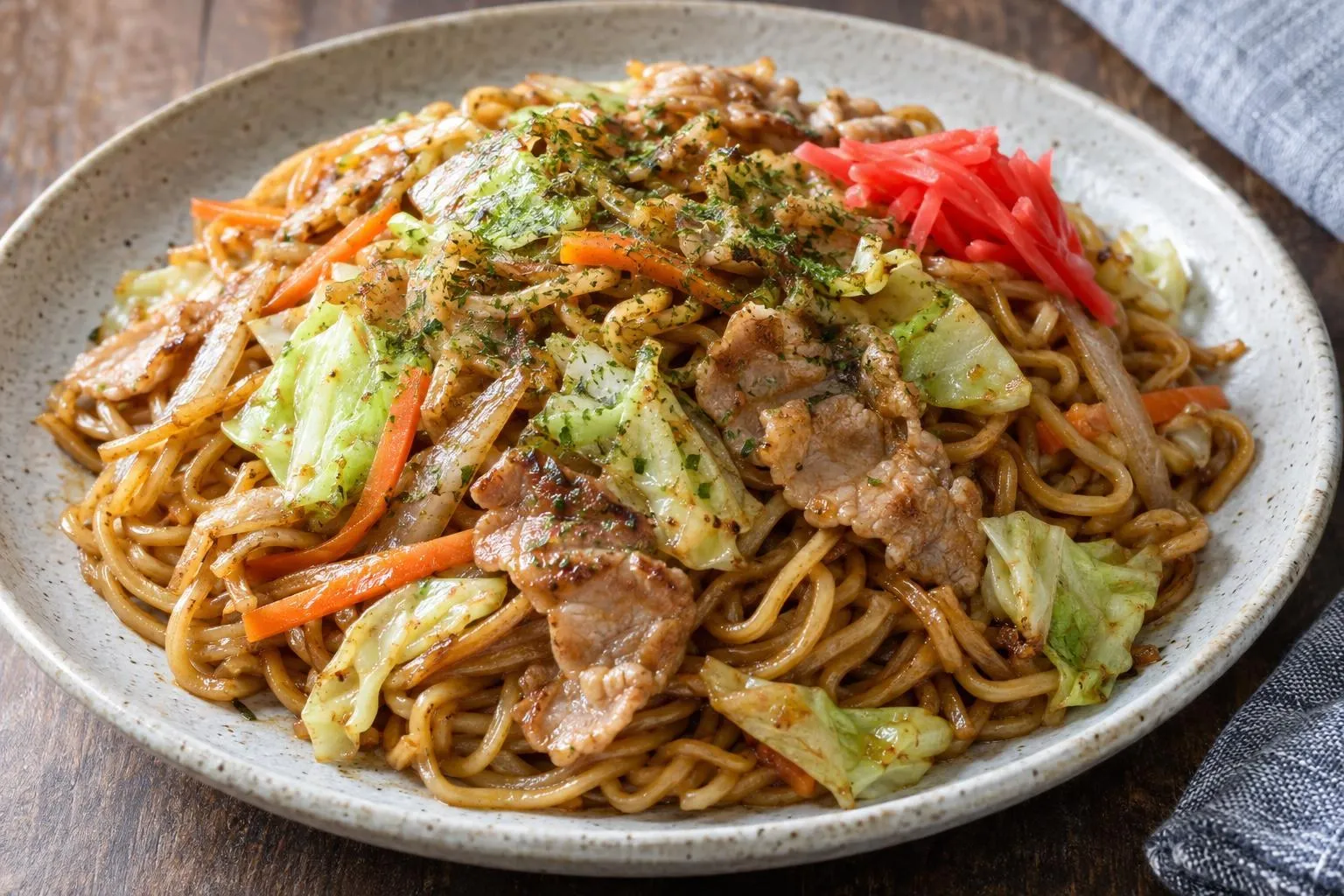
Yakisoba with Pork and Cabbage
◷ 42 mineasy
Springy wheat noodles, thinly sliced pork and cabbage with a little bite, tossed in a tangy-savoury yakisoba sauce. Cooking two separate portions keeps a domestic frying pan hot enough to fry rather than steam.
Oct 17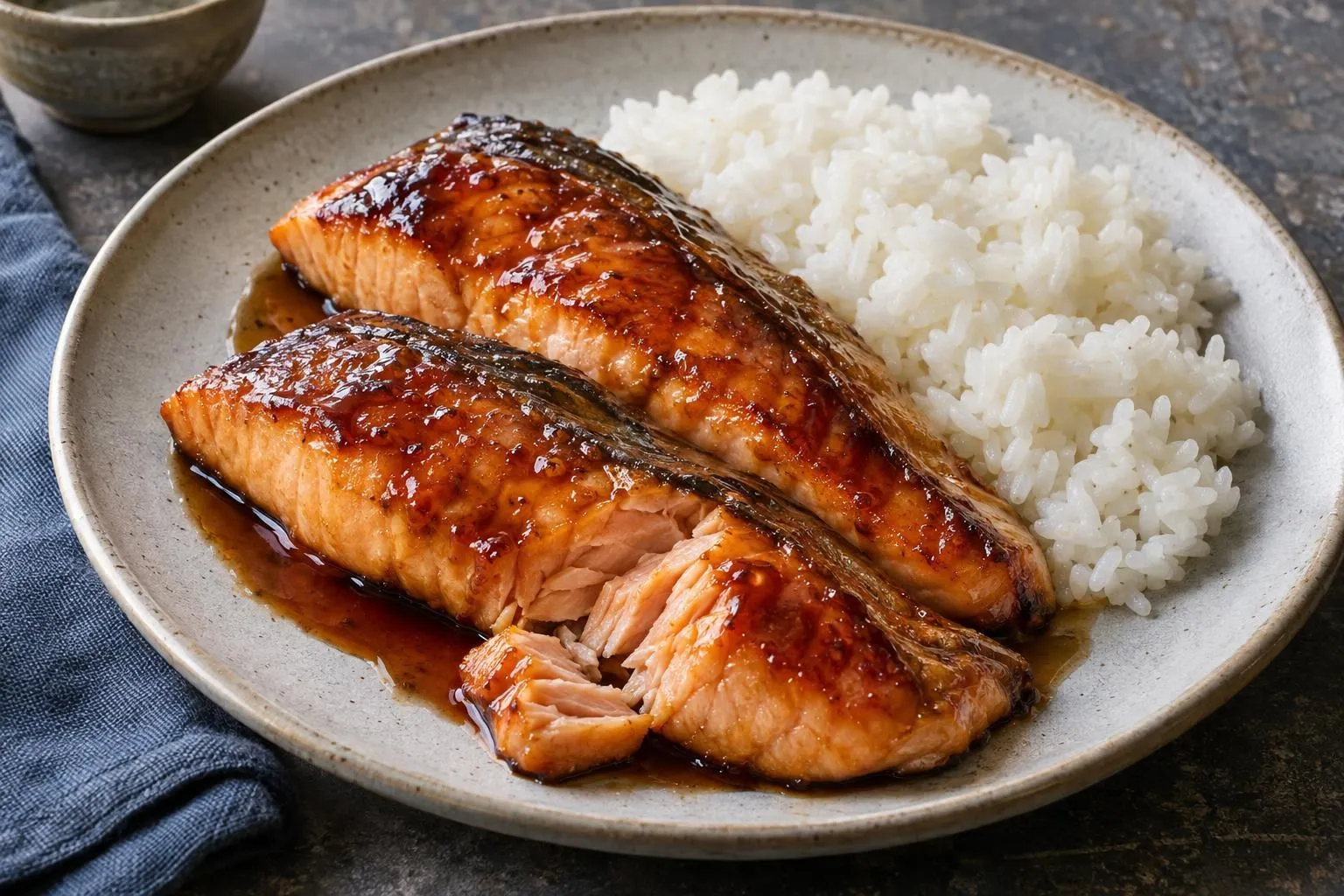
Teriyaki salmon with a glossy soy–mirin glaze
◷ 24 mineasy
Pan-seared salmon finished in a thin, glossy Japanese soy, mirin and sake glaze. Gentle simmering keeps the fish moist, while a separate final reduction prevents overcooking.
Oct 14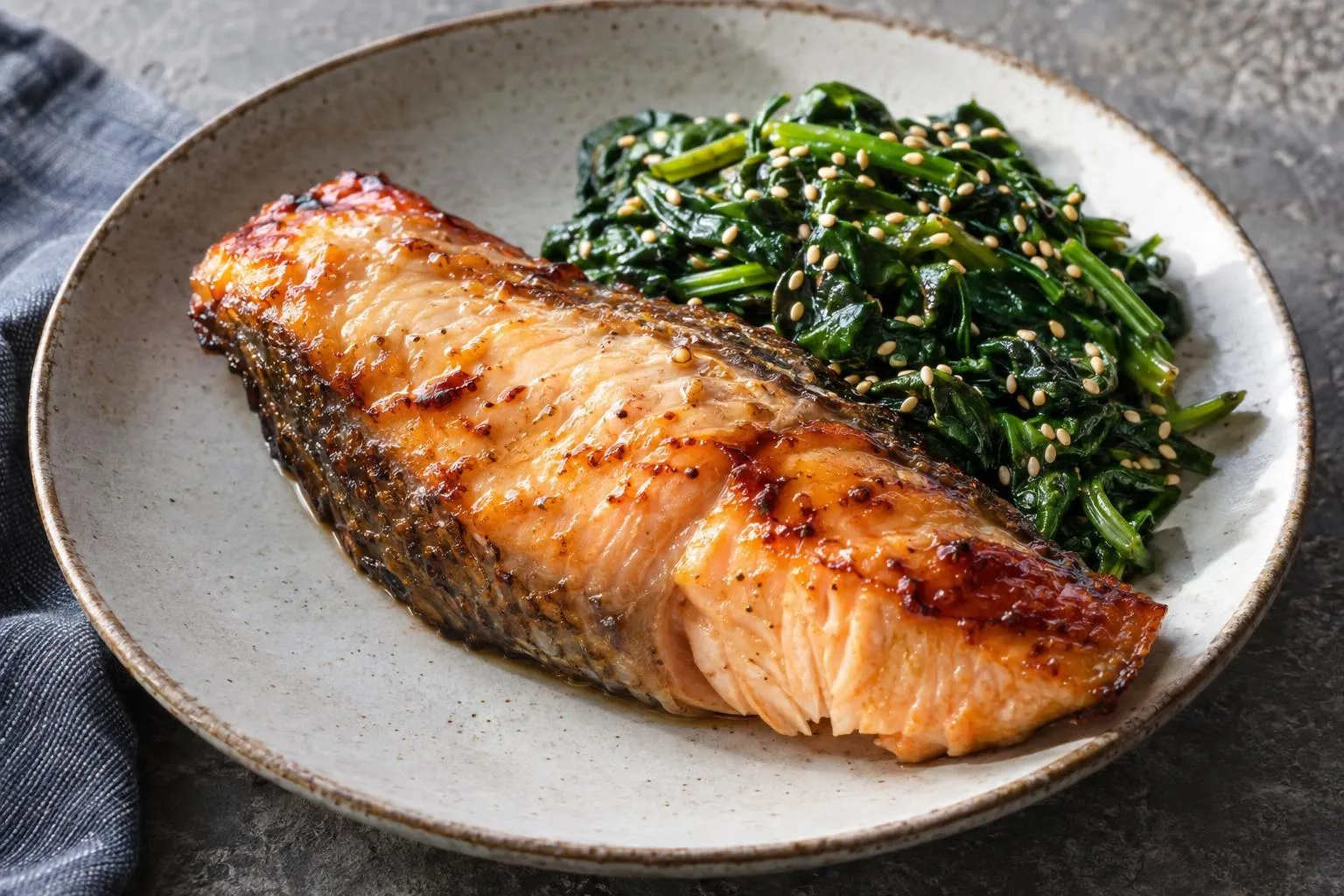
Miso-glazed salmon with sesame greens
◷ 30 mineasy
Moist, gently flaking salmon with a thin, glossy miso glaze, served with tender sesame spinach. Adding the glaze towards the end of roasting gives light caramelisation without scorching the miso.
Oct 6