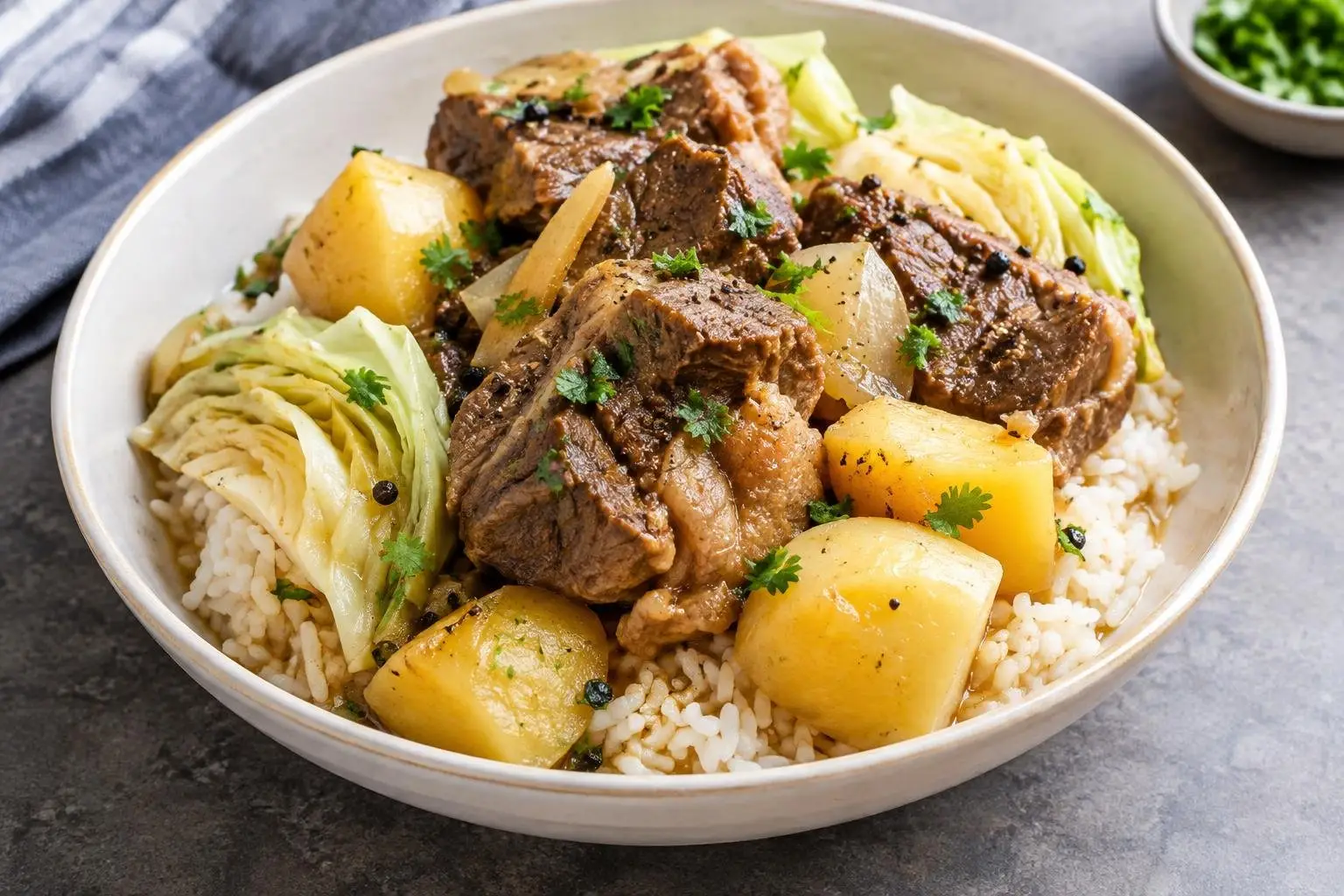
Slow-Braised Filipino Beef Nilaga Grain Bowl
A comforting Filipino-inspired beef nilaga, slow-braised to tender perfection and served over a bed of fragrant garlic rice with seasonal vegetables. This hearty grain bowl harmonizes classic Filipino flavors with a slow-braising technique, highlighting fresh winter produce like cabbage and potatoes, making it an ideal nourishing weeknight meal.
Advert
Let’s get cooking.
Cook mode
Scale servings, tick off ingredients, and run step timers without losing your place.
Servings
Originally developed for 4 servings.
Ingredient checklist
Method
- 10:00Place beef chunks in a large pot and cover with 2 liters of cold water. Bring to a boil over medium-high heat and simmer for 10 minutes. Skim off any scum that rises to the surface.
- 150:00Add the halved onion, sliced ginger, and whole peppercorns to the pot. Reduce the heat to low, cover partially, and let the broth simmer gently for 2.5 hours until beef is tender.
- 02:00Prepare the garlic rice: In a rice cooker or medium saucepan, heat the vegetable oil over medium heat. Add minced garlic and sauté until golden and fragrant, about 2 minutes.
- 15:00Add the rinsed rice to the garlic oil and stir to coat. Add 3 cups (720 ml) of water, a pinch of salt, and bring to a boil. Lower heat, cover, and cook until rice is tender and water is absorbed, about 15 minutes.
- 20:00After the beef has braised for about 2.5 hours, add the quartered potatoes to the pot. Simmer for 20 minutes until potatoes are nearly tender.
- 10:00Add cabbage wedges on top of the potatoes and cook for an additional 10 minutes until tender but still crisp.
- No timer neededRemove the beef, potatoes, and cabbage from the broth with a slotted spoon and arrange over garlic rice in serving bowls. Adjust seasoning of broth with salt and pepper to taste, then ladle over the bowls.
- No timer neededGarnish with thinly sliced spring onions and serve hot for comforting bowls of slow-braised Filipino beef nilaga.
Chef tips
- Start the broth early to allow full slow braising time for maximum tenderness.
- Skim scum frequently during initial boil to keep broth clear and clean-tasting.
- Use freshly minced garlic for the rice to impart best aroma.
- Do not overcook cabbage; it should retain some texture and bright color.
- Store leftovers separately from rice to avoid sogginess, if possible.
Equipment check
- large heavy-bottomed pot or Dutch oven
- rice cooker or medium saucepan
- wooden spoon
- knife
- cutting board
Nutrition per serving
- Calories600
- Protein45 g
- Carbs60 g
- Fat15 g
Tags
Behind the dish.
Overview
This Slow-Braised Filipino Beef Nilaga Grain Bowl showcases tender beef simmered slowly in a savory broth with classic nilaga aromatics, paired with fragrant garlic rice and winter vegetables such as cabbage and potatoes. It is a comforting, nourishing dish perfect for cooler evenings, celebrating traditional Filipino flavors in a convenient and hearty bowl.
Why you’ll love it
The slow braising process makes the beef exceptionally tender and flavorful. The garlic rice adds a fragrant and savory base, while seasonal winter vegetables bring freshness and heartiness that complement the rich broth. This dish is both a satisfying comfort food and well balanced with protein, vegetables, and grains.
Ingredient notes
- Beef shank or brisket: These cuts are ideal for slow braising to achieve tender meat that easily falls apart.
- Cabbage: Use a firm, crisp winter cabbage for the authentic nilaga experience.
- Potatoes: Yukon gold or red potatoes hold their shape during slow cooking and add natural sweetness.
- Garlic rice: Garlic sautéed in oil until golden then cooked with rice to infuse bold flavor throughout.
- Aromatics and broth: Onion, ginger, and peppercorns form the base, gently simmered for hours for depth of flavor.
Serving & storage
Serve the beef nilaga in bowls over garlic rice topped with cooked cabbage and potatoes, ladling some of the broth to soak into the rice. Leftovers keep well refrigerated in an airtight container for 3-4 days. Reheat gently on the stovetop or microwave until steaming hot to maintain tenderness and moisture. This dish can also be frozen for up to 2 months.
Related recipes
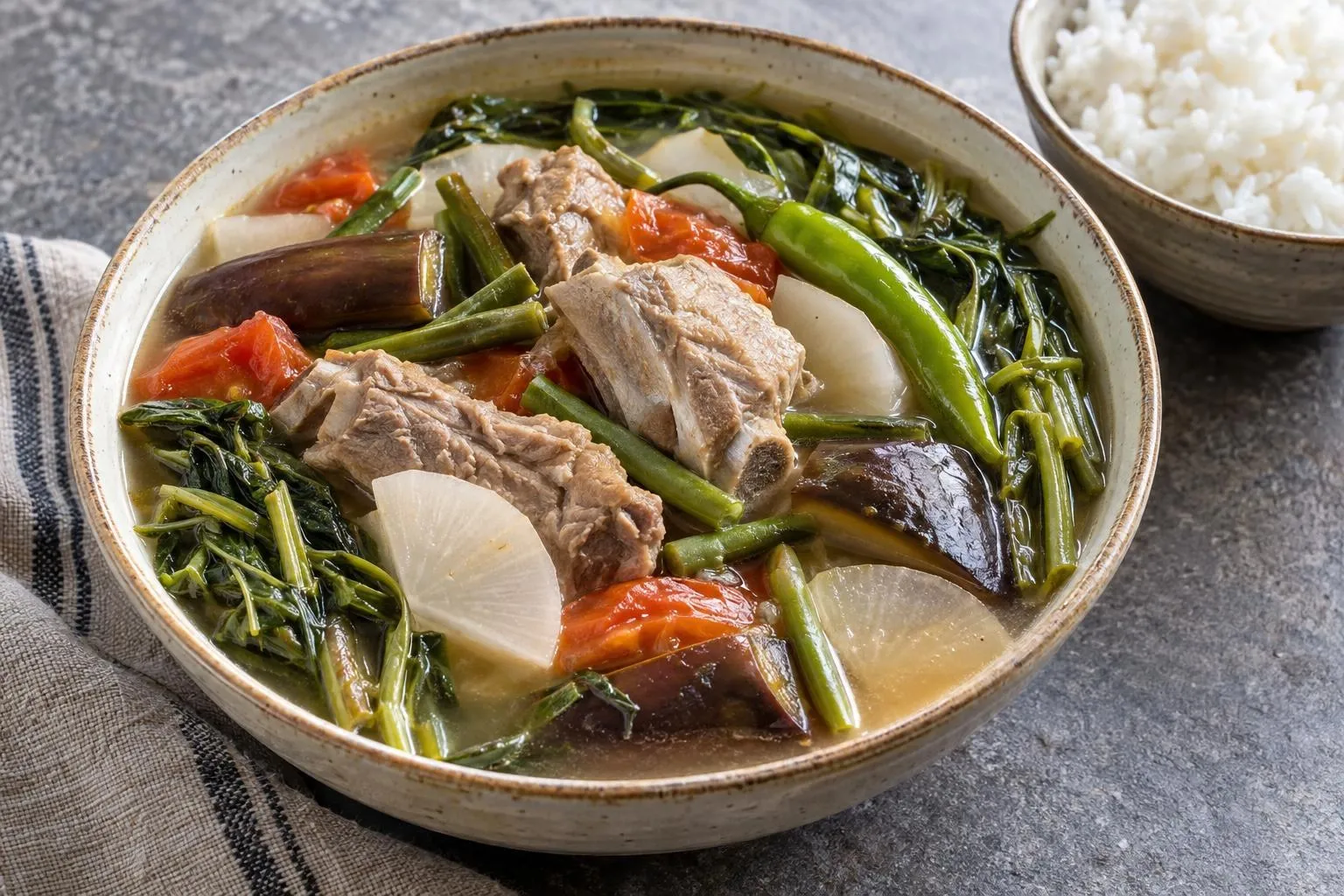
Sinigang na baboy with tamarind broth
◷ 127 mineasy
Tender pork ribs in a distinctly sour, savoury Filipino broth with tomatoes, radish, aubergine, long beans and just-wilted water spinach. Gentle simmering keeps the broth light and the vegetables intact.
Oct 13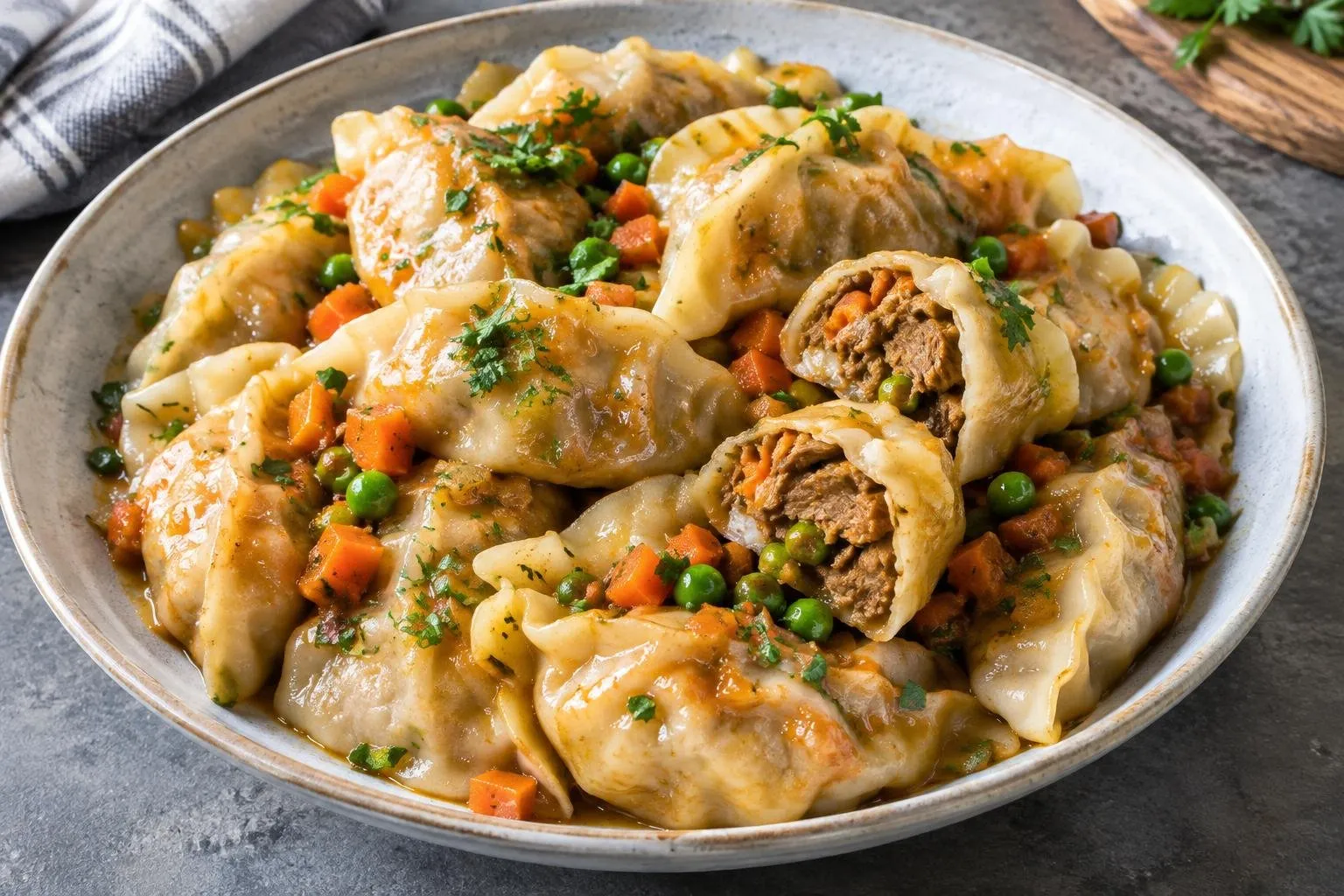
Slow-Braised Filipino Pork Asado Dumplings
◷ 165 minmedium
These Filipino-inspired dumplings feature slow-braised pork asado, infused with traditional Asian spices and served in a delicate wrapper. Perfect for a comforting weeknight meal, they highlight seasonal vegetables and showcase the slow braising technique for tender, flavorful filling.
Feb 1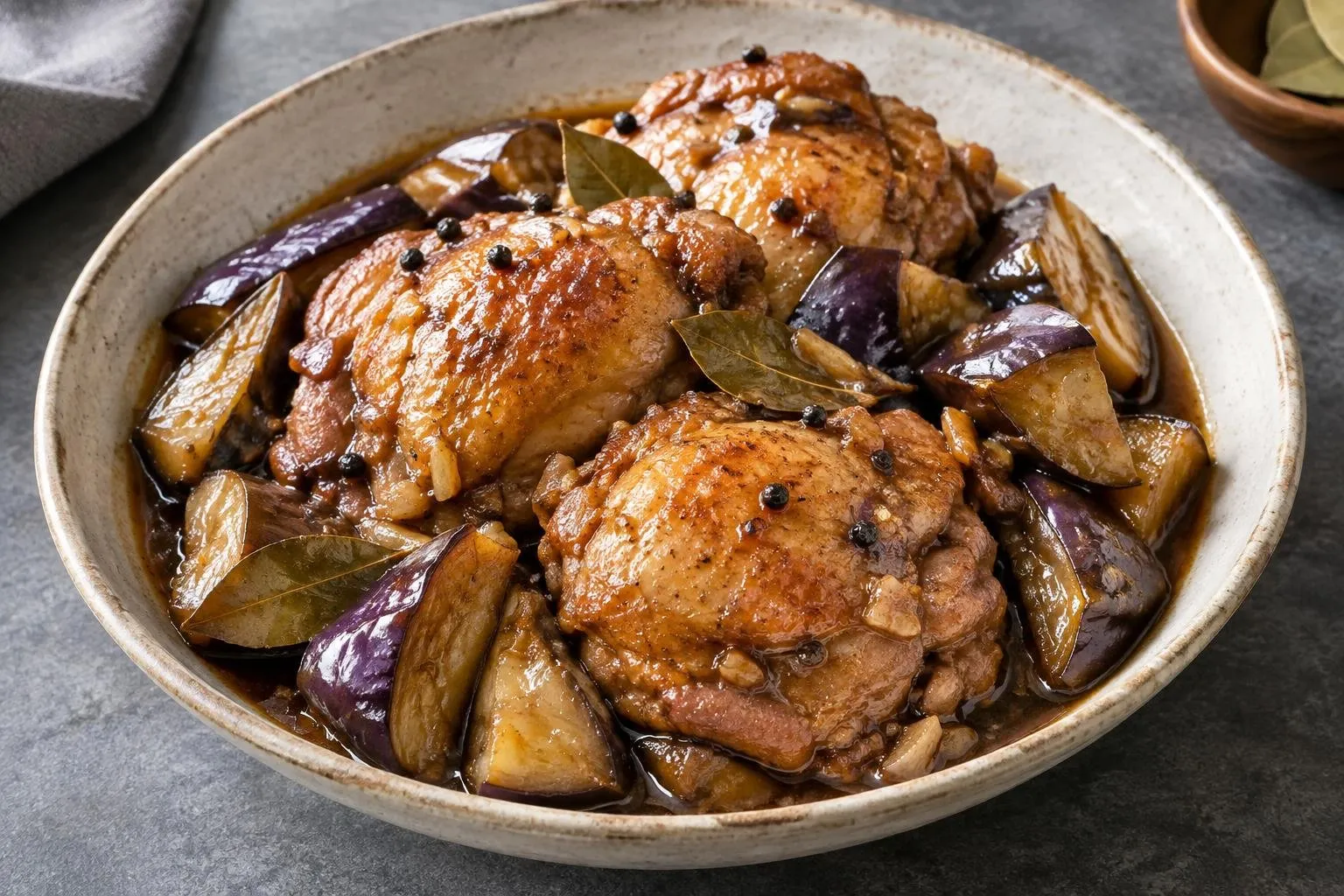
Chicken Adobo Braise with Seasonal Eggplant
◷ 75 minmedium
A traditional Filipino chicken adobo prepared as a braise, featuring seasonal eggplant and a savory blend of soy sauce, vinegar, garlic, and bay leaves. This comforting dish highlights a gentle poaching start before slow braising to tenderize the chicken and infuse deep flavors.
Jan 29