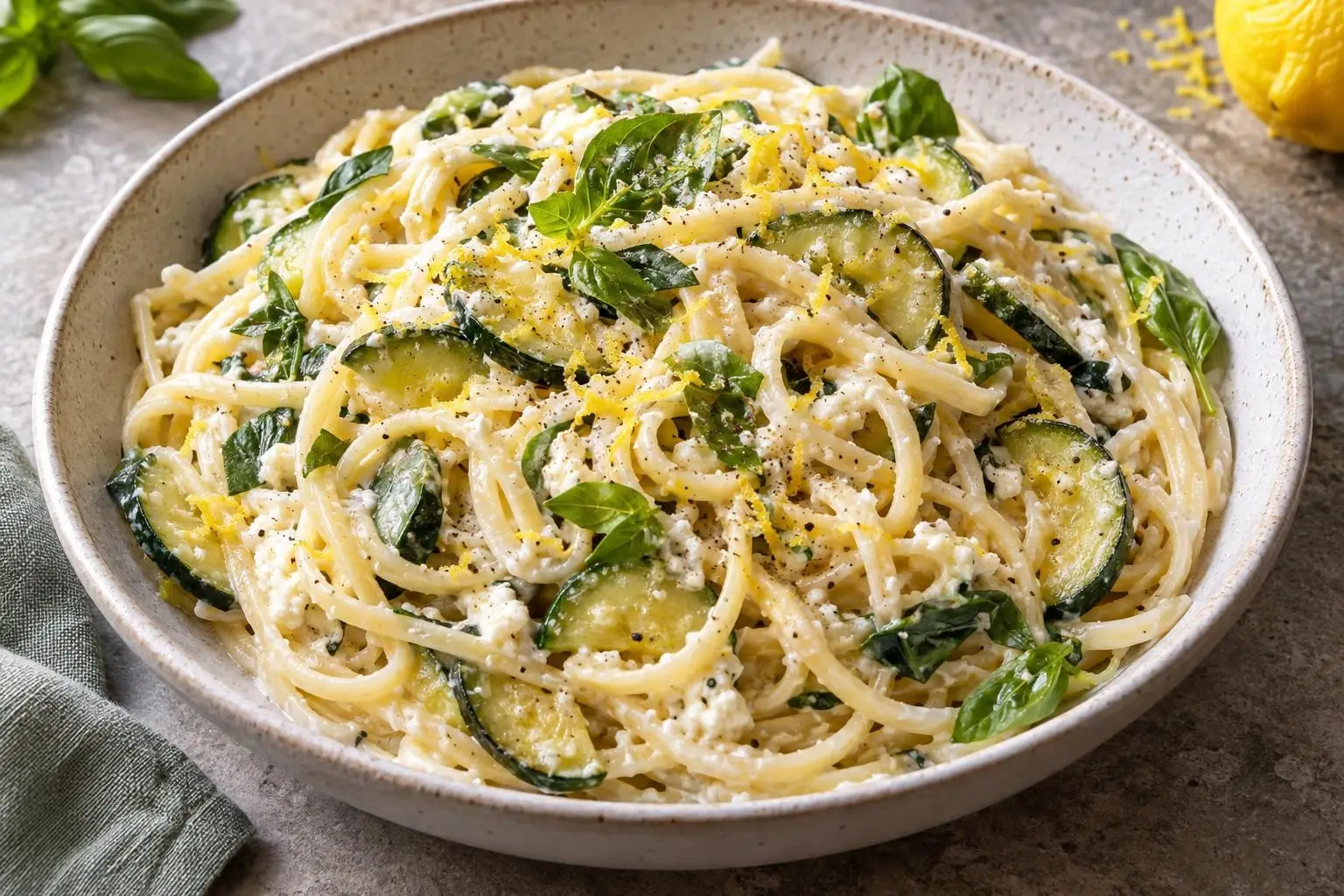
Lemony courgette pasta with ricotta and basil
Linguine with tender courgettes, a loosely coating ricotta sauce, fresh lemon and basil. Starchy pasta water brings the sauce together; adding the ricotta off the heat keeps it creamy.
Advert
Let’s get cooking.
Cook mode
Scale servings, tick off ingredients, and run step timers without losing your place.
Servings
Originally developed for 2 servings.
Ingredient checklist
Method
- No timer needed
Put the 2 litres water in the saucepan, cover and bring to the boil over high heat. While it heats, slice the courgettes into 3 mm half-moons; quarter very thick courgettes lengthways first. Chop the garlic. Measure 1 tsp lemon zest, keeping ¾ tsp for the sauce and ¼ tsp for serving, and 15 ml juice, with up to another 10 ml kept separately for adjustment. Divide the basil into 8 g and 2 g. Stir the ricotta in the heatproof bowl until evenly creamy. Set out the serving bowls and colander. If the water boils early, reduce the heat and keep it hot, covered.
- No timer needed
Heat the olive oil in the deep frying pan over medium heat for about 1 minute. Add the courgettes and their 1 g salt. Cook uncovered for 12–15 minutes, stirring every 2–3 minutes, until tender enough to crush with a spoon, with only light golden patches. Lower the heat if they brown before softening. Let excess watery juices evaporate before adding the pasta.
- No timer needed
While the courgettes cook, bring the pasta water back to a full boil if necessary. Add the 12 g salt and linguine, then stir well. Cook uncovered until 1 minute short of the packet's al dente time, stirring again midway. Start the pasta when the courgettes have roughly that cooking time remaining: for linguine with a 10-minute packet time, start it after the courgettes have cooked for about 4 minutes. Prepare the ricotta as described in step 5 while the pasta is still cooking, not after its draining point. If the courgettes finish first, keep them over very low heat.
- No timer needed
For the courgettes' final minute of cooking, add the garlic and stir frequently, reducing the heat if it starts to colour. Crush about one-third of the courgettes against the pan with the spoon, leaving the rest intact. Have the courgette pan ready before draining the pasta.
- No timer needed
While the pasta still has 3–4 minutes left before draining, scoop out 300 ml cooking water into the heatproof jug. Gradually stir 50 ml into the ricotta, then mix in the reserved ¾ tsp lemon zest; leave this mixture ready beside the hob. When the linguine reaches 1 minute short of its packet time, take the saucepan off the heat and drain promptly without rinsing. Transfer straight to the courgette pan—do not leave it boiling while you mix the ricotta.
- 01:00
Add another 50 ml reserved water to the linguine and courgettes. Toss over medium heat for 1 minute, until the pasta is al dente and the water and oil form a lightly thickened coating rather than separate puddles. If the pasta remains too firm, add a little more reserved water and continue briefly before adding the ricotta.
- No timer needed
Remove the pan from the heat and wait about 30 seconds for vigorous bubbling to stop. Fold in the loosened ricotta, the initial 15 ml lemon juice, black pepper and 8 g basil, torn as you add it. Toss thoroughly, adding reserved water in 15–30 ml increments until the strands move freely in a creamy sauce. Usually 100–150 ml cooking water is needed in total, including the two earlier additions. Do not boil the sauce after adding the ricotta; fine curds are normal.
- No timer needed
Taste and add some of the optional extra lemon juice only if needed. Loosen with a little more reserved water if the sauce has tightened: it should look slightly looser in the pan than you want on the plate. Divide immediately between the bowls and finish with the remaining 2 g basil and ¼ tsp lemon zest.
Chef tips
- Packet pasta timings vary; shift the pasta start accordingly. Reserve the water and prepare the ricotta before the draining point, then drain promptly and transfer directly to the pan.
- If the courgettes remain firm in a watery pan, keep cooking uncovered until crushably tender and the excess liquid has evaporated. Delay starting the pasta if necessary.
- Dry ricotta needs more reserved water. Small curds are normal; avoid vigorous boiling after adding it.
- If the finished sauce is too loose, toss off the heat for 30–60 seconds to allow absorption. If sticky, add reserved water 15–30 ml at a time.
Equipment check
- 4-litre saucepan with lid
- 28 cm deep frying pan, approximately 2.5–3 litres capacity
- Chopping board and knife
- Fine grater
- Large heatproof bowl
- Heatproof measuring jug
- Colander
- Tongs and wooden spoon
- Measuring spoons
- Two serving bowls
Nutrition per serving
- Calories600
- Protein24 g
- Carbs79 g
- Fat20 g
Tags
Behind the dish.
Overview
The courgettes should be tender enough to crush, with some slices left intact. Crushing a portion and tossing with starchy pasta water creates the sauce base. Ricotta goes in off the heat for a creamy coating with fine curds, rather than a perfectly smooth cream sauce. Lemon and basil provide freshness without overwhelming the cheese.
Ingredient notes
Choose moist, spoonable ricotta, draining only visible pooled whey before weighing. Drier basket-style ricotta needs more pasta water. Use ricotta labelled suitable for vegetarians. Spaghetti can replace linguine at the same dry weight; follow its packet timing.
Standard pasta contains wheat/gluten and may contain egg; ricotta contains milk. Check packaging for other declared allergens. Gluten-free pasta is an option, but its cooking water may bind differently, so adjust the sauce gradually. Measure the lemon juice rather than adding a whole lemon's worth.
Serving & storage
Serve immediately as two substantial main-course portions, finished with the reserved basil and zest. Keep ricotta refrigerated at 5°C or colder until preparation and follow its use-by and after-opening instructions.
Cool leftovers promptly in shallow portions and refrigerate within 2 hours at 5°C or colder. Use within 48 hours, or sooner if the ricotta packaging requires it. Reheat only once until steaming hot throughout, stirring with a splash of water. The pasta will soften and the sauce may become grainier; freezing is not recommended for texture.
Related recipes
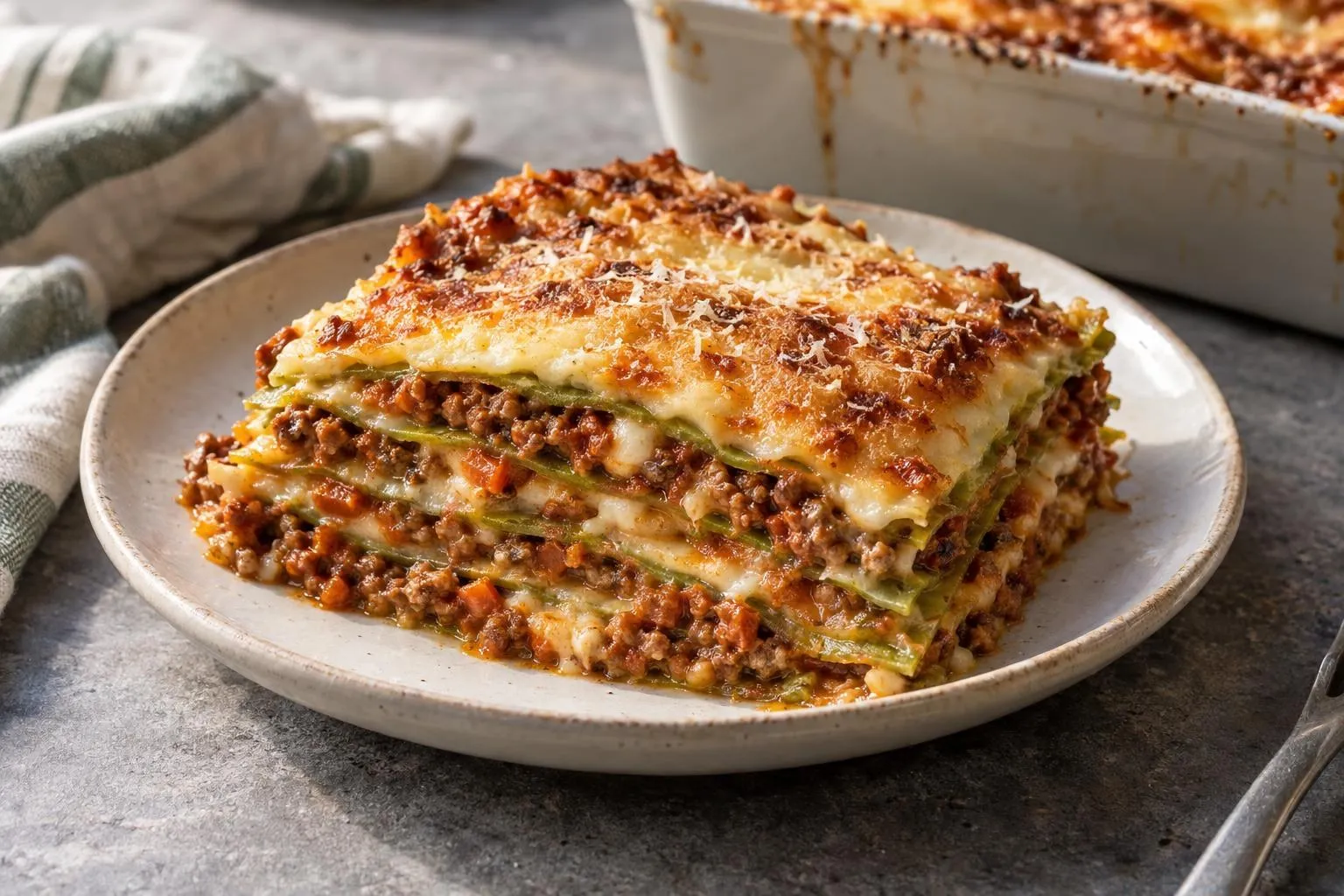
Lasagne alla bolognese with slow-simmered ragù
◷ 304 minmedium
Thin spinach egg-pasta sheets layered with beef and pork ragù, creamy béchamel and Parmigiano Reggiano. Allow about 5 hours 5 minutes, including resting and serving, and longer if the ragù needs further reduction or the lasagne needs more baking.
Oct 18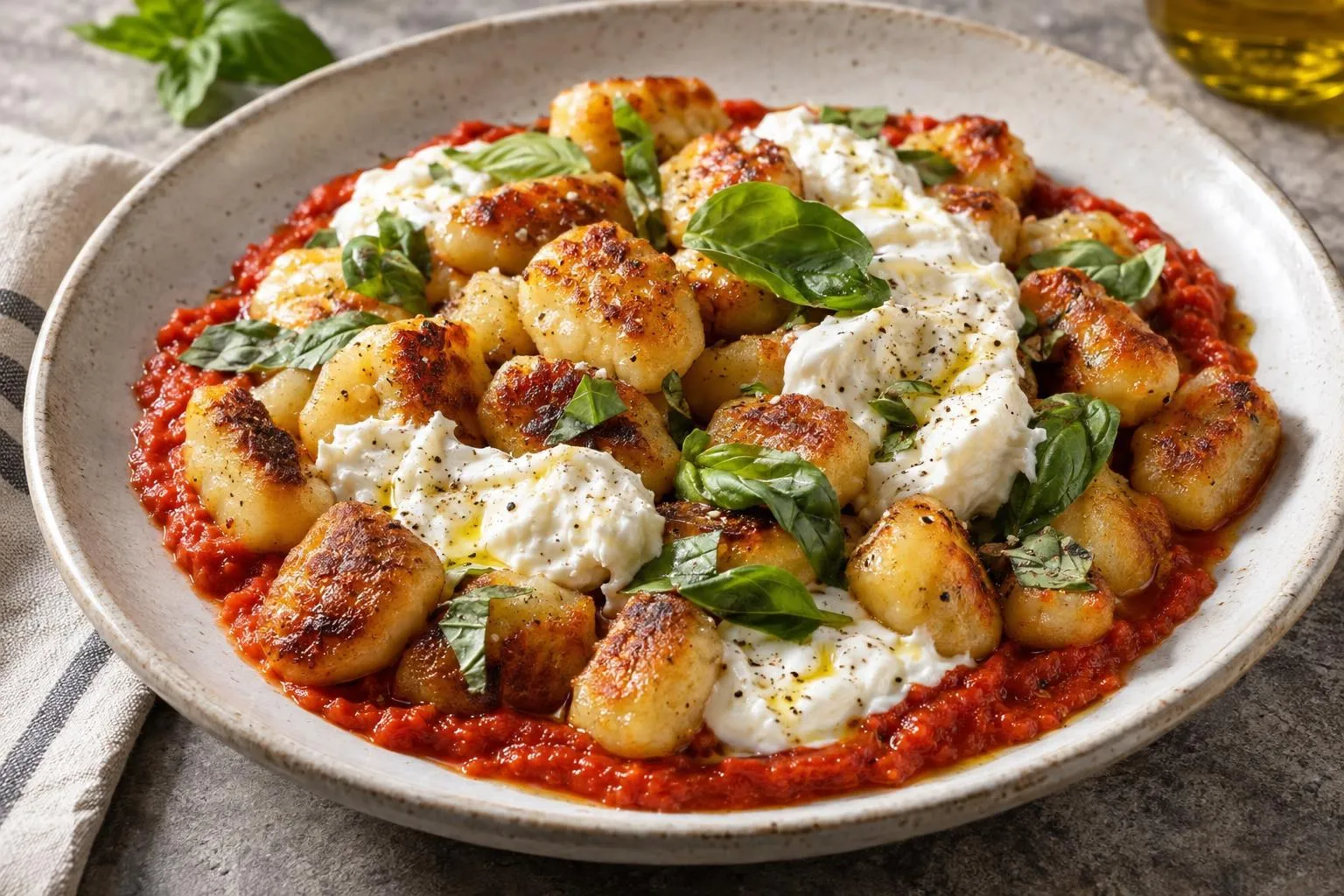
Crispy gnocchi with roasted peppers and burrata
◷ 44 mineasy
Golden pan-fried potato gnocchi sit over a light roasted-pepper sauce, with torn burrata and fresh basil. Keeping the sauce underneath preserves the crisp edges and soft potato centres.
Oct 15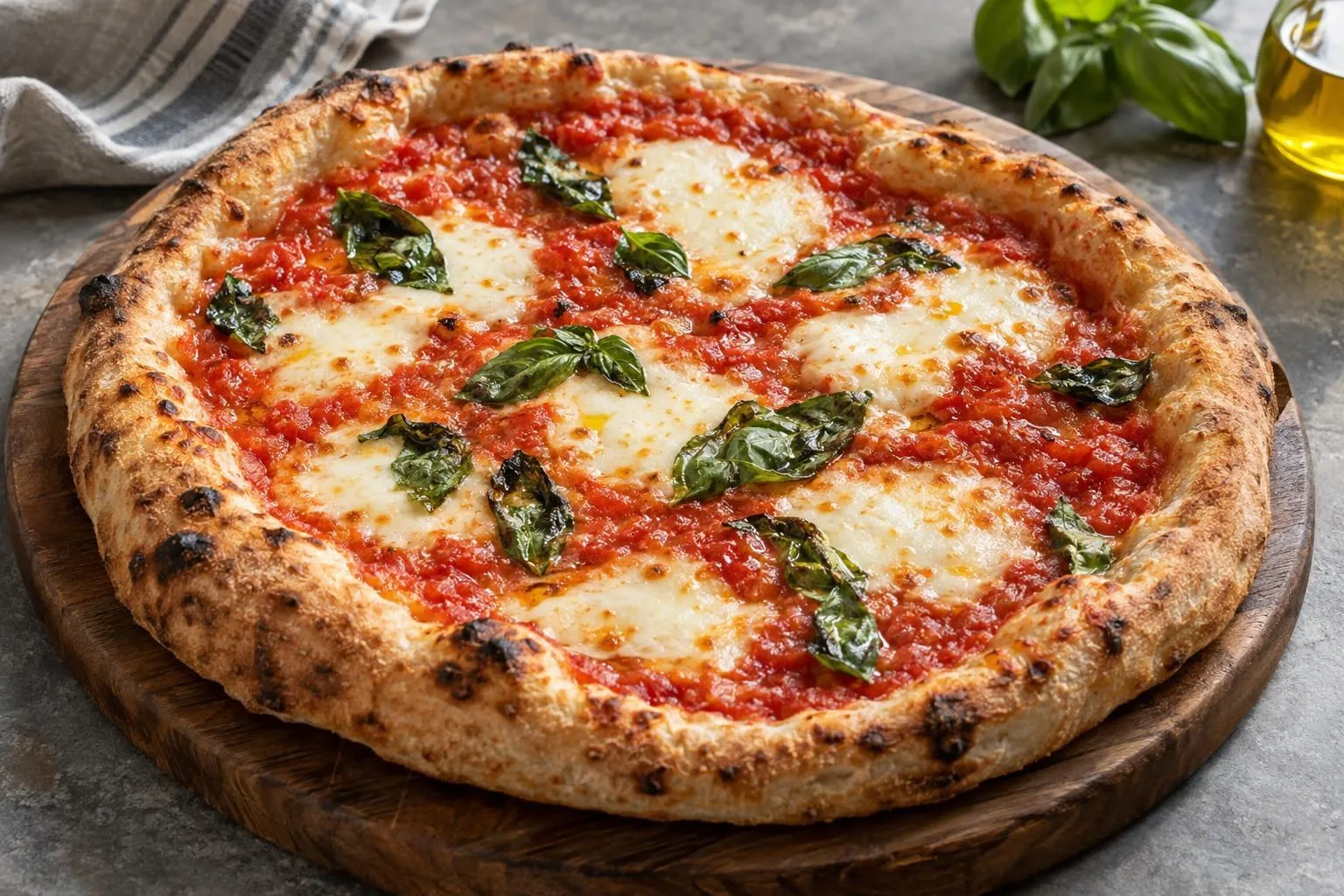
Margherita pizza with no-cook tomato sauce
◷ 204 minmedium
Two homemade pizzas with a crisp, cooked-through base, an airy golden rim, bright tomato sauce, soft mozzarella and fresh basil. Bake them one at a time on a thoroughly preheated metal tray and serve each as it is ready.
Oct 14