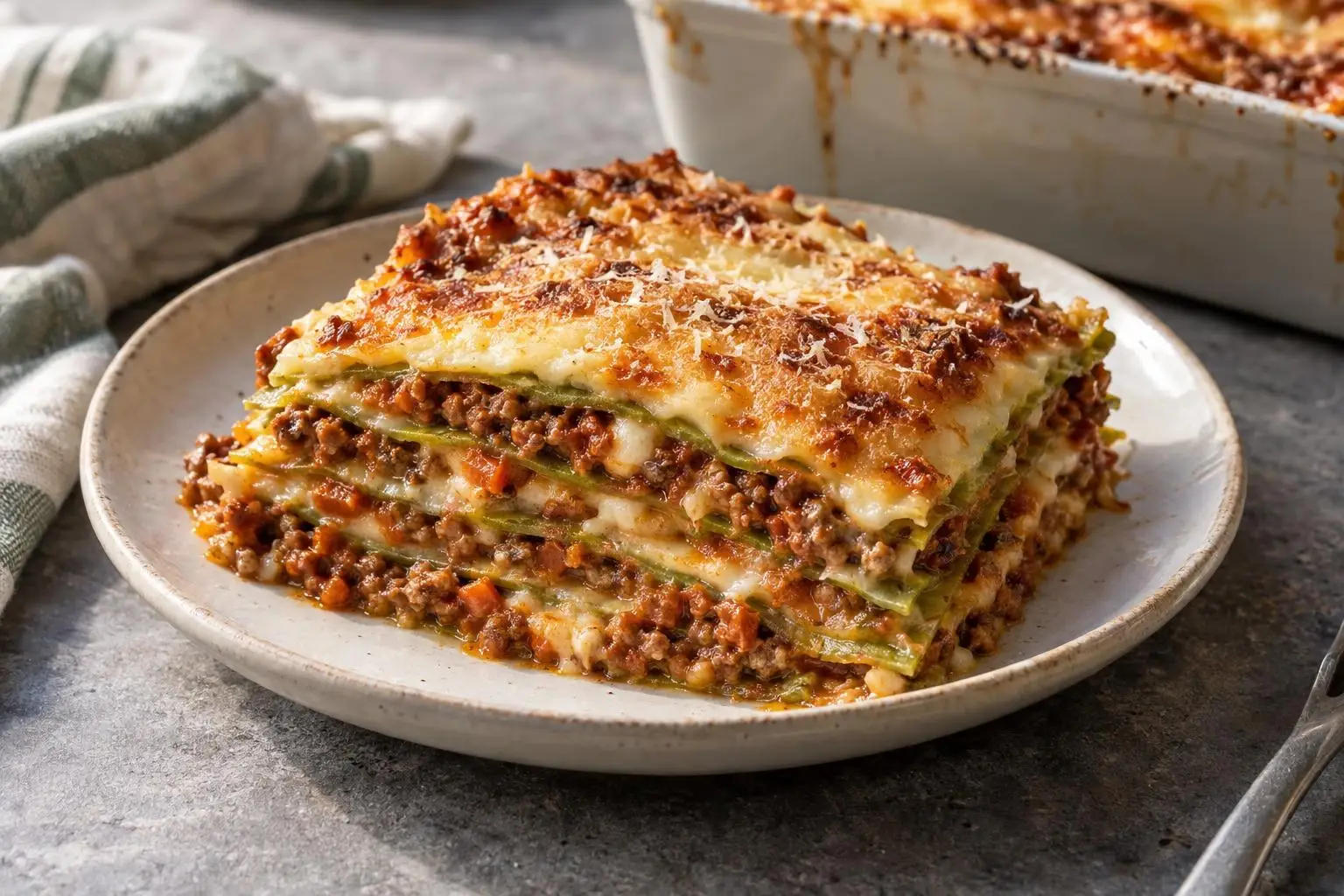
Lasagne alla bolognese with slow-simmered ragù
Thin spinach egg-pasta sheets layered with beef and pork ragù, creamy béchamel and Parmigiano Reggiano. Allow about 5 hours 5 minutes, including resting and serving, and longer if the ragù needs further reduction or the lasagne needs more baking.
Advert
Let’s get cooking.
Cook mode
Scale servings, tick off ingredients, and run step timers without losing your place.
Servings
Originally developed for 8 servings.
Ingredient checklist
Method
- No timer needed
Finely chop the onion, carrot and celery into approximately 3 mm pieces. Grate the Parmigiano Reggiano and divide into five 24 g portions. Measure the remaining ingredients and set out the equipment. Keep raw mince and its utensils separate from the cheese, pasta and clean equipment.
- No timer needed
Heat the oil in the casserole over medium-low heat. Add the chopped vegetables and soften for 12 minutes, stirring regularly, without dark browning. Transfer to a bowl. Increase to medium-high and brown the beef and pork in two approximately 400 g batches, allowing about 6 minutes per batch. Break the meat into small granules; transfer the first batch to the vegetable bowl while cooking the second.
- No timer needed
Return all the meat and vegetables to the casserole. Stir in the tomato purée and cook for 1 minute. Add the wine, scrape the base and simmer uncovered for about 4 minutes, until little free wine remains. Add the 200 ml milk and simmer for 3 minutes. Stir in the passata, stock, 4 g salt and ¼ tsp pepper, then bring to a gentle simmer.
- No timer needed
Partially cover and simmer very gently for about 2 hours 20 minutes, with only occasional bubbles. Stir and scrape the base every 20–30 minutes. If it starts catching before the meat is tender, heat the corrective water in a kettle and add it in 30–50 ml amounts, up to 150 ml. Near the end, uncover if necessary to reduce excess liquid. Aim for approximately 1.4–1.5 kg of moist, spreadable ragù with no watery moat around a spoonful. The meat should be tender and cooked through; check a portion reaches 75°C for 30 seconds. Taste and check the seasoning. Allow longer if tenderness or reduction requires it, then cover off the heat while finishing the pasta.
- No timer needed
During the final 45 minutes of the ragù's simmer, make the béchamel, stirring the ragù just before you start. Melt the 80 g butter in the saucepan, stir in the flour and cook gently for 2 minutes without colouring. Gradually whisk in the 1 litre milk, starting with small additions to make a smooth paste. Bring to a gentle simmer, stirring continuously, then cook for 6 minutes, stirring and scraping the base. Add 3 g salt, the remaining ¼ tsp pepper and the nutmeg. It should coat a spoon but pour readily; add the optional extra milk in 25 ml additions if too thick. Cover off the heat and stir again before layering.
- No timer needed
Once the béchamel is made, bring the 4 litres water and 20 g salt to the boil in the large pan. While it heats, stir the ragù, preheat the oven to 200°C conventional / 180°C fan and set out a bowl of cold water and clean tea towels. Finish checking the ragù before starting the pasta batches. Blanch one or two sheets at a time, following the packet guidance—usually 30–60 seconds for very thin sheets—until flexible but not fragile. Briefly cool in the cold water, drain and lay flat on the towels without overlapping. Allow about 12 minutes for the batches and drain thoroughly.
- No timer needed
Grease the deep 30 × 22 cm dish with the 5 g butter. Reserve 100 g béchamel for the base; divide the rest into five equal portions. Divide the ragù into five equal portions, approximately 280–300 g each. Spread the reserved béchamel over the base, then add a complete pasta layer, trimming to fit with minimal overlap. Spread over one portion each of ragù and béchamel, then 24 g cheese. Repeat to make five pasta layers, ending with ragù, béchamel and cheese. Spread sauces right to the edges and leave at least 1.5 cm headroom.
- 35:00
Set the dish on a rimmed baking tray and bake the still-warm lasagne on the middle shelf for 35–45 minutes; check after 35 minutes. It should be golden, bubbling at the edges and easily pierced through the centre with a thin knife. Check that the centre reaches 75°C for 30 seconds. Cover loosely with foil if the top colours before the centre is hot, and continue baking as needed.
- 20:00
Remove from the oven and rest for 20 minutes so the sauces settle. Cut into eight portions and serve, using a broad spatula to support the layers.
Chef tips
- The schedule allows a 140-minute ragù simmer and about 40 minutes in the oven. Extend either stage if the sauce texture or centre temperature requires it; do not shorten the rest to recover time.
- For watery layers, reduce the ragù further before assembly and drain the pasta thoroughly. Resting helps the layers settle but cannot correct a watery sauce.
- If the béchamel is lumpy, briefly blend it before its final simmer. If too thick, whisk in the listed extra milk a little at a time.
- Trim pasta to fit rather than making broad overlaps, which can create chewy seams. Keep every edge covered with sauce.
- Skim obvious pools of excess fat from the finished ragù if necessary, but do not drain it until dry.
- Use the specified deep dish: a shallow tin risks overflow and leaves too little room for five layers.
Equipment check
- Heavy 4–5 litre casserole with lid
- 2.5–3 litre saucepan
- 6 litre pan for pasta
- Deep ovenproof dish, approximately 30 × 22 × 7 cm internally, about 4.5 litres capacity
- Rimmed baking tray
- Digital scales
- Food thermometer
- Whisk and wooden spoon
- Slotted spoon or spider
- Large bowl for cooling pasta
- Clean tea towels
- Foil
- Kettle for heating corrective water if needed
Tags
Behind the dish.
Overview
This lasagne has a meat-led ragù, restrained tomato flavour and tender, distinct green pasta layers beneath a golden cheese crust. Finely chop the vegetables, brown the mince in batches and simmer gently until the sauce is moist and cohesive—not watery or dry. Pourable béchamel softens the layers, while a rest after baking helps them hold their shape.
Ingredient notes
Use ready-made fresh spinach egg-pasta sheets about 1 mm thick; 400 g should cover five layers in the specified dish. Check their dimensions and packet cooking instructions before starting. Mince with approximately 10–15% fat gives richness without pancetta. Dilute stock concentrate according to its label. To omit wine, replace it with 150 ml additional low-salt beef stock and reduce at the same stage.
Contains wheat/gluten, egg, milk and celery. Stock may contain other allergens, and wine may contain sulphites: check labels, including those of substitutions.
Serving & storage
Serve as eight substantial main-course portions. No garnish is needed; a green salad is an optional accompaniment, not included in the recipe quantities.
Divide leftovers into shallow portions and refrigerate promptly, within 2 hours, at 5°C or colder. Use within 48 hours or freeze sooner. Thaw in the fridge and reheat only once, until steaming hot throughout, with the centre reaching 75°C for 30 seconds. Cover portions during reheating to protect the edges.
Related recipes
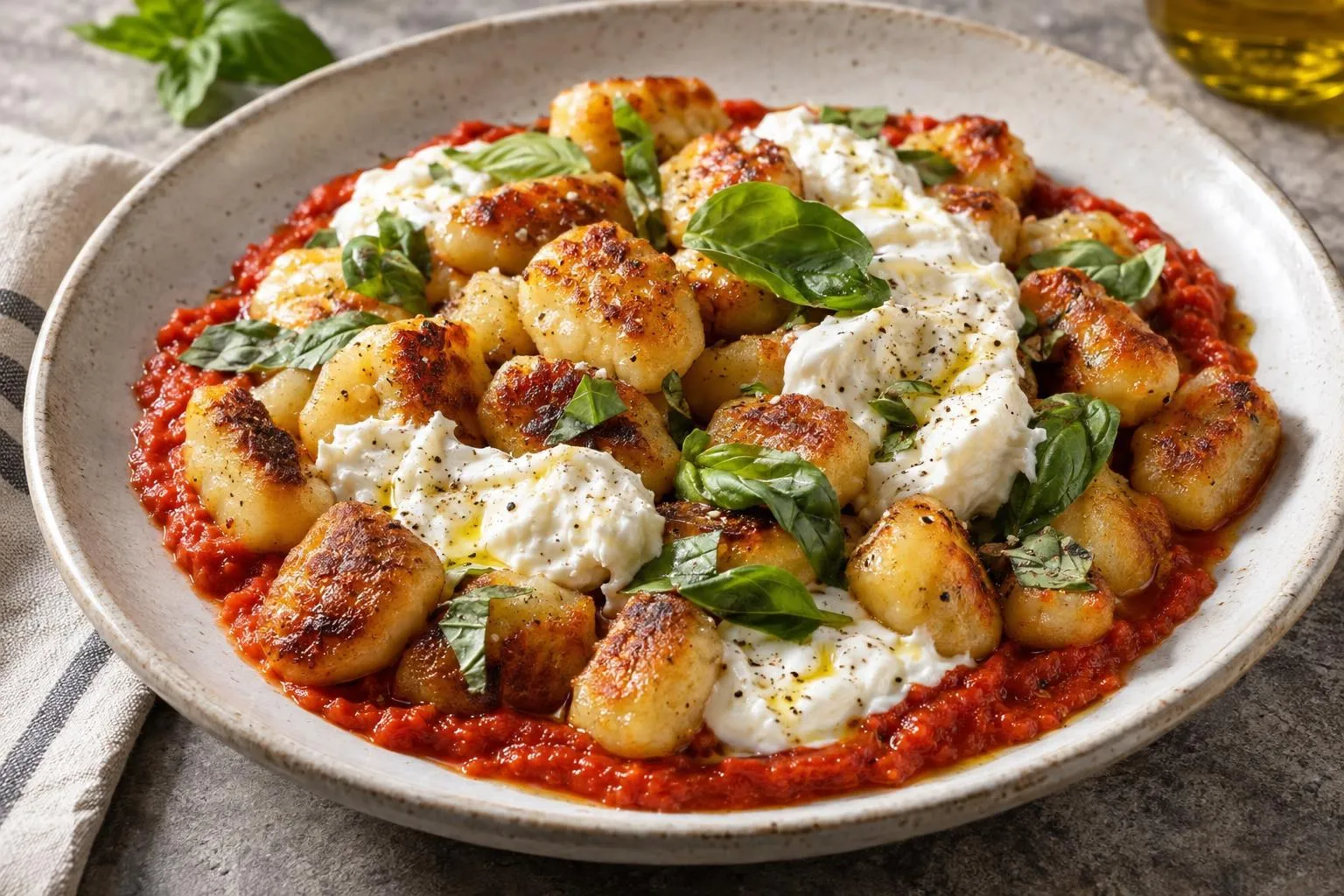
Crispy gnocchi with roasted peppers and burrata
◷ 44 mineasy
Golden pan-fried potato gnocchi sit over a light roasted-pepper sauce, with torn burrata and fresh basil. Keeping the sauce underneath preserves the crisp edges and soft potato centres.
Oct 15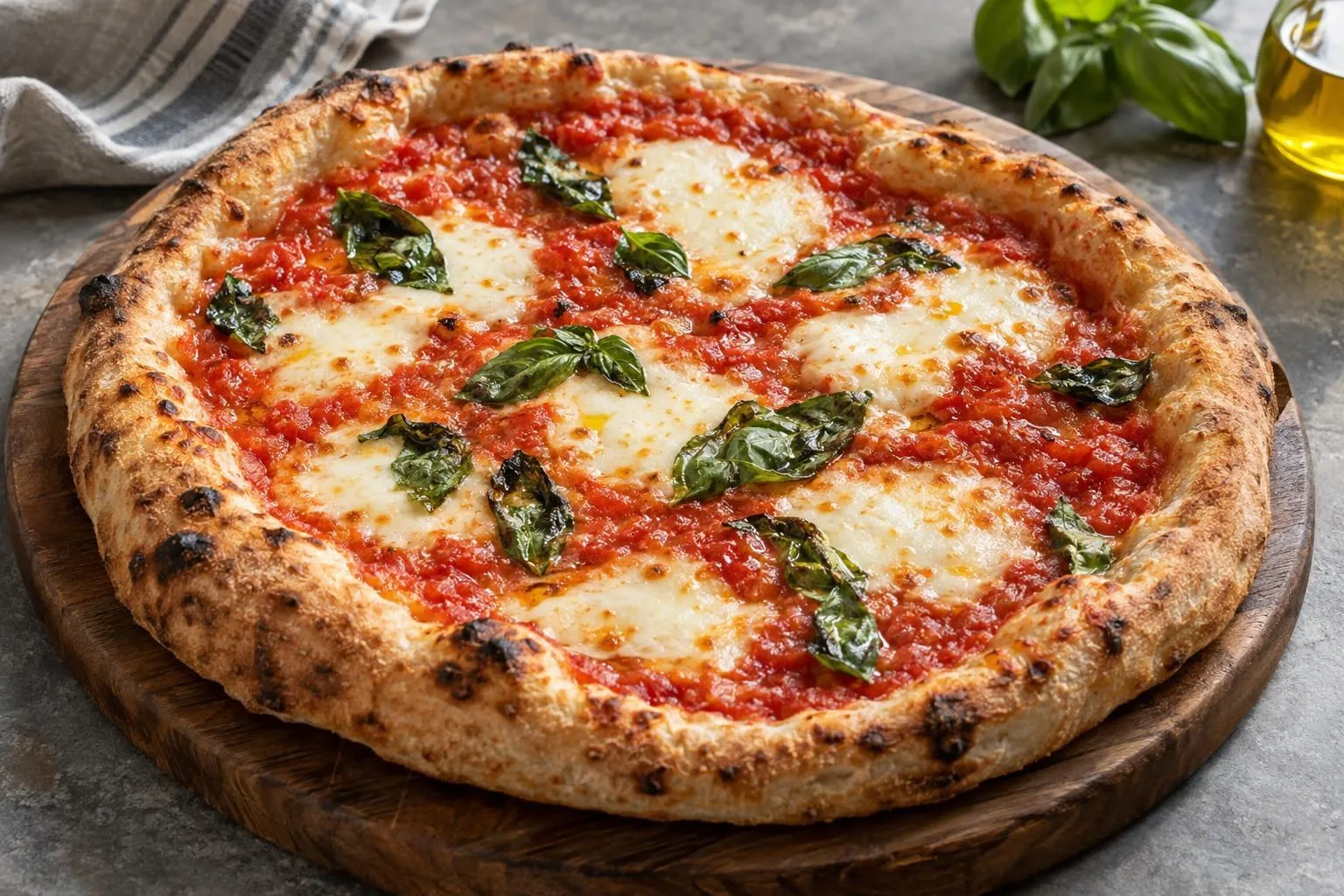
Margherita pizza with no-cook tomato sauce
◷ 204 minmedium
Two homemade pizzas with a crisp, cooked-through base, an airy golden rim, bright tomato sauce, soft mozzarella and fresh basil. Bake them one at a time on a thoroughly preheated metal tray and serve each as it is ready.
Oct 14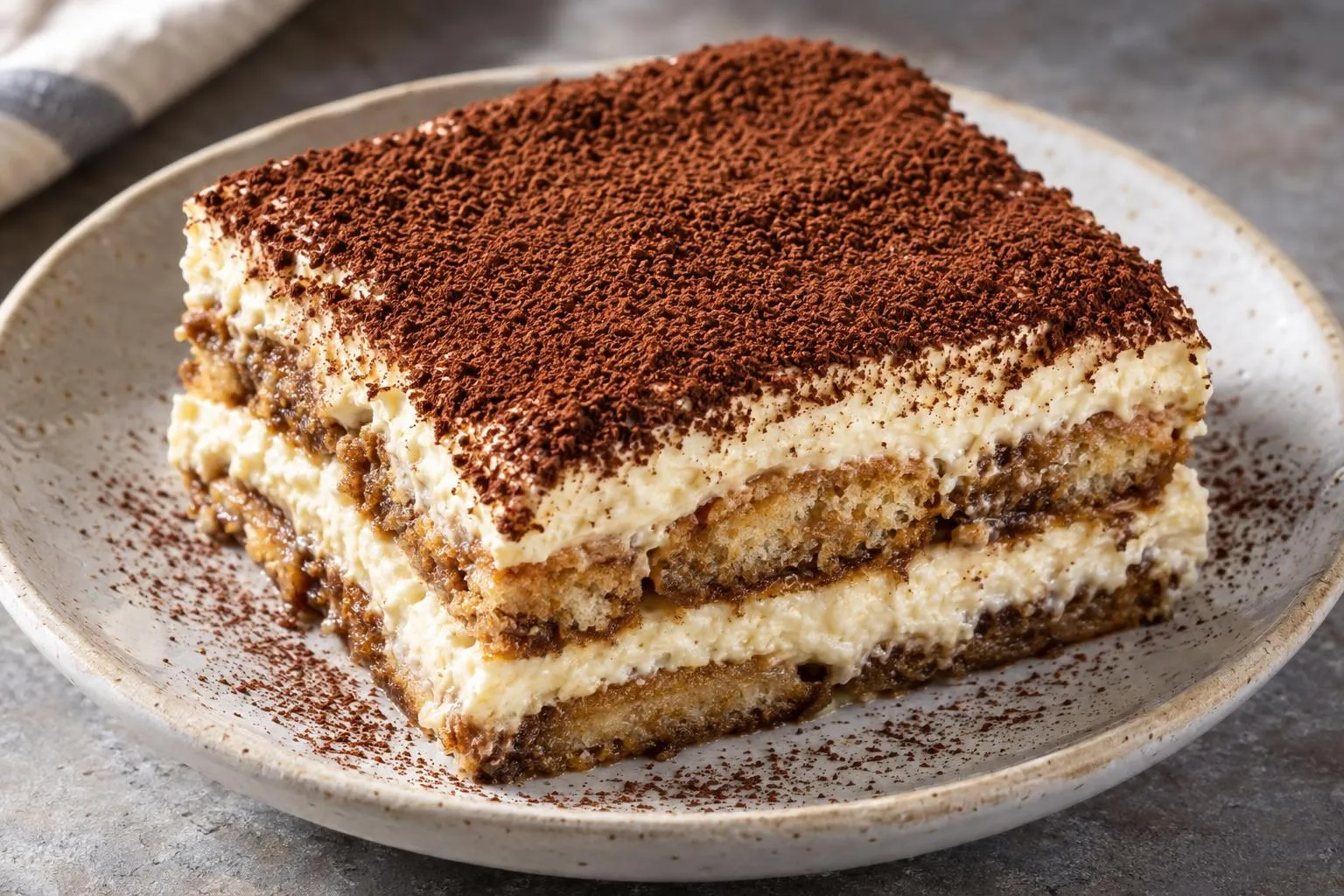
Tiramisu with Espresso-Dipped Ladyfingers
◷ 403 minmedium
Two layers of briefly espresso-dipped savoiardi and airy mascarpone cream, finished with cocoa. Use pasteurised egg products suitable for uncooked dishes and chill for at least 6 hours for tender biscuits and softly set layers.
Oct 9