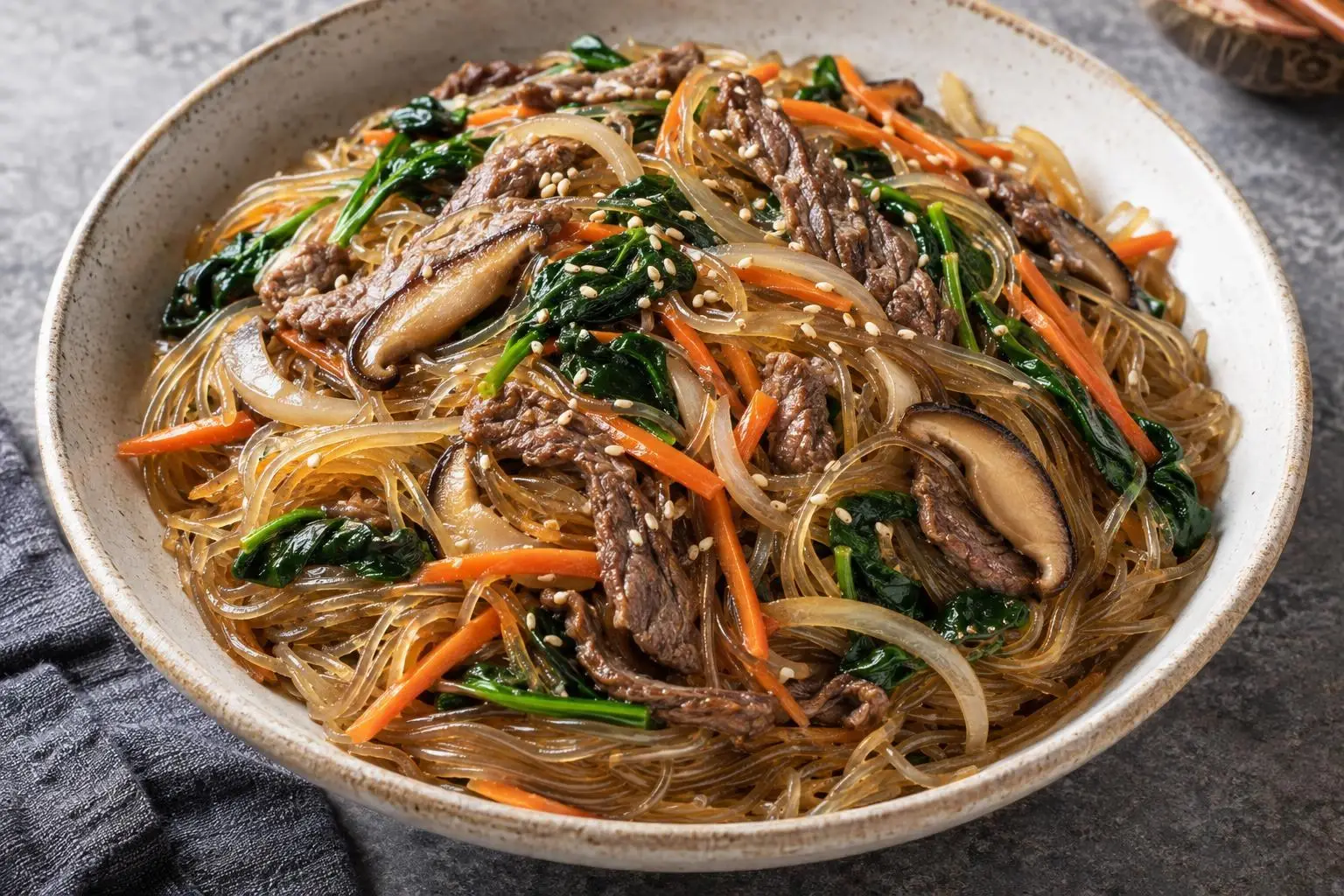
Japchae with Beef and Shiitake Mushrooms
Springy sweet potato glass noodles, beef and separately cooked vegetables in a lightly sweet soy–sesame coating. Allow about an hour; the exact timing depends on the noodle packet instructions.
Advert
Let’s get cooking.
Cook mode
Scale servings, tick off ingredients, and run step timers without losing your place.
Servings
Originally developed for 4 servings.
Ingredient checklist
Method
- No timer needed
Put the 3 litres unsalted water in the saucepan, cover and bring to the boil. Meanwhile, slice the beef across the grain into strips about 3 mm thick and 5 cm long. Mix 15 ml soy sauce, 5 g sugar, 5 ml sesame oil and 4 g grated garlic, toss with the beef and refrigerate for at least 15 minutes. Wash your hands and clean the knife and board. Remove the mushrooms' tough stalks and slice the caps 5 mm thick; cut the carrot into 3 mm matchsticks and slice the onion 5 mm thick. Mix the main sauce using 45 ml soy sauce, 15 g sugar, 15 ml sesame oil, 8 g grated garlic and 30 ml water. Stir well and reserve 15 ml of this mixed sauce for the mushrooms. Keep the water covered at a gentle boil until needed.
- 00:30
Add the spinach to the boiling water and blanch for 30–45 seconds, until just wilted. Lift it into a colander, leaving the water in the saucepan. Cool the spinach under cold running water, then squeeze firmly and cut into roughly 4 cm lengths. Loosen the leaves and toss in the large mixing bowl with the remaining 5 ml sesame oil and 0.5 g salt. While you cool and season the spinach, return the saucepan water to a full boil, then keep covered until the noodles go in.
- No timer needed
Heat the frying pan over medium-high heat for about 1 minute. Add 5 ml neutral oil, the onion and 0.25 g salt; cook for 3–4 minutes, stirring, until translucent without much browning. Transfer to the mixing bowl. Add another 5 ml oil, the carrot and the remaining 0.25 g salt. Cook for 2–3 minutes, until flexible but still lightly crisp, then transfer to the bowl.
- No timer needed
Add the noodles to the boiling water, stir to separate and cook according to the packet, commonly 6–10 minutes. While they boil, reheat the frying pan for about 1 minute, add 5 ml neutral oil and cook the mushrooms for 4–5 minutes, stirring, until softened and lightly browned. Add the reserved 15 ml mixed main sauce, toss for about 30 seconds until absorbed, and transfer to the bowl. Taste a noodle at the packet's first suggested check: it should be flexible and chewy without a hard centre. Drain, briefly rinse under cool water unless the packet directs otherwise, and leave to drain thoroughly for 2 minutes. If the noodles cook sooner, pause the mushroom cooking briefly to drain them; do not overcook them to match the pan schedule.
- No timer needed
Use the final 5 ml neutral oil to fry the beef in two approximately 150 g batches, dividing the oil between them. Lift the strips from the marinade and spread them in the hot pan; allow about 2–3 minutes per batch. Add each batch's share of the remaining marinade towards the end and cook it thoroughly—never add raw marinade to the finished dish. The strips should be browned and cooked through without a raw centre; where a fine probe can be positioned in the thickest strip, check 75°C held for 30 seconds. Extend cooking if needed to reach this endpoint. Transfer each batch and its juices to the mixing bowl using clean utensils. Between batches, use clean kitchen scissors to cut the drained noodles several times into roughly 20–25 cm lengths.
- No timer needed
Lower the pan heat to medium and add the remaining main sauce. Let it bubble briefly, then add the drained noodles. Toss for 2–3 minutes, until hot and evenly glossy, with most free liquid absorbed. If the strands clump or the pan dries before they are coated, add water 15 ml at a time and gently separate them with tongs; do not add more oil.
- No timer needed
Transfer the noodles to the mixing bowl and toss thoroughly with the beef, vegetables and 8 g toasted sesame seeds, lifting from the bottom to distribute everything evenly. Taste the combined dish before considering any seasoning adjustment. Divide between four bowls and scatter over the remaining 2 g sesame seeds. Serve promptly.
Chef tips
- The schedule uses a representative 7-minute noodle boil. Packet instructions and texture take priority; longer boiling times move the subsequent tasks later.
- Hard-centred noodles need more boiling, not extra sauce. Overcooked noodles cannot regain their springy texture.
- Squeeze the spinach firmly, drain the noodles thoroughly and cook off mushroom moisture to avoid a watery finish.
- Keep beef strips thin and cut across the grain. Cook in two batches so they fry rather than steam, stopping once they are cooked through.
- Measure the divided seasonings rather than salting each pan freely. Taste only after all components are combined.
- Frozen beef requires advance thawing in the fridge; this schedule starts with fresh or fully thawed beef. With one hob ring or a smaller frying pan, allow longer rather than crowding the pan.
Equipment check
- 5-litre saucepan with lid
- Two hob rings
- 28–30 cm frying pan
- Mixing bowl of at least 4 litres
- Small bowls for marinade and sauce
- Colander and slotted spoon
- Tongs and kitchen scissors
- Knife and chopping board
- Scales and measuring spoons
- Fine-tip food thermometer, if available
Nutrition per serving
- Calories530
- Protein24 g
- Carbs71 g
- Fat17 g
Tags
Behind the dish.
Overview
This japchae makes four main-course portions. Aim for springy, distinct noodle strands with a restrained sweet–salty coating, savoury beef and mushrooms, and vegetables that retain their individual textures. Cook the components separately, then combine in a large bowl rather than overcrowding the frying pan.
Ingredient notes
Choose dangmyeon made from sweet potato starch, not rice vermicelli or mung bean glass noodles. Packet boiling times vary; 250 g dry noodles typically yields about 600–750 g cooked and drained. Fresh shiitake need no soaking; chestnut mushrooms can substitute, although their flavour is milder. Start with fresh or fully fridge-thawed beef.
Use regular light soy sauce, not dark soy sauce. Reduced-salt versions and tamari change the seasoning balance. Soy sauce contains soya and usually wheat; sesame oil and seeds contain sesame. For a gluten-free version, use certified gluten-free tamari and check the noodles and all other packaged ingredients. This does not remove the soya or sesame allergens.
Serving & storage
Serve promptly, warm or briefly cooled. Cool leftovers promptly in shallow containers and refrigerate within 2 hours at 5°C or colder. Use within 48 hours or freeze sooner. Thaw frozen portions in the fridge; freezing may soften the vegetables and change the noodle texture. Reheat only once, with a splash of water, until steaming hot throughout, stirring to eliminate cold spots.
Related recipes
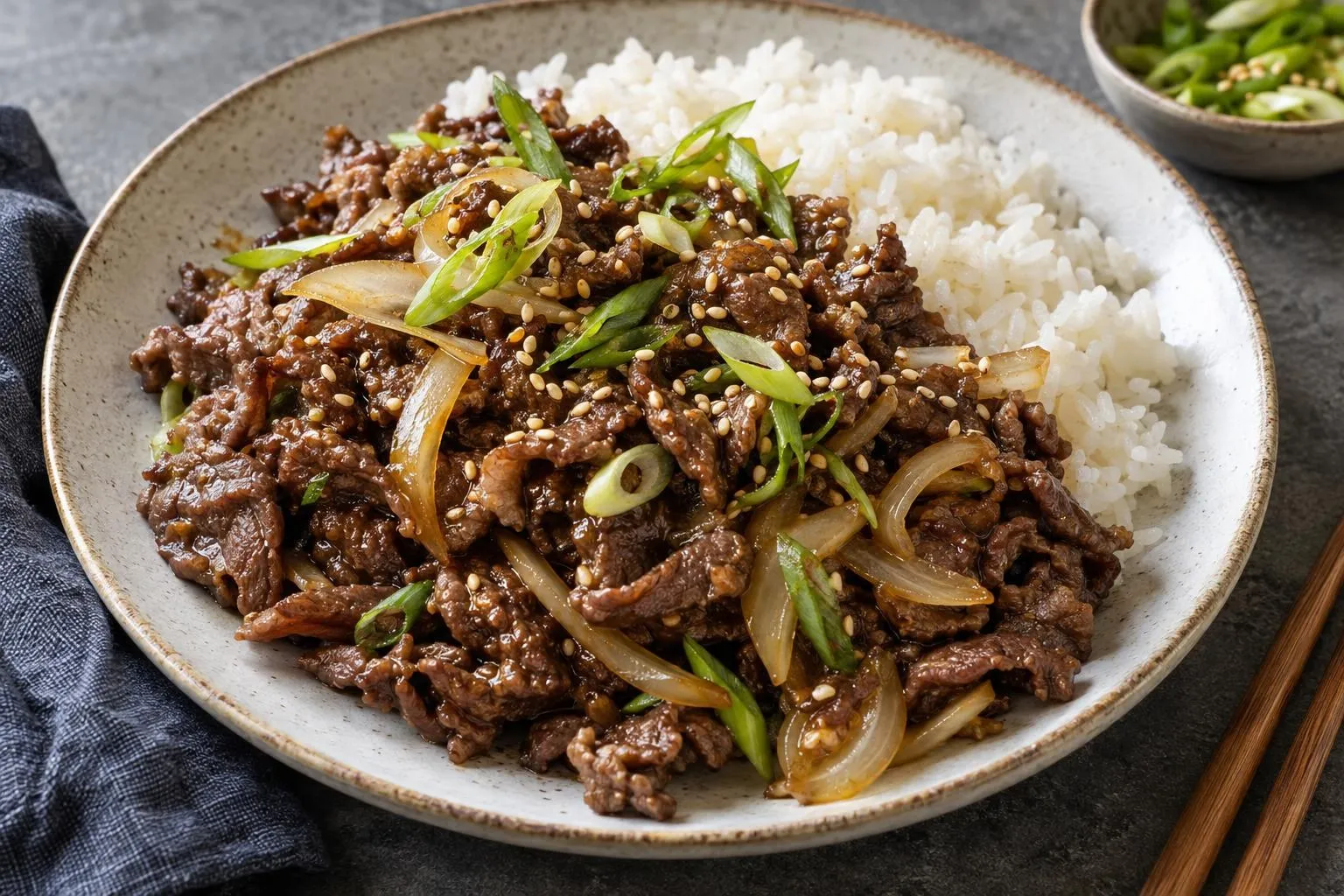
Beef bulgogi with pear and sesame
◷ 86 minmedium
Thinly sliced beef marinated with pear, soy and sesame, then seared in eight small batches for tender folds and browned edges. Served with softened onion, spring onions, sesame seeds and steamed rice.
Oct 16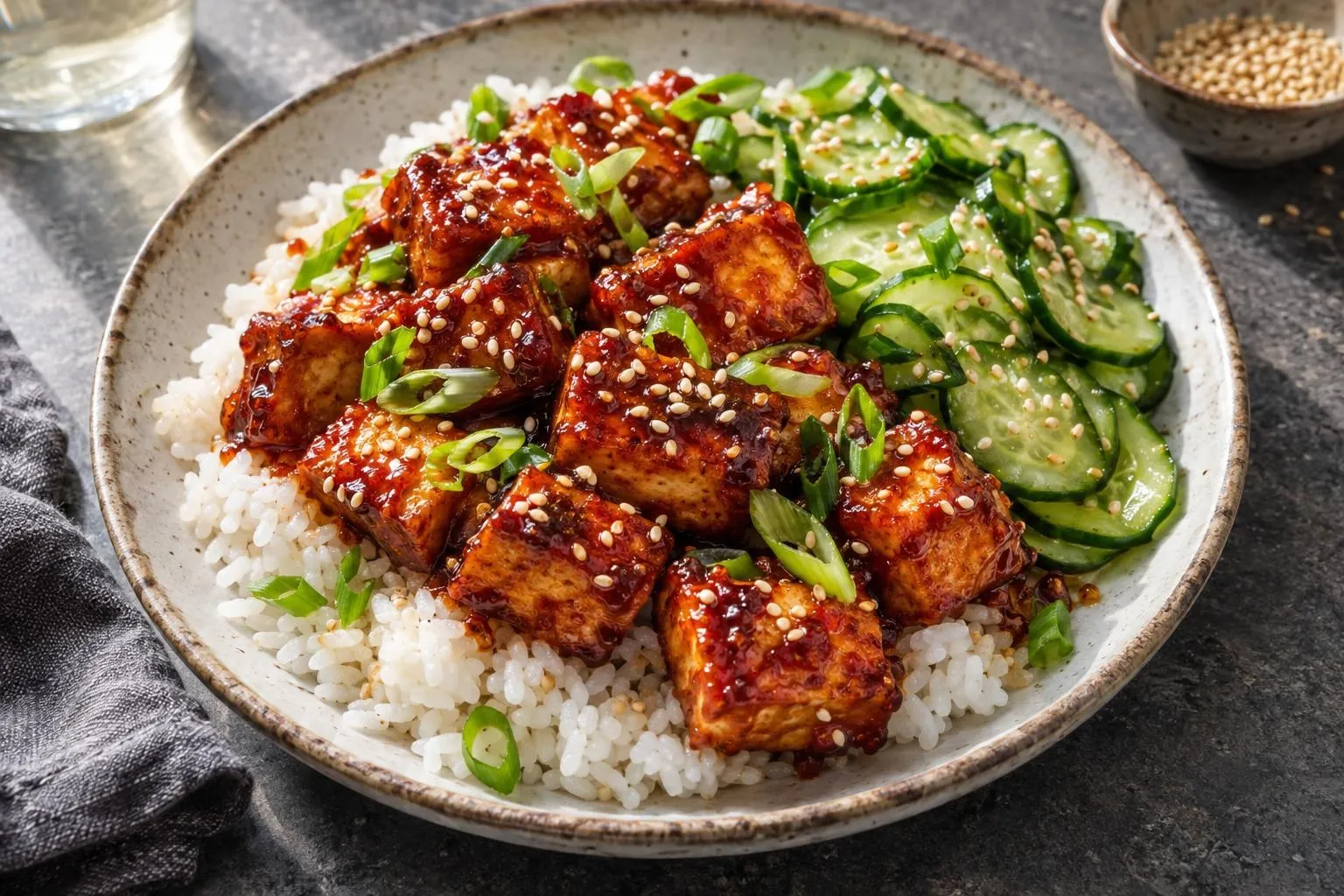
Gochujang glazed tofu with sesame cucumber
◷ 47 mineasy
Golden, cornflour-coated tofu gets a thin, sticky gochujang glaze, balanced by cool sesame cucumber and plain short-grain rice. Glaze just before serving to preserve the crisp edges.
Oct 13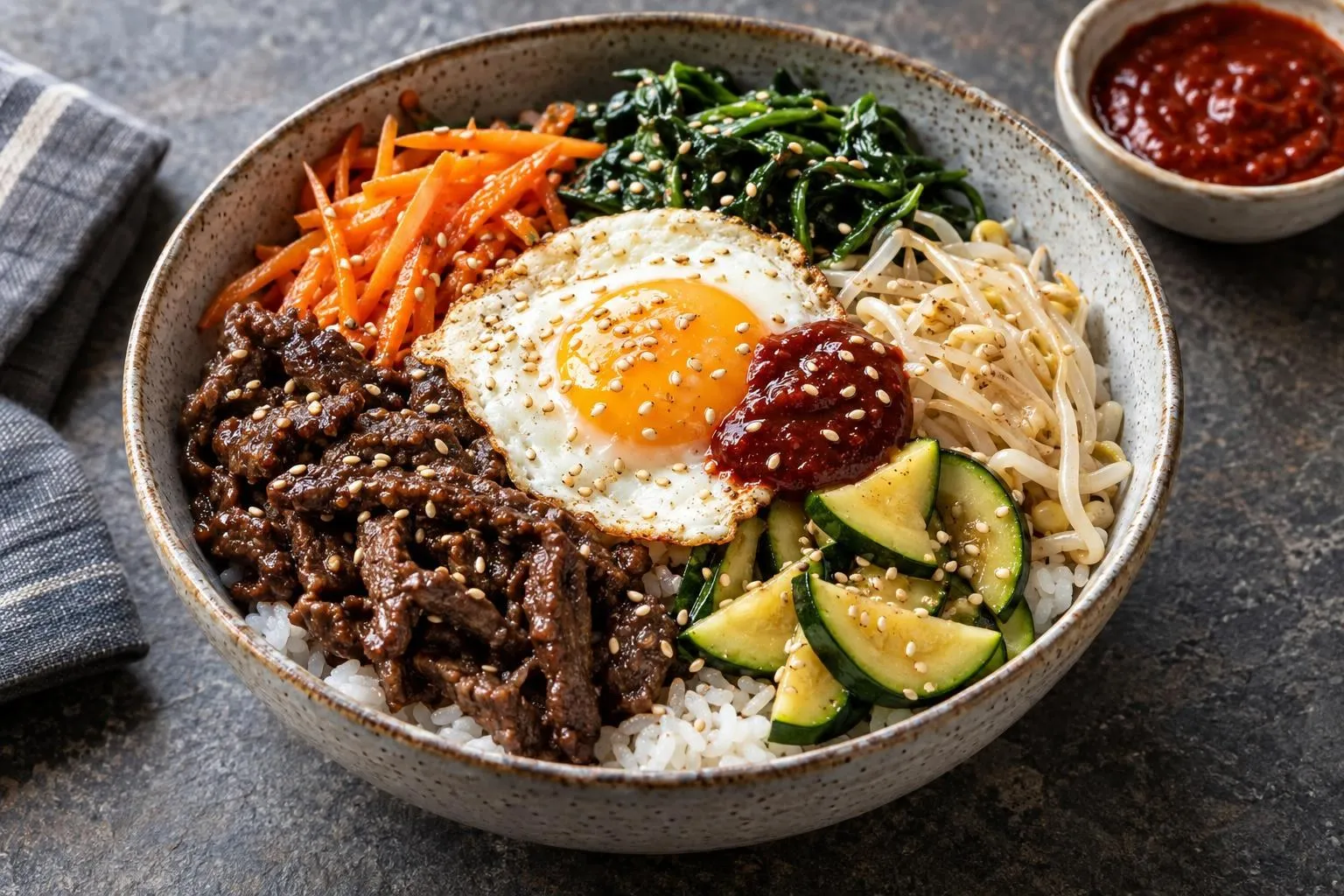
Bibimbap with Gochujang Sauce
◷ 60 minmedium
Korean rice bowls with sesame-seasoned beef, separately cooked vegetables and a fried egg, ready in about 1 hour. Mix at the table with sweet-spicy gochujang sauce. Longer packet cooking instructions or additional beef batches will extend the time.
Oct 4