Bibimbap with Gochujang Sauce
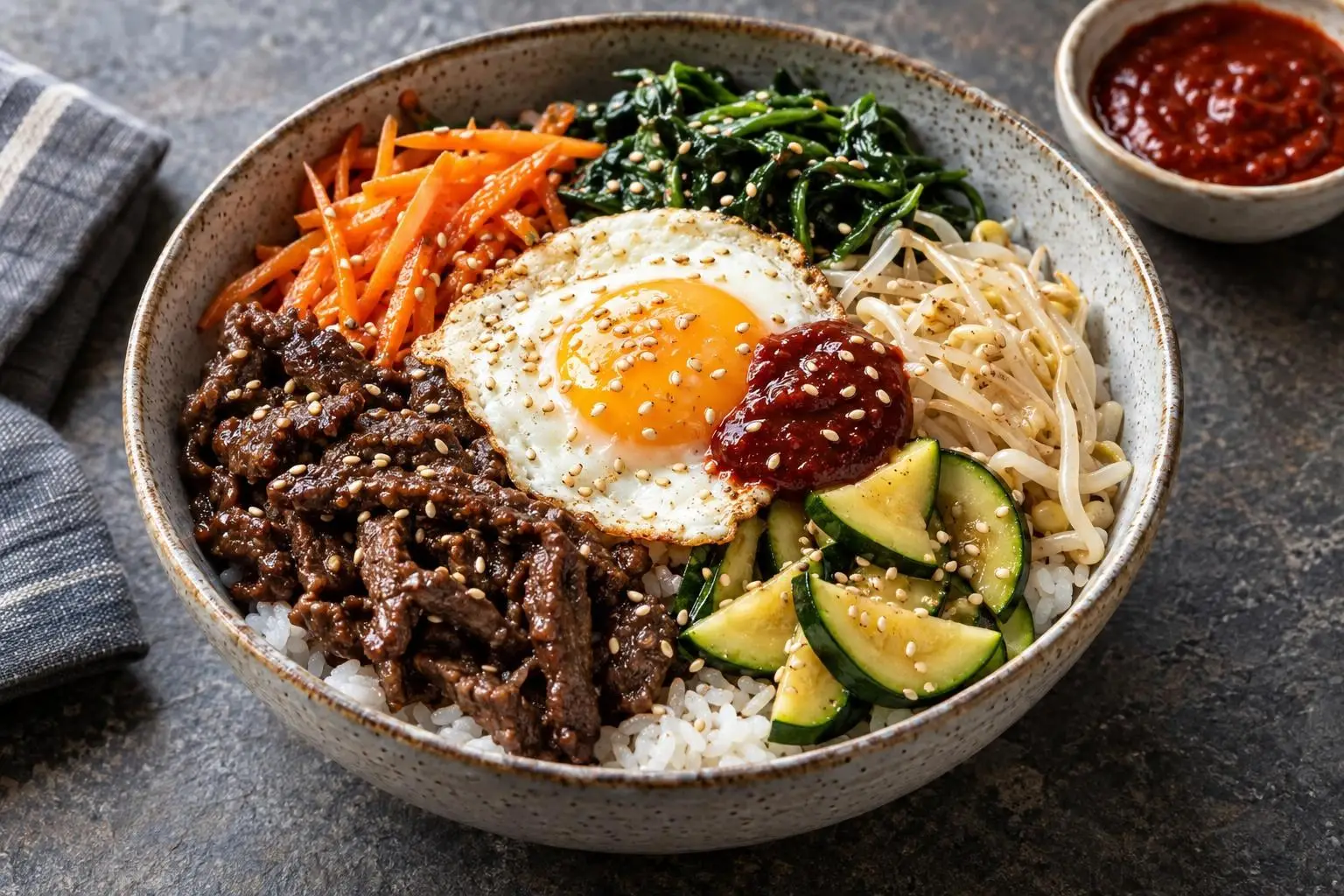
Korean rice bowls with sesame-seasoned beef, separately cooked vegetables and a fried egg, ready in about 1 hour. Mix at the table with sweet-spicy gochujang sauce. Longer packet cooking instructions or additional beef batches will extend the time.
Advert
Let’s get cooking.
Cook mode
Scale servings, tick off ingredients, and run step timers without losing your place.
Servings
Originally developed for 2 servings.
Ingredient checklist
Method
- No timer needed
Check the rice and beansprout packet instructions before starting. Rinse the rice and drain thoroughly. Wash and prepare the vegetables as listed and grate the garlic. Mix the gochujang, vinegar, sauce water, 10 g sugar and 5 ml sesame oil. It should be spoonable; add extra water in 5 ml increments only if needed. Reserve two 2 g portions of garlic for the spinach and sprouts. Using separate raw-meat equipment, slice the beef and mix with the soy sauce, 5 ml sesame oil, 5 g sugar and 4 g garlic. Cover and refrigerate until step 6 while you cook the other components. Wash your hands and clean the raw-meat equipment. Set out a platter for the cooked toppings.
- 15:00
Put the drained rice and 250 ml cold water, or the packet-specified amount, in the rice saucepan. Bring to the boil over medium-high heat, allowing about 4 minutes. Cover, reduce to the lowest heat and cook for 15 minutes, or according to the packet. Remove from the heat and leave covered for 10 minutes. Avoid lifting the lid during cooking or resting. Cook the toppings while the rice cooks and rests.
- 01:00
While the rice comes to the boil, put 1 litre water in the second saucepan and bring to a full boil. Add the spinach and blanch for 1 minute, until wilted. Lift it into the colander, briefly rinse under cold water and let it cool enough to handle, keeping the blanching water in the pan. Squeeze the spinach firmly, cut into manageable lengths and toss with 5 ml sesame oil, 2 g reserved garlic and one-quarter of the salt. Do this while the sprouts cook in the next step. Transfer to the topping platter.
- No timer needed
Return the blanching water to a full boil. Add the beansprouts and cook according to the packet, typically 3–5 minutes, until steaming hot throughout but still with some bite. Drain thoroughly and toss with 5 ml sesame oil, the remaining 2 g garlic and one-quarter of the salt. Add to the platter; do not reserve raw sprouts for garnishing.
- No timer needed
Heat the frying pan over medium-high heat on the hob ring freed by the blanching pan. When the rice finishes cooking, remove its pan from the heat for its covered rest. Add 5 ml neutral oil to the frying pan and stir-fry the carrot for 2–3 minutes, until flexible but still slightly crisp. Season with one-quarter of the salt and transfer to the platter. Add another 5 ml oil and cook the courgette for 3–4 minutes, spreading it out and turning occasionally until lightly coloured and just tender. Season with the remaining salt and transfer to the platter. Wipe away any wet residue.
- No timer needed
Add 5 ml neutral oil to the hot pan. Take the beef from the fridge and add it with its marinade in one uncrowded layer. Cook over medium-high heat for approximately 3–5 minutes, turning and separating the strips. Brown the surfaces and cook through, checking that the centre of a thick strip reaches 75°C for 30 seconds. If the marinade catches before the beef is cooked, lower the heat and add a small splash of water. Transfer to a clean plate, never the raw-beef container. A smaller pan requires two batches: divide the beef and its cooking oil between them and allow another 3–5 minutes.
- No timer needed
Once the rice has rested, fluff it gently and divide between the serving bowls. Arrange the beef and each vegetable in separate sections over the rice. Loosely cover the bowls while you cook the eggs.
- No timer needed
Wipe any scorched marinade from the frying pan, reduce the heat to medium-low and add the remaining 10 ml neutral oil. Crack in both eggs and fry for approximately 5–7 minutes. Cover for the final 1–2 minutes to set the tops gently; for this recipe, cook until both whites and yolks are set. Lower the heat if the bottoms colour before the tops set.
- No timer needed
Place an egg on each bowl and sprinkle with the toasted sesame seeds. Serve immediately with the gochujang sauce alongside. Start with one tablespoon of sauce per bowl, mix thoroughly and add more to taste.
Chef tips
- Check the rice and beansprout packets before starting: longer cooking instructions extend the schedule.
- If the rice has hard centres and the pan is dry, add 20–30 ml boiling water, cover and cook gently for another 3–5 minutes, then rest. If excess water remains, heat uncovered very gently for 1–2 minutes before resting.
- Keep the beef uncrowded. With a smaller frying pan, divide the beef and its 5 ml cooking oil between two batches and allow another 3–5 minutes.
- Squeeze the spinach firmly and drain the sprouts well. Keep released vegetable liquid off the serving platter and out of the bowls.
- Use less sauce if it tastes too salty or hot. Adding water changes its consistency, not the total salt or chilli in the portion.
- If egg bottoms colour before the yolks set, lower the heat and cover the pan to finish cooking gently.
Equipment check
- 1.5–2 litre saucepan with a tight-fitting lid
- 2 litre saucepan for blanching
- Two hob rings; no oven required
- 26–28 cm non-stick frying pan with a suitable lid
- Colander and slotted spoon
- Separate raw-meat board and utensils
- Digital food thermometer suitable for thin meat strips
- Topping platter, clean cooked-beef plate and small sauce bowl
- Two approximately 900 ml serving bowls
Tags
Behind the dish.
Overview
This ordinary bowl bibimbap combines tender, distinct short-grain rice with browned beef, individually seasoned vegetables and a fried egg. Cooking the toppings separately preserves their textures; squeezing the spinach and draining the sprouts prevents a watery bowl. Allow about 1 hour, longer if the rice or beansprout packet requires it or the beef needs two batches. Offer the sauce separately and mix everything together just before eating.
Ingredient notes
Use unseasoned Korean or Japanese short-grain white rice suitable for covered absorption cooking. The listed quantity should yield approximately 420–450 g cooked rice. Check the packet before starting and use its water ratio if materially different. Gochujang should be fermented chilli paste, not a ready-diluted dipping sauce; brands vary in heat, sweetness and saltiness. The sauce makes approximately 85–90 g, enough to offer alongside both bowls without adding it all automatically.
Rump can replace sirloin when sliced thinly across the grain. Ready-toasted sesame seeds avoid an extra cooking stage. Contains egg, sesame and soya; light soy sauce and some gochujang also contain wheat. Gluten-free preparation requires explicitly gluten-free gochujang and suitable gluten-free soy sauce or tamari. Check both condiment labels.
Serving & storage
These are two complete main-course bowls. Start with one tablespoon of sauce per bowl, mix thoroughly and add more to taste.
Cool leftover rice as quickly as possible in shallow portions, ideally within 1 hour, refrigerate at 5°C or colder and use within 24 hours. Cool beef, eggs and vegetables promptly in shallow portions and refrigerate within 2 hours; use within 48 hours or freeze sooner. An assembled bowl follows the shorter rice limit. Reheat only once, until steaming hot throughout.
Related recipes
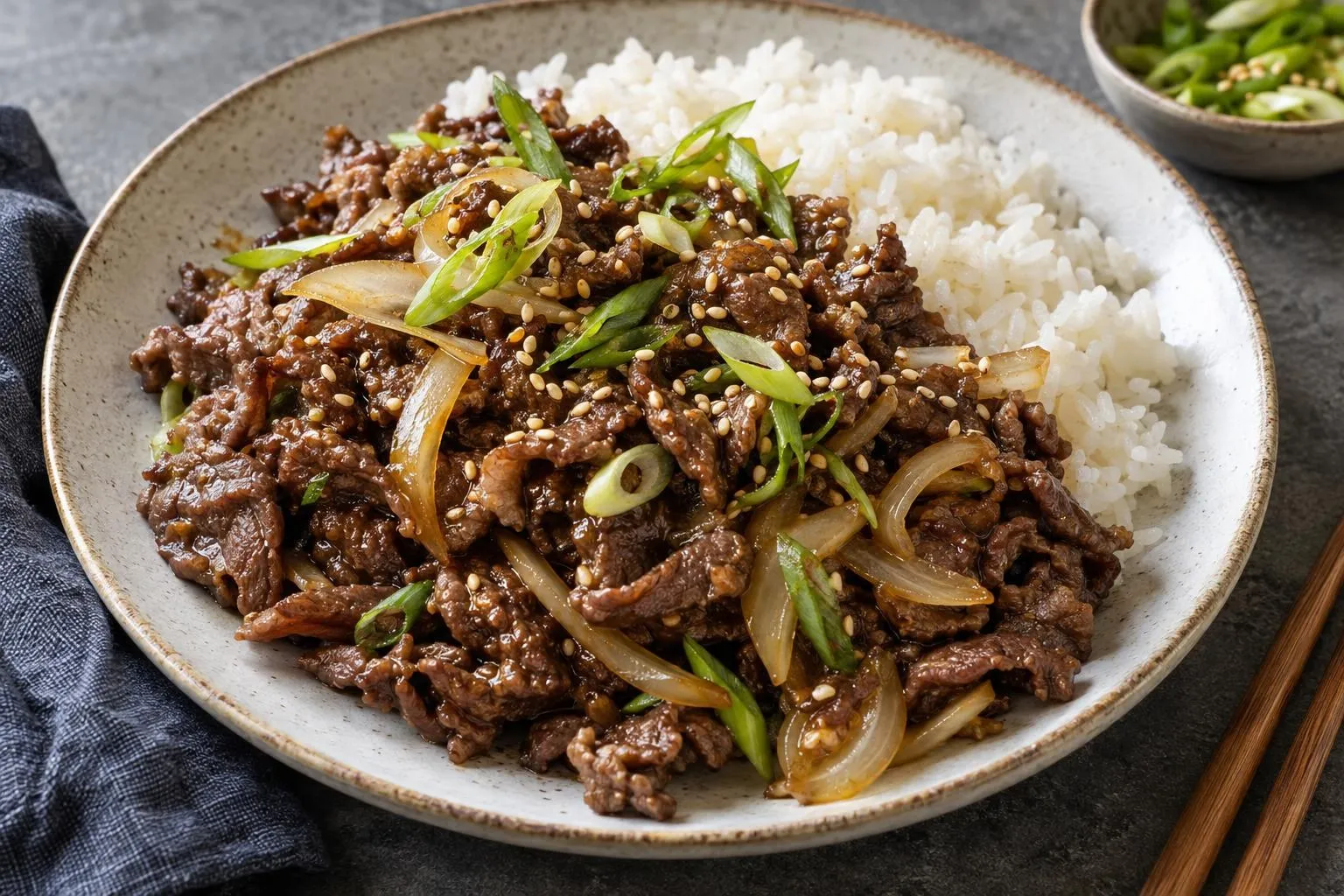
Beef bulgogi with pear and sesame
◷ 86 minmedium
Thinly sliced beef marinated with pear, soy and sesame, then seared in eight small batches for tender folds and browned edges. Served with softened onion, spring onions, sesame seeds and steamed rice.
Oct 16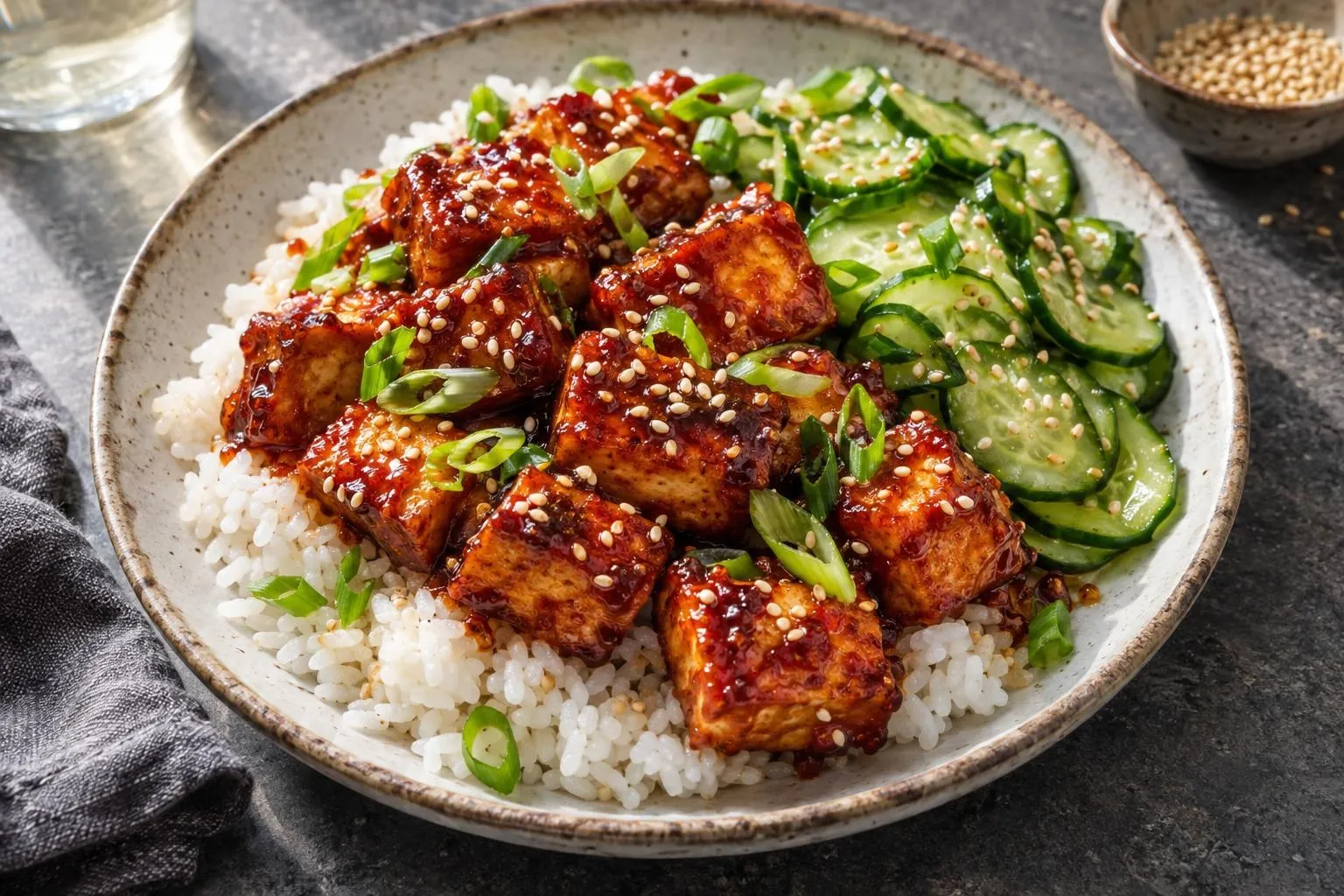
Gochujang glazed tofu with sesame cucumber
◷ 47 mineasy
Golden, cornflour-coated tofu gets a thin, sticky gochujang glaze, balanced by cool sesame cucumber and plain short-grain rice. Glaze just before serving to preserve the crisp edges.
Oct 13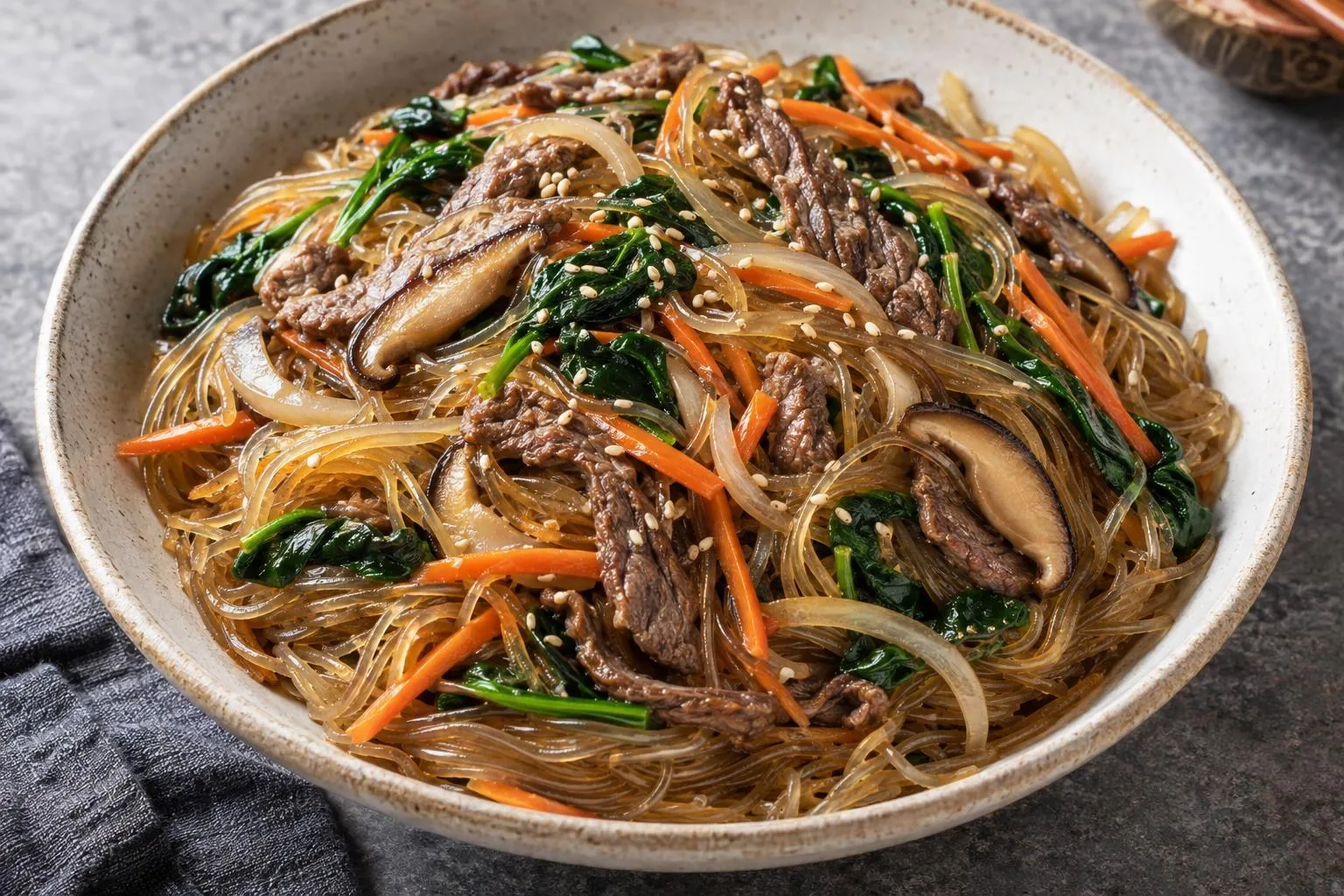
Japchae with Beef and Shiitake Mushrooms
◷ 56 minmedium
Springy sweet potato glass noodles, beef and separately cooked vegetables in a lightly sweet soy–sesame coating. Allow about an hour; the exact timing depends on the noodle packet instructions.
Oct 8