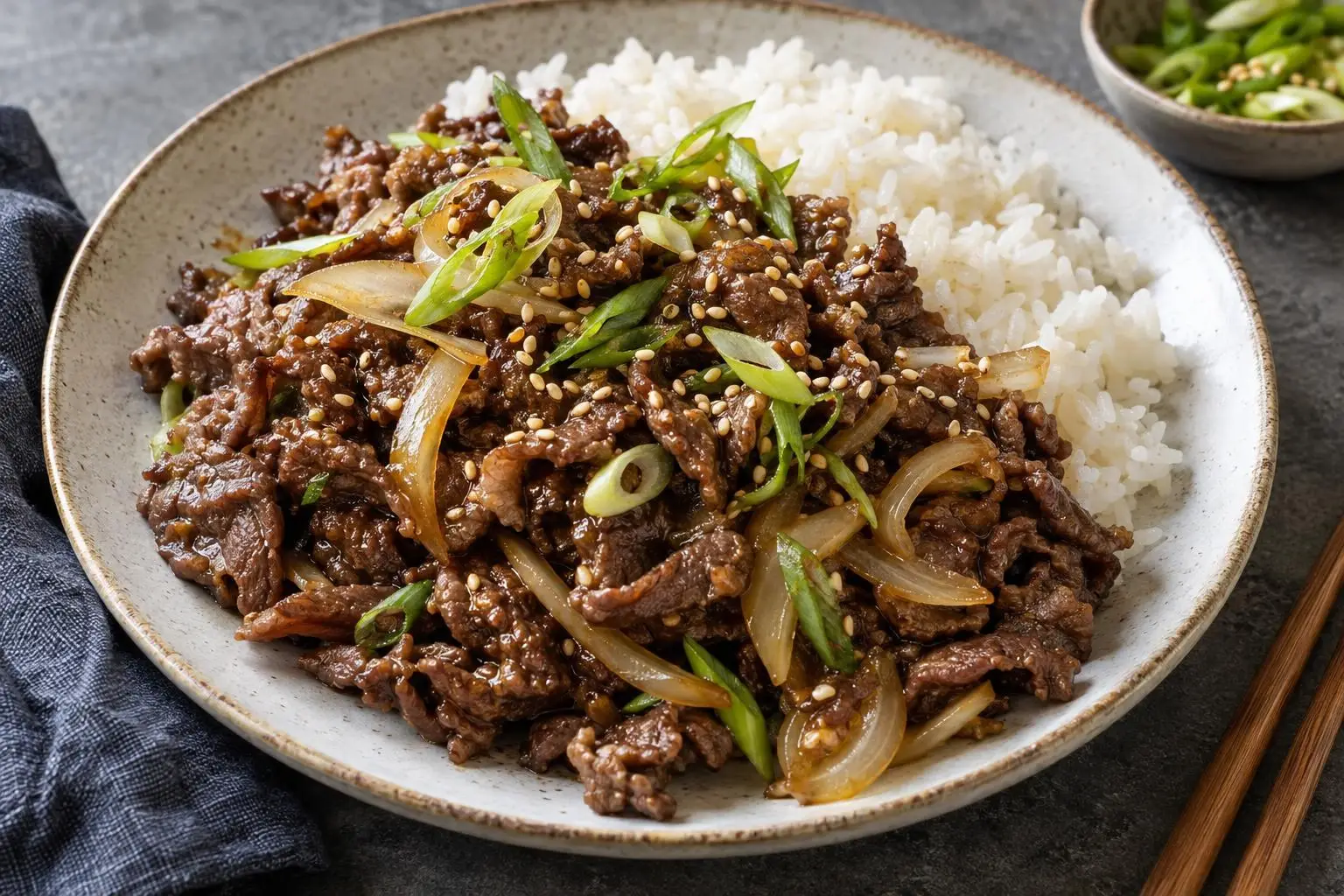
Beef bulgogi with pear and sesame
Thinly sliced beef marinated with pear, soy and sesame, then seared in eight small batches for tender folds and browned edges. Served with softened onion, spring onions, sesame seeds and steamed rice.
Advert
Let’s get cooking.
Cook mode
Scale servings, tick off ingredients, and run step timers without losing your place.
Servings
Originally developed for 4 servings.
Ingredient checklist
Method
- No timer needed
Slice the chilled beef across the grain, 2–3 mm thick, cutting long slices into manageable lengths. Separate any folded slices. Clean the knife, board and work surface and wash your hands before preparing the other ingredients; keep raw meat away from ready-to-eat garnishes.
- 30:00
Finely grate the pear and garlic. Mix with the pear juice, soy sauce, sugar, toasted sesame oil and pepper until the sugar dissolves. Toss thoroughly with the beef, separating the slices. Cover and refrigerate for at least 30 minutes while preparing the vegetables and rice. Keep the total marinating time under 2 hours.
- 12:00
While the beef marinates, slice the onion about 3 mm thick and finely slice the spring onions; keep them separate. Rinse and thoroughly drain the rice. Put it in the saucepan with 450 ml water, or the quantity specified by its packet. Bring to the boil, cover tightly and cook on the lowest heat for about 12 minutes, following the packet if different. Remove from the heat and rest, covered, for 10 minutes. The grains should be tender with no free water. Fluff after resting, then cover again to keep warm while frying the beef.
- No timer needed
While the rice rests, heat the frying pan over medium-high heat for about 2 minutes. Add 5 ml neutral oil and the onion. Cook for about 6 minutes, stirring, until softened with a few golden edges. Transfer to a clean heatproof bowl.
- No timer needed
Once the beef has marinated for at least 30 minutes, tip it into a colander over a bowl. Drain for 1–2 minutes without squeezing, retaining the coating on the meat. Meanwhile, reheat the empty pan over high heat for about 1 minute, until hot but not smoking heavily. Discard the pooled raw marinade, clear away the draining bowl and wash your hands. Keep raw-beef utensils separate from those used to remove cooked meat.
- 01:00
Cook the beef in eight batches, each one-eighth of the drained meat, equivalent to 75 g of the original raw beef. For each batch, add 2.5 ml neutral oil (½ teaspoon), then spread the slices flat with visible gaps and no overlap. A 24 cm flat pan base should accommodate this quantity; if yours does not, use smaller batches and allow extra time. Leave undisturbed for 45–60 seconds, then turn and stir-fry for another 1–2 minutes, separating folds. Allow about 3 minutes per batch including loading and transfer. Cook through, with browned patches and no raw folds; check a thicker piece reaches 75°C for 30 seconds where a fine probe can be inserted. Browning alone is not a safety check.
Transfer each cooked batch to the clean onion bowl and loosely cover. Allow about 30 seconds for the pan to regain heat between batches. Use the remaining 20 ml oil across all eight batches. If the coating blackens in under 30 seconds, lower the heat slightly. If residue burns, take the pan off the heat, carefully wipe it out with kitchen paper held in tongs, then reheat before continuing; this adds time.
- 02:00
Return all the cooked beef, onion and their cooked juices to the pan over medium-high heat. Toss for about 2 minutes, checking that everything is steaming hot throughout; continue briefly if needed. Keep the coating light rather than simmering the beef in sauce. Divide the rice and bulgogi between four plates, scatter with the spring onions and toasted sesame seeds, and serve immediately.
Chef tips
- Judge capacity by the flat pan base, not its rim diameter. Keep the slices flat with visible gaps; a smaller base needs more than eight batches.
- If liquid pools, do not add more beef. Let the liquid evaporate, then reduce the next batch size.
- For tenderness, slice across the grain and avoid extending the marinade overnight or simmering the cooked beef.
- If the rice is firm after absorbing its water, add 30 ml boiling water, cover and cook on low for another 3–5 minutes, then rest again.
- The schedule uses eight beef batches and a 12-minute rice simmer. Smaller batches, residue clean-up or different rice packet instructions will extend it.
Equipment check
- Sharp knife and raw-meat chopping board
- Fine grater
- Mixing bowl and cover
- Sieve for rice
- 1.5–2 litre saucepan with a close-fitting lid
- Heavy 28–30 cm frying pan with a flat cooking base at least 24 cm across
- Colander and bowl for draining beef
- Measuring spoons, including a ½ teaspoon measure
- Separate utensils for raw beef and cooked food
- Clean heatproof bowl and loose cover for cooked beef and onion
- Fine-tip food thermometer
Tags
Behind the dish.
Overview
The aim is tender, savoury-sweet beef with browned edges and a light coating rather than pooled sauce. Brief pear marination, draining and genuinely small batches achieve this. A frying pan with a 24 cm flat base needs eight 75 g batches for this quantity of thin beef; allow time for the repeated frying and heat recovery.
Ingredient notes
Use chilled whole-cut sirloin or rib-eye, sliced across the grain, rather than stewing beef, mechanically tenderised steak or thick stir-fry strips. Asian pear or firm, ripe Conference pear works well. Avoid kiwi or pineapple substitutions: their stronger tenderising action can make the beef mushy.
Use ordinary light soy sauce, not dark soy sauce; “light” does not necessarily mean reduced-salt. Soy sauce contains soya and usually wheat; sesame oil and seeds contain sesame. For a gluten-free version, use explicitly gluten-free tamari and check all packaged ingredients. Tamari varies in saltiness.
Serving & storage
Serve with the included unseasoned rice. Cool leftover beef and onion promptly in shallow portions and refrigerate within 2 hours at 5°C or colder. Use within 48 hours or freeze sooner. Thaw in the fridge and reheat only once, until steaming hot throughout.
Cool leftover rice separately as quickly as possible, ideally within 1 hour, rather than leaving it in the covered saucepan. Refrigerate at 5°C or colder, use within 24 hours and reheat only once until steaming hot throughout.
Related recipes
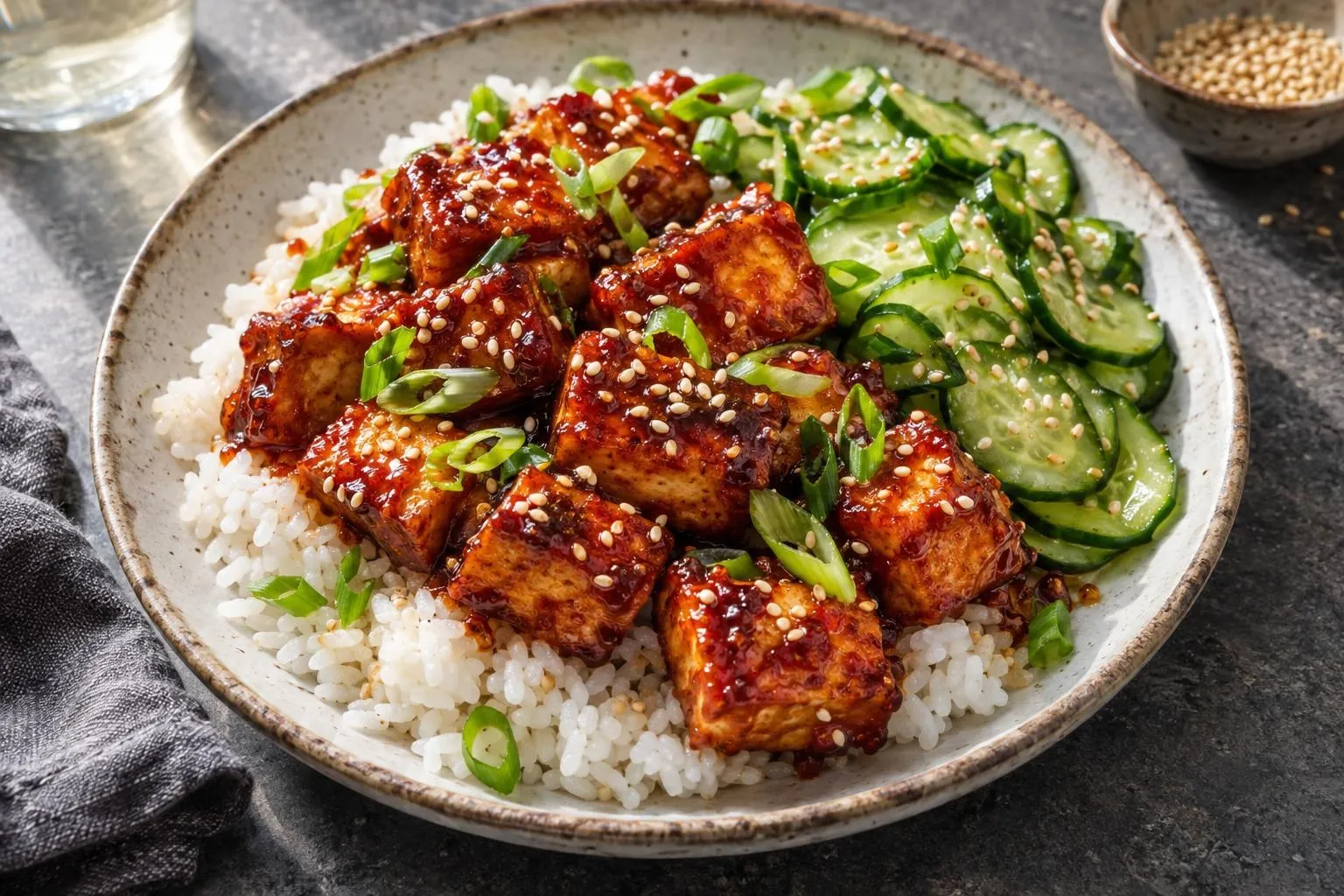
Gochujang glazed tofu with sesame cucumber
◷ 47 mineasy
Golden, cornflour-coated tofu gets a thin, sticky gochujang glaze, balanced by cool sesame cucumber and plain short-grain rice. Glaze just before serving to preserve the crisp edges.
Oct 13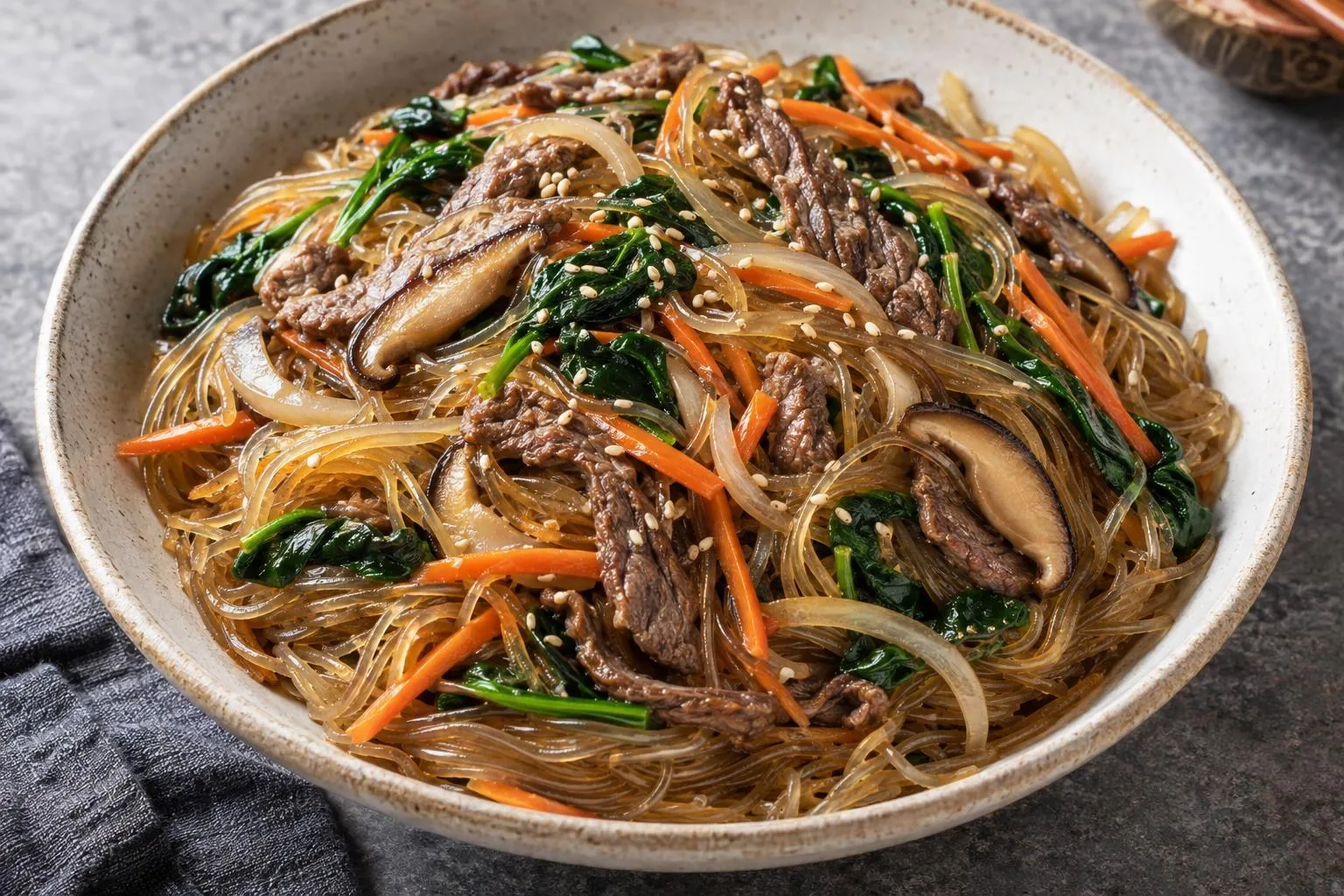
Japchae with Beef and Shiitake Mushrooms
◷ 56 minmedium
Springy sweet potato glass noodles, beef and separately cooked vegetables in a lightly sweet soy–sesame coating. Allow about an hour; the exact timing depends on the noodle packet instructions.
Oct 8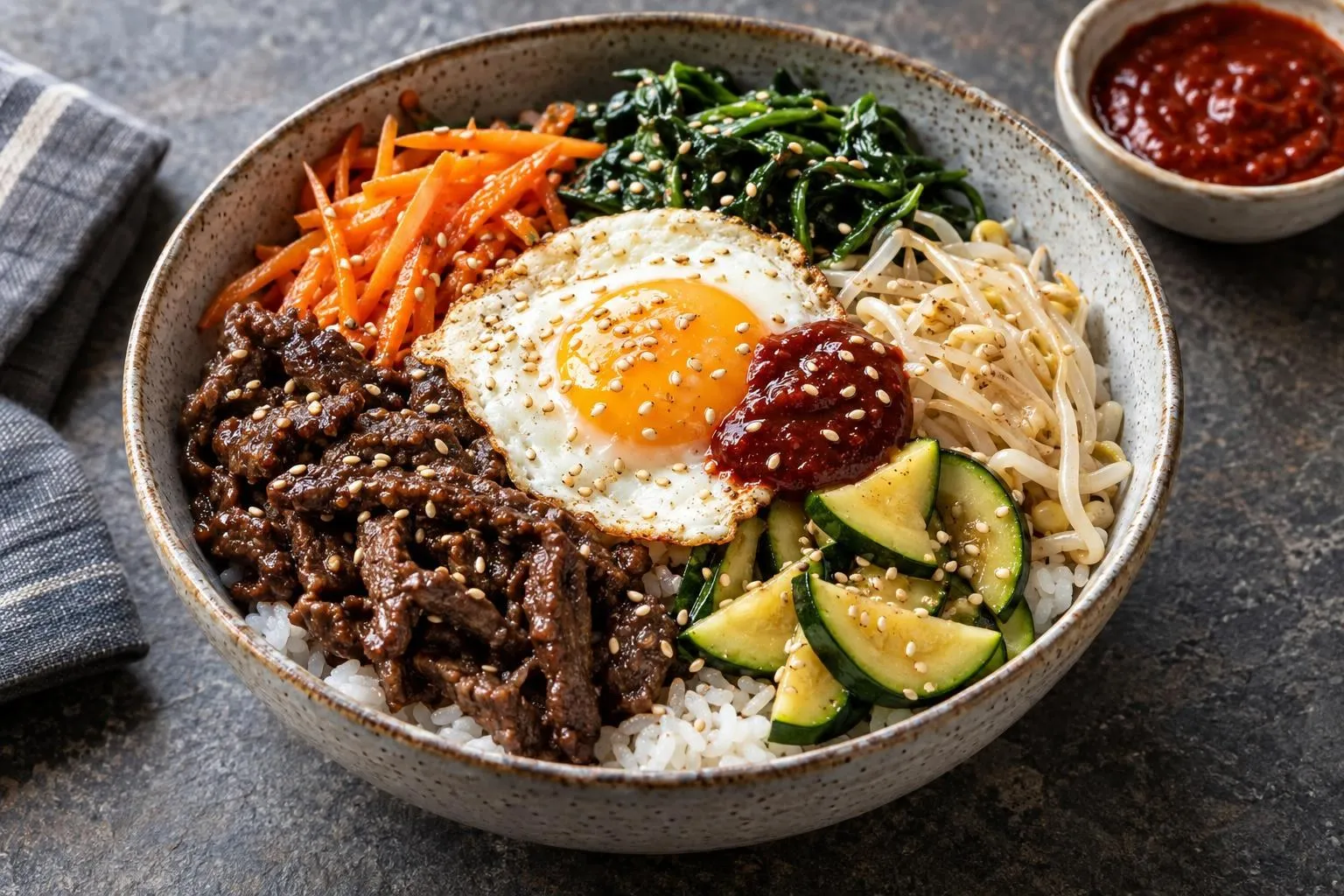
Bibimbap with Gochujang Sauce
◷ 60 minmedium
Korean rice bowls with sesame-seasoned beef, separately cooked vegetables and a fried egg, ready in about 1 hour. Mix at the table with sweet-spicy gochujang sauce. Longer packet cooking instructions or additional beef batches will extend the time.
Oct 4