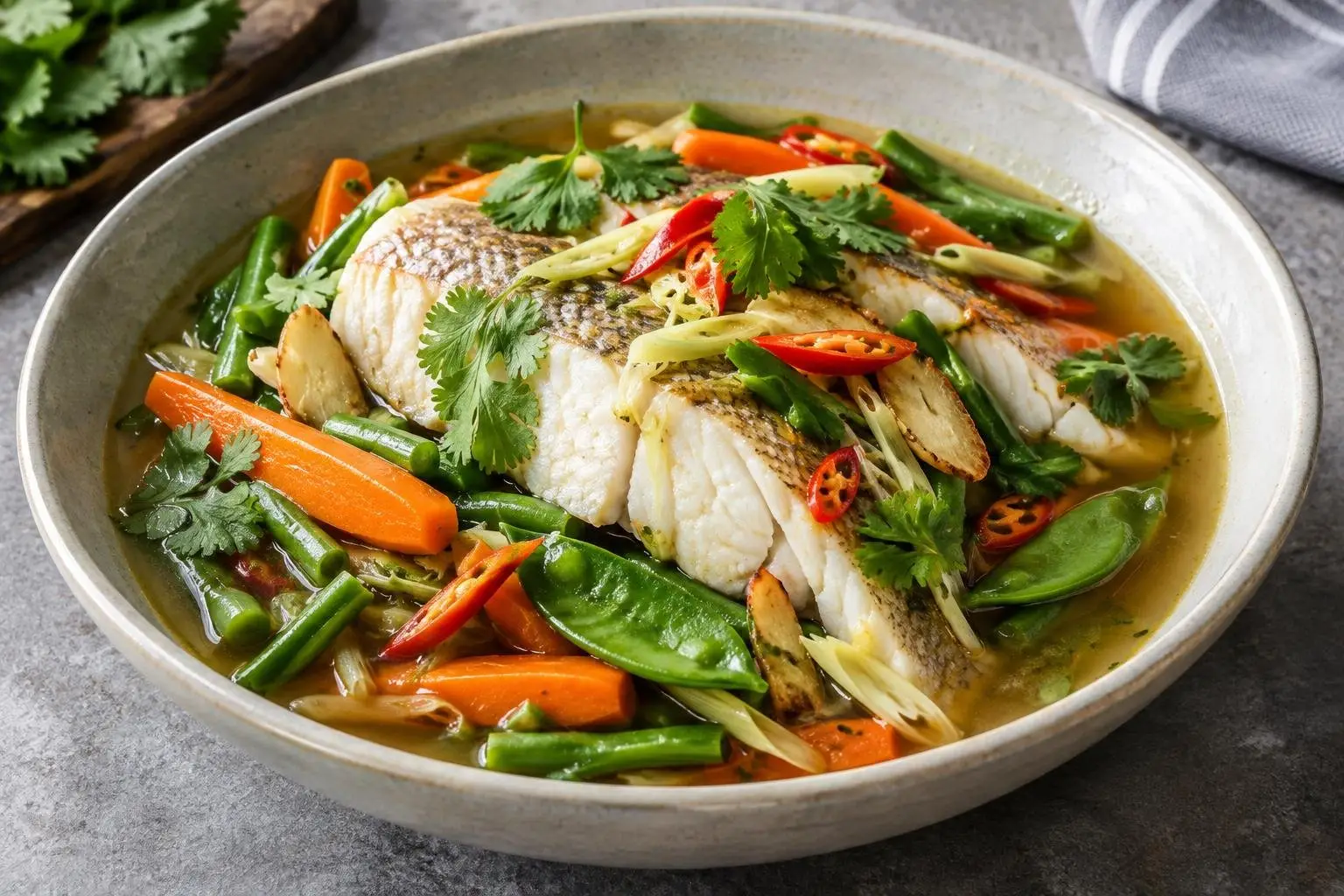
Indonesian Steamed Fish With Tamarind and Seasonal Vegetables
A delicate and aromatic steamed fish dish inspired by traditional Indonesian flavors, featuring tamarind-infused broth and a vibrant medley of seasonal vegetables. Slow-steamed to preserve the natural flavors and nutrients, this recipe offers a healthy, flavorful weeknight meal that highlights the freshness of the season and authentic Indonesian culinary techniques.
Advert
Let’s get cooking.
Cook mode
Scale servings, tick off ingredients, and run step timers without losing your place.
Servings
Originally developed for 4 servings.
Ingredient checklist
Method
- No timer neededIn a mixing bowl, combine tamarind paste and water, stirring until the paste dissolves completely to form the tamarind broth.
- 02:00Heat the vegetable oil in a small pan over medium heat. Add sliced garlic, galangal, and lemongrass; sauté for 2 minutes until fragrant. Remove from heat and transfer aromatics to the tamarind broth.
- No timer neededAdd fish sauce, sugar, and lime juice to the tamarind broth; stir well to mix. Adjust seasoning with salt and pepper to taste.
- No timer neededArrange the fish fillets on a heatproof plate suitable for steaming. Scatter the sliced red chilies (if using) over the fish, then evenly distribute the baby carrots, green beans, and snap peas around the fish.
- No timer neededPour the tamarind broth and aromatic mixture gently over the fish and vegetables.
- 15:00Set up a large wok or steamer pot with some boiling water. Place the plate with fish and vegetables into the steamer, cover with a lid, and steam over medium heat for 15 minutes, or until the fish is opaque and flakes easily with a fork.
- No timer neededRemove the steamed fish and vegetables carefully from the steamer. Garnish with chopped fresh cilantro leaves before serving.
Chef tips
- Use fresh, firm white fish for best texture and flavor.
- If you don’t have a steamer, you can create a double boiler setup using a large pot with a lid and a heatproof plate or colander.
- Do not overcook the fish; steaming time may vary slightly depending on fish thickness.
- Adjust chili quantity or omit according to your heat preference.
Equipment check
- steaming tray or large heatproof plate
- large wok or steamer pot with lid
- mixing bowl
- knife
- cutting board
- measuring spoons
- measuring jug
Nutrition per serving
- Calories230
- Protein30 g
- Carbs10 g
- Fat5 g
Tags
Behind the dish.
Overview
This Indonesian Steamed Fish with Tamarind and Seasonal Vegetables is a fragrant and nourishing dish that combines the subtle tartness of tamarind with a medley of fresh, seasonal vegetables. The fish is gently steamed to retain moisture and delicate flavors, offering a healthy and authentic introduction to Indonesian coastal cuisine.
Why you’ll love it
Its slow-steamed preparation keeps the fish tender and juicy while infusing it with the tangy, aromatic tamarind broth. The use of seasonal vegetables adds vibrant color and nutrients, making it a balanced one-pot meal perfect for a wholesome weeknight dinner. Plus, the recipe requires minimal fuss and equipment.
Ingredient notes
Tamarind paste provides the key sour note and is readily available in Asian markets or well-stocked grocery stores. Choose firm white fish fillets such as snapper, cod, or sea bass for the best results. Seasonal vegetables like baby carrots, green beans, and snap peas maintain a slight crunch after steaming and complement the flavors well.
Serving & storage
Serve the steamed fish immediately with steamed jasmine rice or light noodles to soak up the flavorful broth. Leftovers can be stored in an airtight container in the refrigerator for up to 2 days; reheat gently to avoid drying out the fish. Ensure fish is cooked to an internal temperature of 63°C (145°F) for food safety.
Related recipes

Nasi goreng with a fried egg
◷ 30 mineasy
Chilled rice is fried with shallots, garlic, chilli, shrimp paste and kecap manis until savoury and lightly caramelised, then topped with a crisp-edged fried egg and served with cucumber.
Oct 17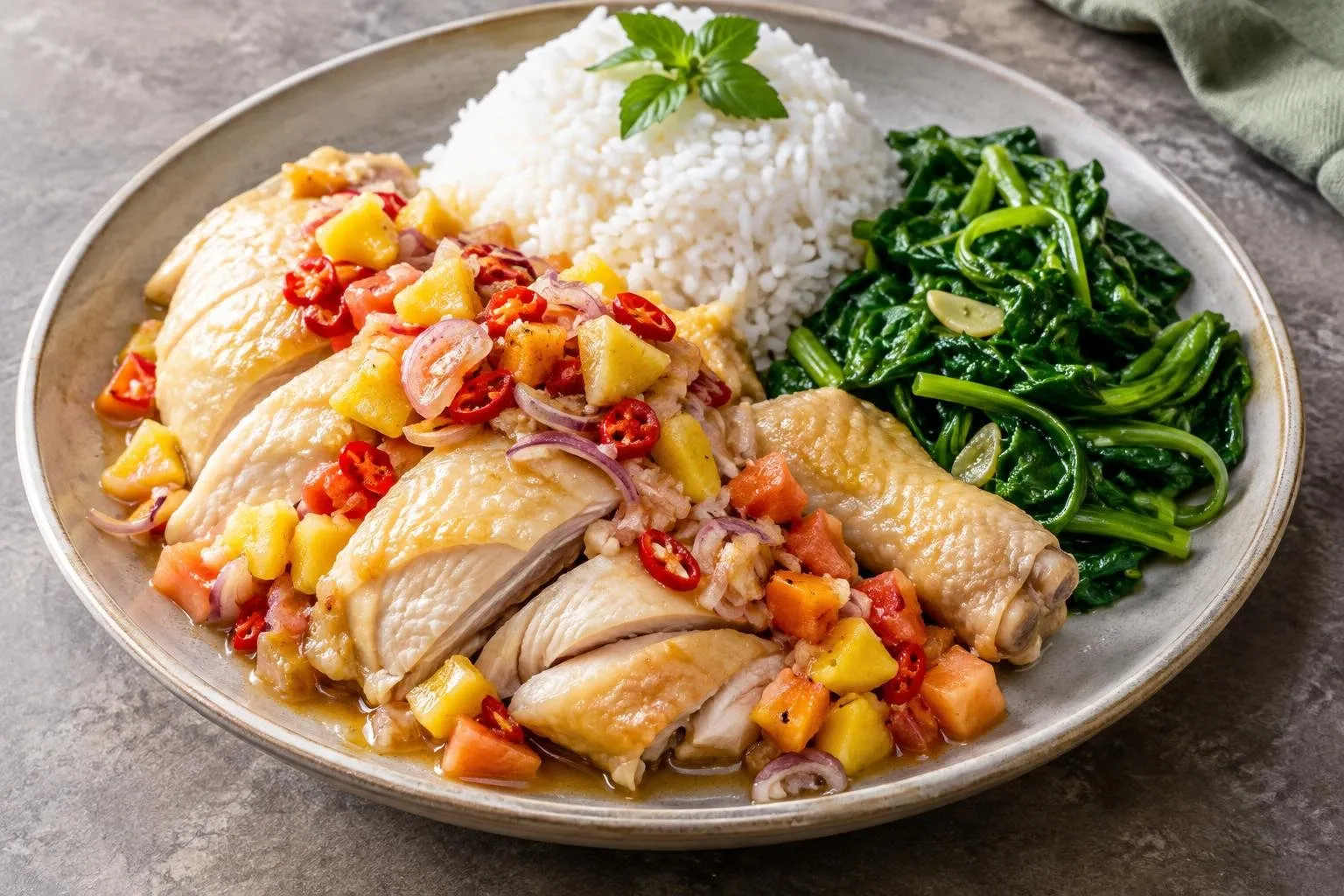
Indonesian Poached Chicken with Tropical Fruit Sambal
◷ 50 minmedium
A vibrant Indonesian dish featuring tender poached chicken served with a fresh sambal made from seasonal tropical fruits, balancing sweet and spicy flavors. Accompanied by steamed jasmine rice and lightly sautéed greens, this recipe highlights traditional techniques and seasonal produce for an easy weeknight meal.
Feb 1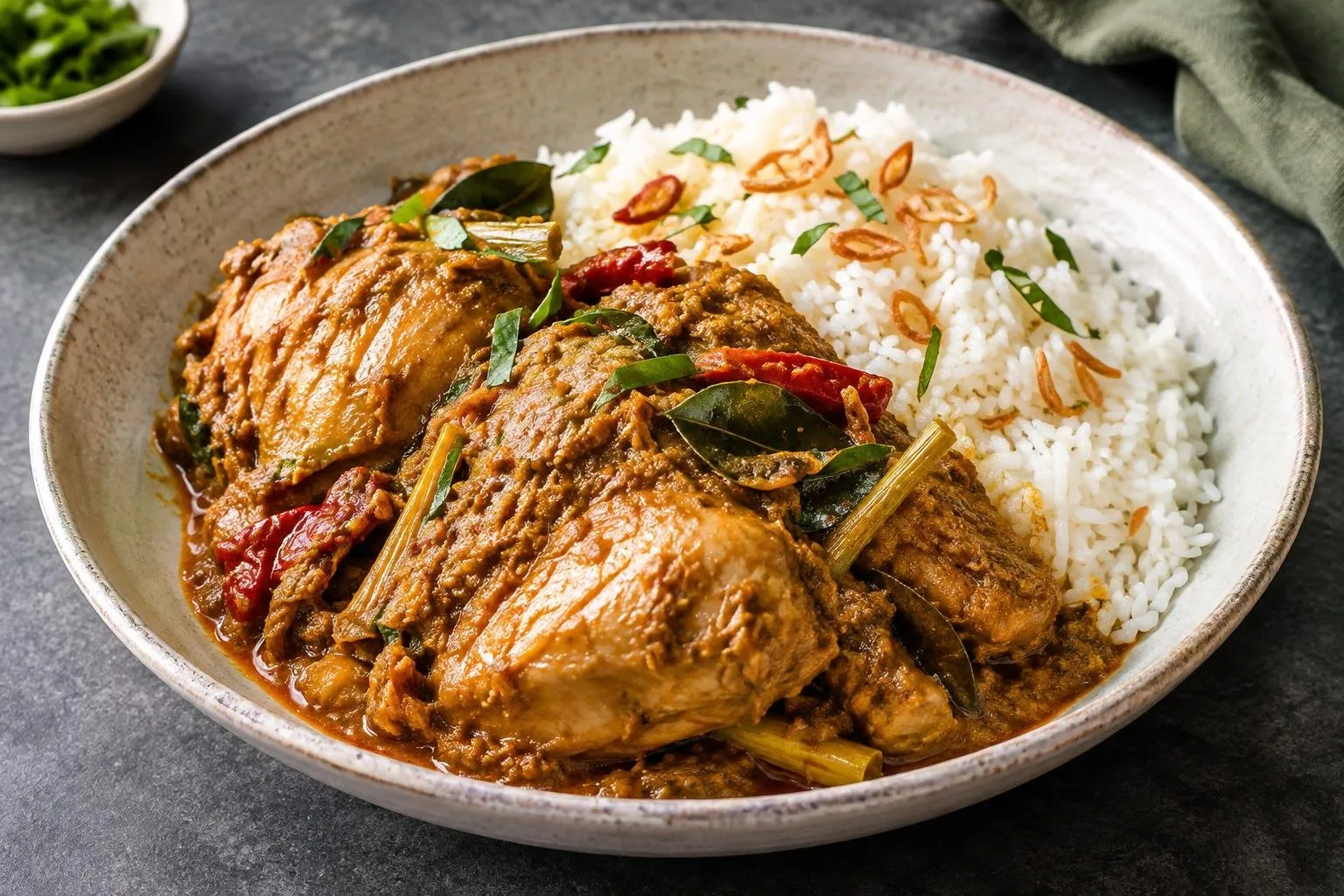
Indonesian Pressure-Cooked Chicken Rendang with Coconut Rice
◷ 60 minmedium
A fragrant and tender pressure-cooked chicken rendang featuring seasonal Indonesian spices and slow-simmered coconut rice. This dish highlights traditional Indonesian flavors using an accessible pressure cooking technique for a weeknight-friendly meal.
Jan 30