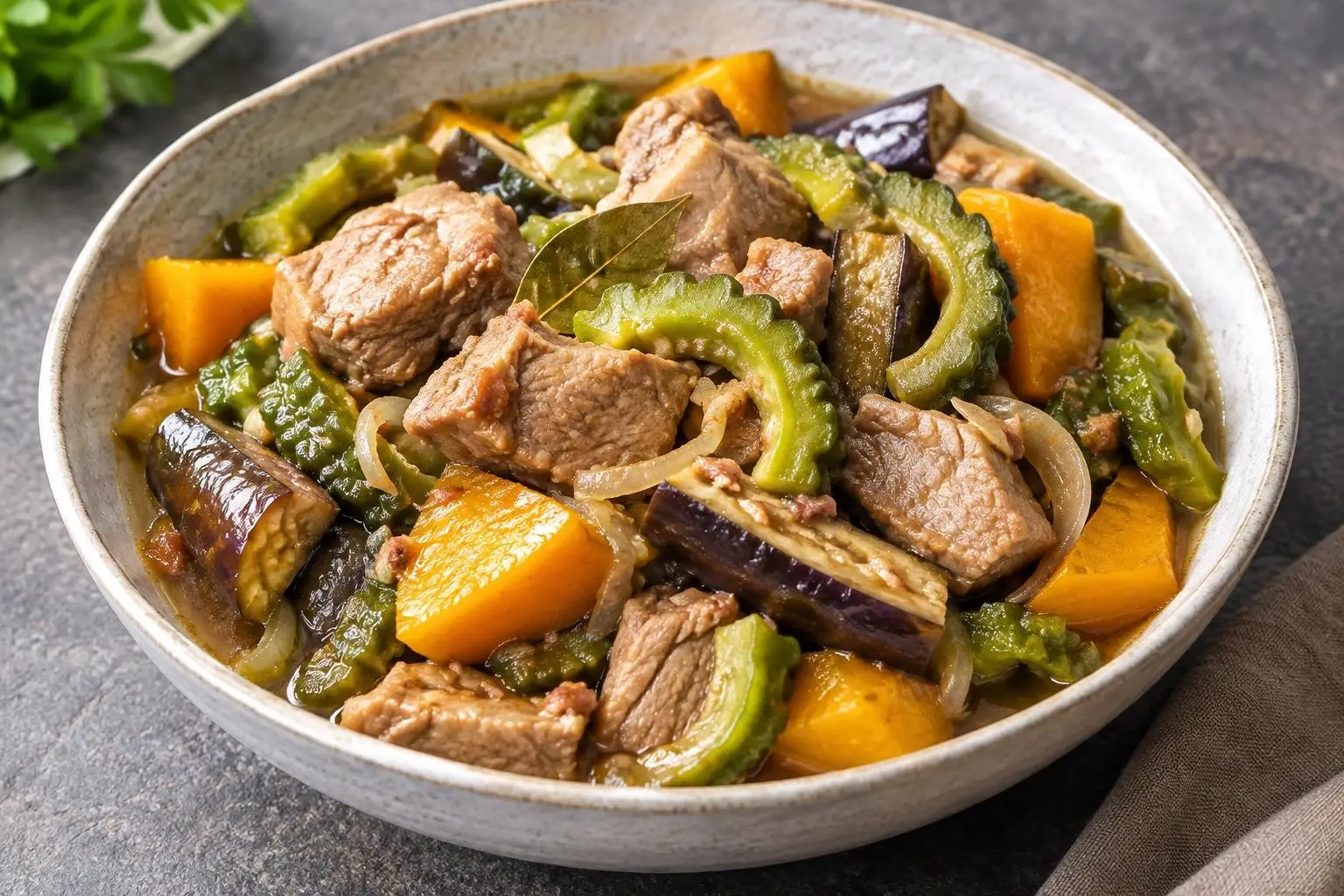
Pinakbet Stewed Pork with Seasonal Vegetables
A hearty Filipino stew featuring tender poached pork simmered with a medley of seasonal vegetables including eggplant, bitter melon, and squash, flavored with traditional bagoong and aromatic spices. This comforting dish embraces authentic flavors and a classic poaching technique to highlight fresh, seasonal produce.
Advert
Let’s get cooking.
Cook mode
Scale servings, tick off ingredients, and run step timers without losing your place.
Servings
Originally developed for 4 servings.
Ingredient checklist
Method
- 03:00Heat vegetable oil in a large pot over medium heat. Add garlic, onion, and ginger; sauté until onions turn translucent, about 3 minutes.
- 05:00Add pork chunks and bay leaves to the pot. Stir and cook until the pork is lightly browned on all sides, about 5 minutes.
- 40:00Pour in water or pork broth to cover the pork. Bring to a boil, then immediately reduce heat to low, cover, and poach gently until pork is tender, about 40 minutes.
- 05:00Add bagoong alamang to the pot and stir to dissolve into the broth. Simmer uncovered for 5 minutes to let flavors combine.
- 15:00Add eggplant, bitter melon, and squash. Gently stir to combine. Cover and simmer for another 10-15 minutes until vegetables are tender but not mushy.
- No timer neededTaste the broth and season with salt as needed. Remove bay leaves. Serve hot with steamed white rice.
Chef tips
- Trim excess fat from the pork shoulder to prevent greasy broth.
- Do not overcook the vegetables to keep a pleasant texture and color.
- Use fresh bagoong for the best authentic flavor; adjust quantity according to saltiness.
- Poaching at a low simmer keeps pork juicy and tender.
- Always store leftovers in an airtight container and reheat until steaming hot.
Equipment check
- large pot or Dutch oven
- knife
- cutting board
- measuring spoons
- stove
Nutrition per serving
- Calories350
- Protein30 g
- Carbs15 g
- Fat18 g
Tags
Behind the dish.
Overview
Pinakbet is a traditional Filipino stew rich with the flavors of seasonal vegetables cooked together with poached pork and fermented shrimp paste called bagoong. This dish uses a gentle poaching method to keep the pork tender and juicy, while the medley of eggplant, bitter melon, and squash provide natural sweetness and bitterness that balance the savory depth. The slow simmer infuses all ingredients with the iconic umami of bagoong, resulting in a comforting and authentic experience.
Why you’ll love it
This Pinakbet recipe brings together the perfect harmony of textures and tastes: the softness of squash, crisp-tender bite of bitter melon, and the earthiness of eggplant. Poaching the pork first ensures it remains moist and tender. The traditional bagoong adds a uniquely Filipino salty, savory depth without overpowering the fresh vegetables. It's a wholesome one-pot meal that highlights seasonal produce in an exciting way.
Ingredient notes
- Pork shoulder: Use boneless pork shoulder, trimmed and cut into chunks. This cut is perfect for slow poaching due to its fat content and tenderness.
- Bagoong (fermented shrimp paste): Available at Asian markets, this adds umami and saltiness typical of Filipino cuisine.
- Vegetables: Choose fresh seasonal produce such as small eggplants, thinly sliced bitter melon (ampalaya), and peeled squash (kabocha or butternut) cut into chunks.
- Spices: Garlic, onion, ginger, and fresh or dried bay leaves provide aromatic layering.
Serving & storage
Serve hot with steamed white rice for a satisfying meal. Pinakbet tastes even better the next day as flavors meld. Store leftovers in an airtight container in the refrigerator for up to 3 days. Reheat thoroughly before serving. This dish can also be frozen for up to 1 month; thaw overnight in the fridge and reheat gently.
Related recipes
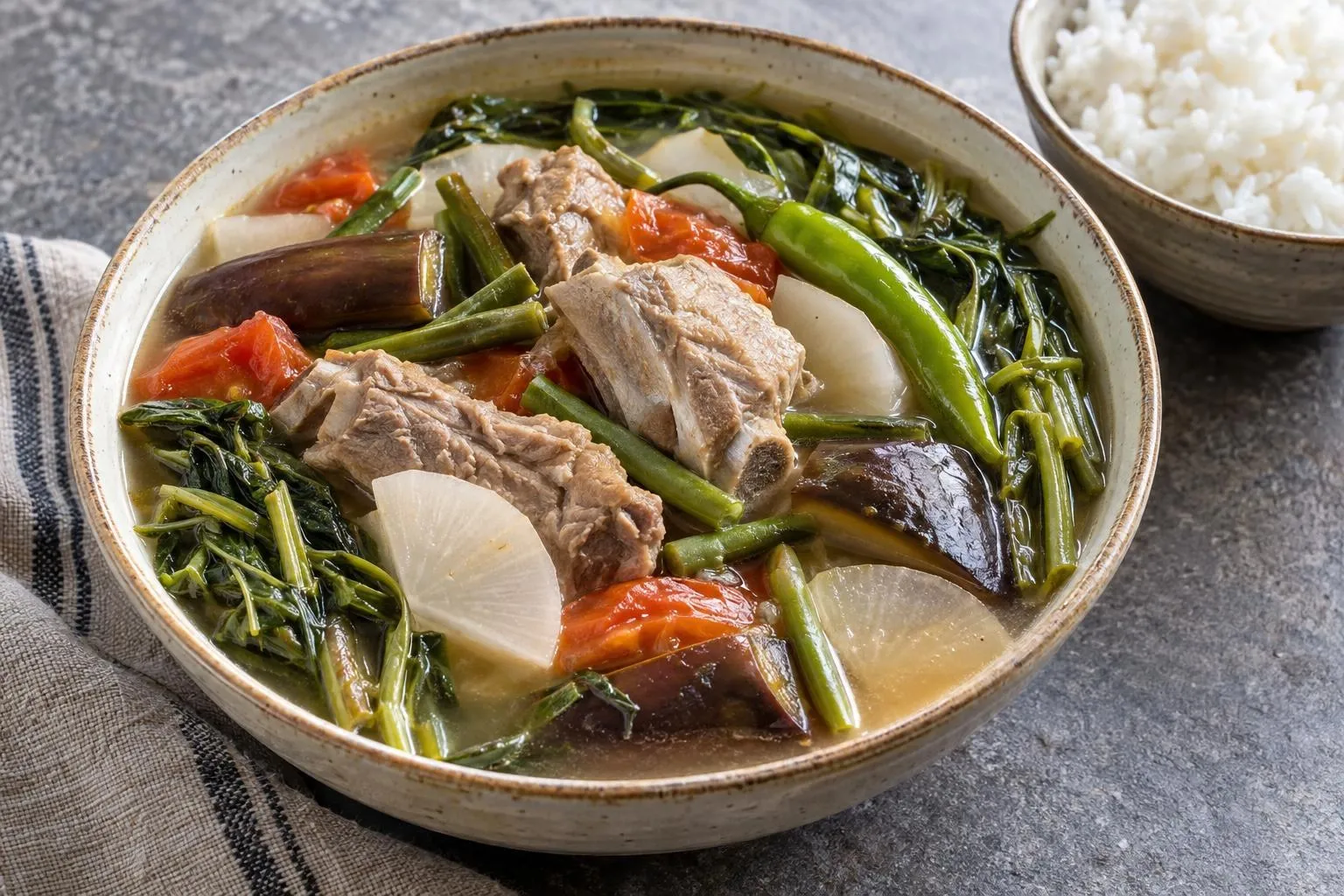
Sinigang na baboy with tamarind broth
◷ 127 mineasy
Tender pork ribs in a distinctly sour, savoury Filipino broth with tomatoes, radish, aubergine, long beans and just-wilted water spinach. Gentle simmering keeps the broth light and the vegetables intact.
Oct 13
Slow-Braised Filipino Pork Asado Dumplings
◷ 165 minmedium
These Filipino-inspired dumplings feature slow-braised pork asado, infused with traditional Asian spices and served in a delicate wrapper. Perfect for a comforting weeknight meal, they highlight seasonal vegetables and showcase the slow braising technique for tender, flavorful filling.
Feb 1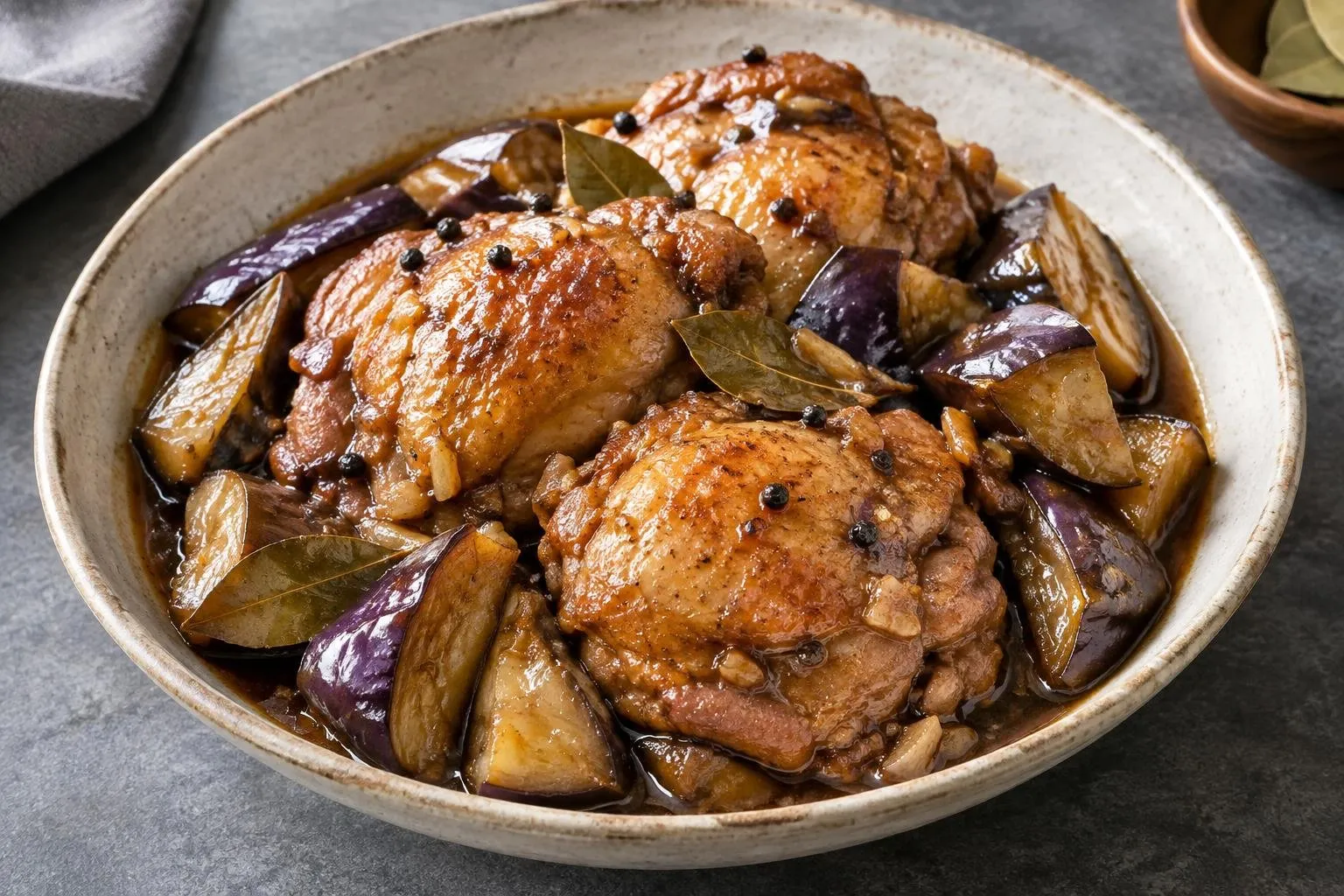
Chicken Adobo Braise with Seasonal Eggplant
◷ 75 minmedium
A traditional Filipino chicken adobo prepared as a braise, featuring seasonal eggplant and a savory blend of soy sauce, vinegar, garlic, and bay leaves. This comforting dish highlights a gentle poaching start before slow braising to tenderize the chicken and infuse deep flavors.
Jan 29