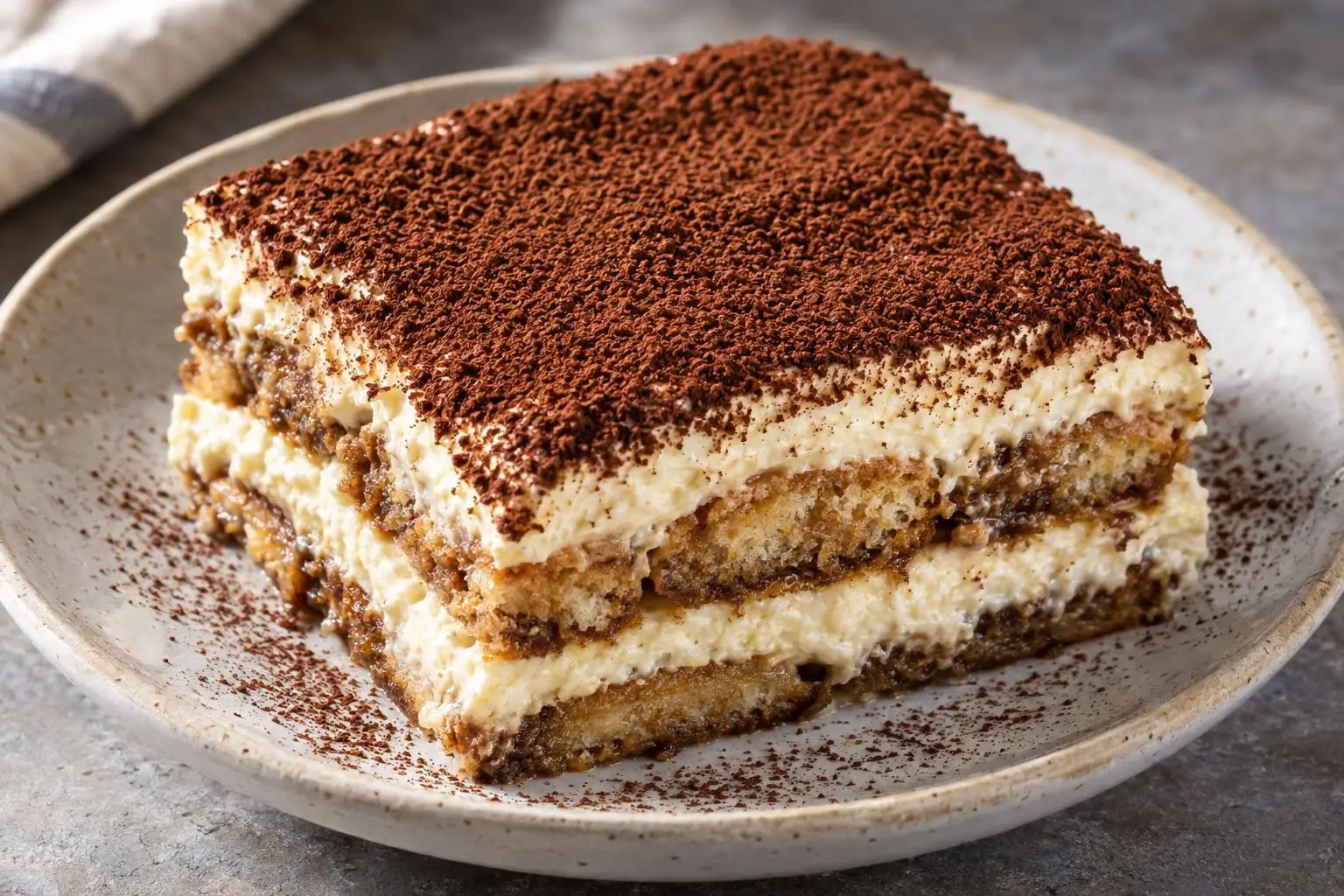
Tiramisu with Espresso-Dipped Ladyfingers
Two layers of briefly espresso-dipped savoiardi and airy mascarpone cream, finished with cocoa. Use pasteurised egg products suitable for uncooked dishes and chill for at least 6 hours for tender biscuits and softly set layers.
Advert
Let’s get cooking.
Cook mode
Scale servings, tick off ingredients, and run step timers without losing your place.
Servings
Originally developed for 9 servings.
Ingredient checklist
Method
- No timer needed
Clear space in the fridge for the dish. Take the mascarpone out to become pliable but remain cool, about 15 minutes. Prepare 300 ml strong espresso using your usual coffee equipment, then pour it into a shallow heatproof container set in an ice-water bath. Stir initially and leave to cool completely, allowing about 12 minutes; do not let bath water enter the coffee. While it cools, dry-fit the biscuits into two close-packed layers in the dish, trimming pieces to fill gaps. Remove them and keep the two approximately 125 g portions separate.
- No timer needed
Beat the 80 g pasteurised yolks with 60 g caster sugar for 3–5 minutes, until pale and thickened with the sugar largely dissolved. In the other bowl, stir the mascarpone briefly with a spatula to loosen it. Incorporate the yolk mixture in three additions, stirring just until smooth. Do not beat vigorously or continue once combined: overworking mascarpone can split it.
- No timer needed
Wash and thoroughly dry the emptied yolk bowl and beaters so they are grease-free. Whisk the pasteurised whites until foamy. Gradually add the remaining 40 g caster sugar, then continue to glossy medium-firm peaks: a lifted peak should stand with a slight bend, without becoming dry or clumpy.
- No timer needed
Fold one-third of the whites into the mascarpone mixture to loosen it. Fold in the rest in two additions using a broad spatula, stopping as soon as no white streaks remain. Keep the mixture airy rather than beating it smooth; you will use half for each layer.
- No timer needed
Check that the espresso is no warmer than room temperature, then divide it between two shallow bowls, 150 ml in each. Using the first biscuit portion and first bowl, briefly touch each biscuit face to the coffee, roughly half a second per side, and place it straight into the dish. Test the first one: it should be damp outside but still firm enough to lift intact. Shorten the dip if it softens rapidly. Spread half the mascarpone cream evenly over this layer.
- No timer needed
Repeat with the remaining biscuits and second bowl of espresso, then spread over the remaining cream. Discard unused dipping coffee; do not pour it into the dish. Cover without touching the cream and refrigerate immediately at 5°C or colder. If assembly is interrupted, refrigerate the cream rather than leaving it on the worktop.
- 360:00
Chill for at least 6 hours, preferably 8–12 hours overnight. Before serving, the cream should be softly set and the biscuits tender. If the centre still slumps heavily, leave it refrigerated longer; this dessert will not set as firmly as one made with gelatine.
- No timer needed
Immediately before serving, sift the 8 g cocoa evenly over the cold tiramisu. Cut into nine portions with a clean knife and lift with a broad server. Keep any unserved portions refrigerated.
Chef tips
- Coffee is dipping liquid, not a quantity the biscuits must absorb. Never add the remainder to the dessert.
- For very absorbent biscuits, touch each face to the coffee even more briefly. If the surface barely wets, lengthen subsequent dips slightly rather than soaking them.
- If whites refuse to whip, check that the product is whipping-suitable and the equipment is free of grease and yolk.
- Do not try to repair separated mascarpone by beating harder; a clearly split mixture may not produce reliable layers.
- For the neatest portions, chill overnight and serve directly from the fridge. Reserve the cocoa until serving so it stays dry and evenly coloured.
Equipment check
- Square dish approximately 20 × 20 cm internally and at least 6 cm deep, about 2.4 litres capacity
- Espresso machine or other suitable coffee-making equipment
- Shallow heatproof container and larger bowl for an ice-water bath
- Electric hand mixer
- Two mixing bowls of at least 2 litres
- Flexible spatula
- Two shallow dipping bowls
- Digital scales
- Fine sieve
- Cover or cling film
- Knife and broad serving spatula
Tags
Behind the dish.
Overview
This coffee-forward tiramisu balances bitter espresso with moderately sweet, airy mascarpone cream. Brief dipping keeps the biscuits intact; whipped pasteurised whites lighten the filling without cream or gelatine. Serve cold and expect softly set portions rather than rigid slices. No oven is needed.
Ingredient notes
Choose crisp savoiardi, also sold as ladyfingers or sponge fingers, not soft sponge cakes. Their absorbency varies: test the first biscuit and adjust the dipping time. Use full-fat mascarpone and discard any visible free liquid.
Both liquid egg products must be commercially pasteurised and explicitly suitable for uncooked use; the whites must also be suitable for whipping. Ordinary raw shell eggs are not a substitution in this method. If suitable products are unavailable, use a separately developed cooked-egg recipe instead.
Decaffeinated espresso works well. The dessert contains milk, egg and wheat/gluten; check biscuit and egg-product labels for additional allergens. Regular espresso adds caffeine.
Serving & storage
Dust with cocoa immediately before serving and lift portions with a broad server. Keep refrigerated at 5°C or colder until needed. Return leftovers promptly to the fridge in covered portions, within 2 hours, and consume within 48 hours of assembly—or sooner if an ingredient’s opened-storage instructions require it. The chilling period counts towards that limit. Freeze sooner if needed; thaw in the fridge and expect a less airy texture.
Related recipes
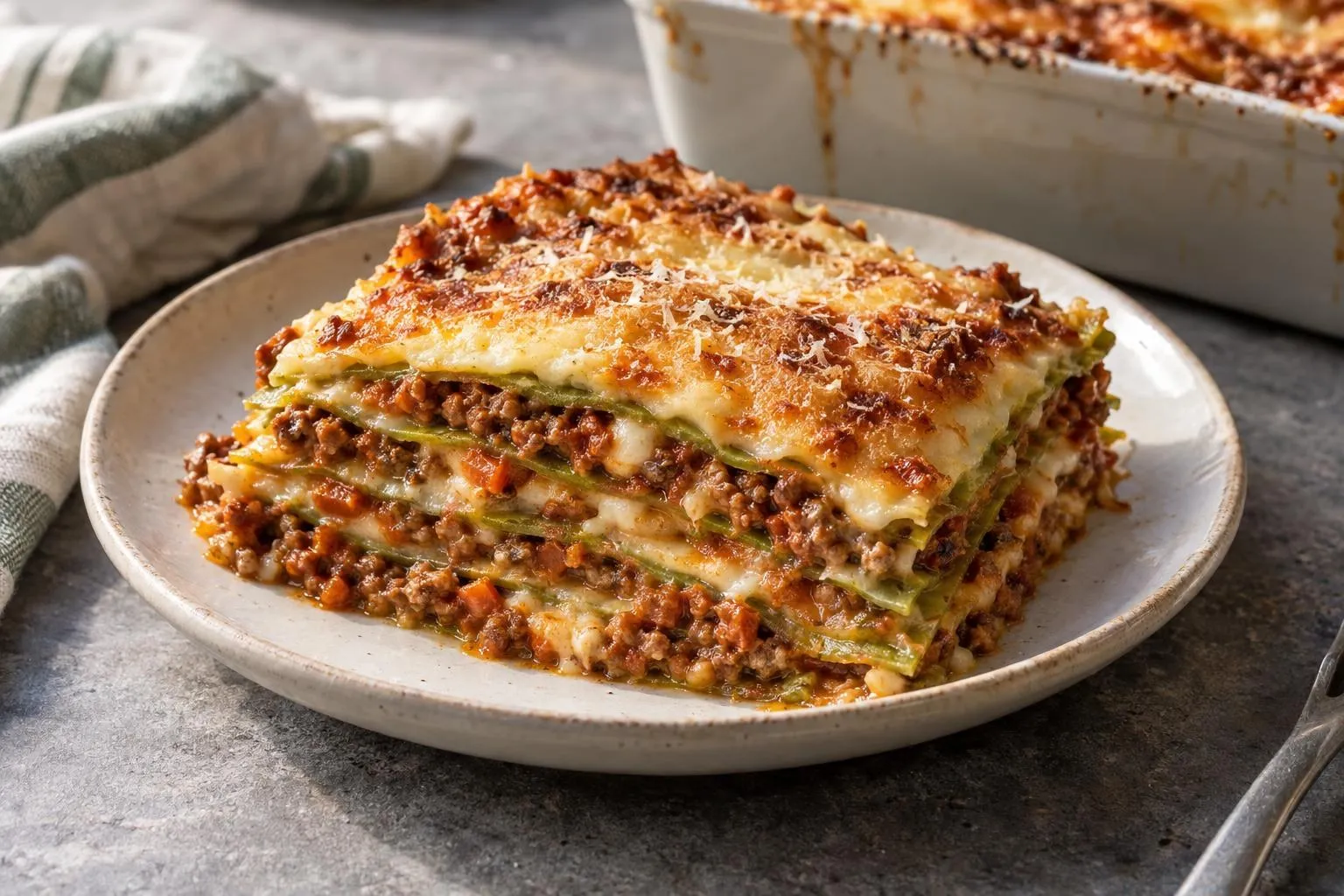
Lasagne alla bolognese with slow-simmered ragù
◷ 304 minmedium
Thin spinach egg-pasta sheets layered with beef and pork ragù, creamy béchamel and Parmigiano Reggiano. Allow about 5 hours 5 minutes, including resting and serving, and longer if the ragù needs further reduction or the lasagne needs more baking.
Oct 18
Crispy gnocchi with roasted peppers and burrata
◷ 44 mineasy
Golden pan-fried potato gnocchi sit over a light roasted-pepper sauce, with torn burrata and fresh basil. Keeping the sauce underneath preserves the crisp edges and soft potato centres.
Oct 15
Margherita pizza with no-cook tomato sauce
◷ 204 minmedium
Two homemade pizzas with a crisp, cooked-through base, an airy golden rim, bright tomato sauce, soft mozzarella and fresh basil. Bake them one at a time on a thoroughly preheated metal tray and serve each as it is ready.
Oct 14