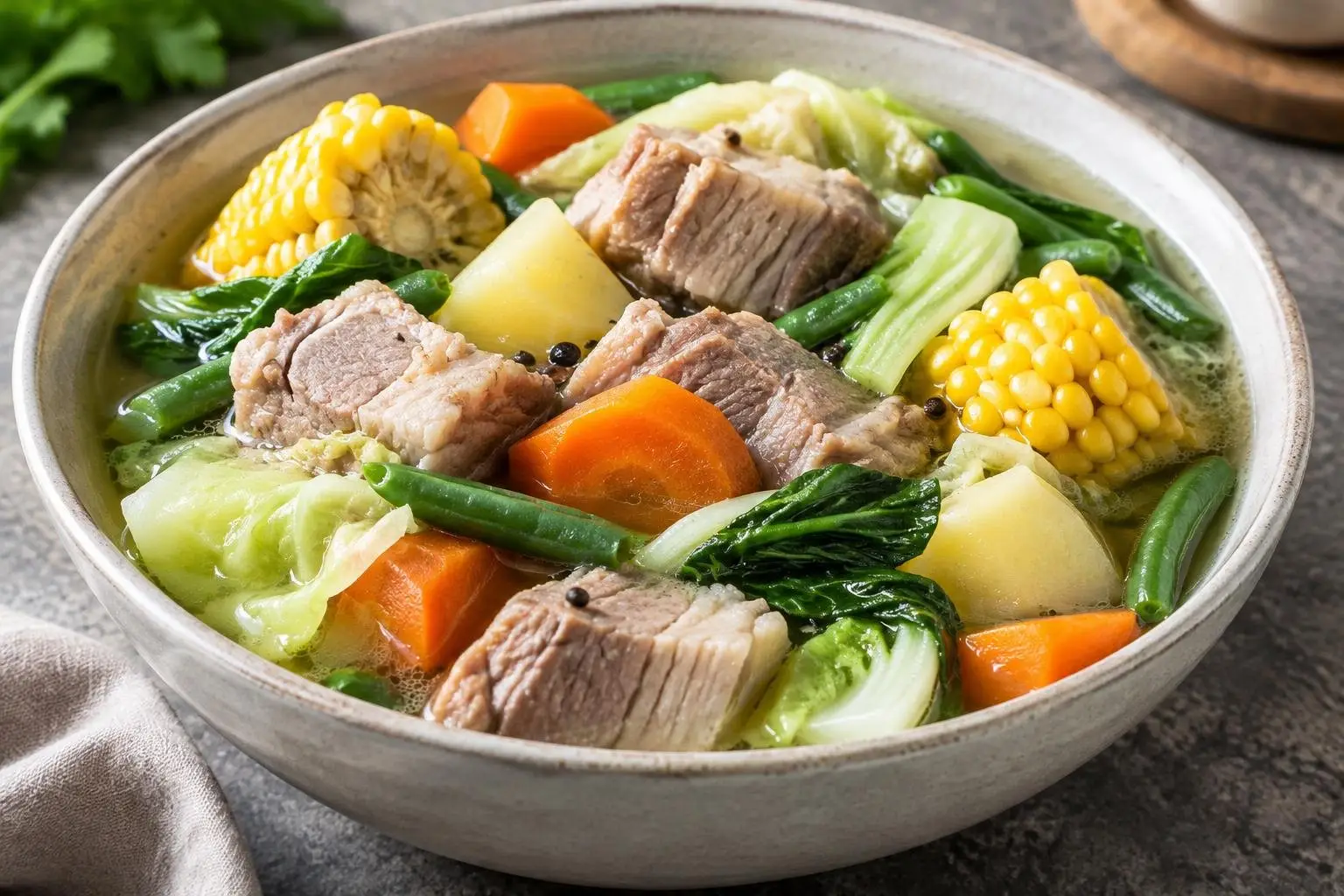
Filipino Pork Nilaga Stew With Seasonal Vegetables
A comforting Filipino stew featuring tender pork simmered in a clear broth with hearty seasonal root vegetables and greens, pressure-cooked to perfection for a quick and flavorful weeknight meal.
Advert
Let’s get cooking.
Cook mode
Scale servings, tick off ingredients, and run step timers without losing your place.
Servings
Originally developed for 6 servings.
Ingredient checklist
Method
- No timer neededPrepare the pork by cutting into large chunks. Peel and quarter the onion. Crush the garlic cloves.
- No timer neededIn the pressure cooker, combine pork, onion, garlic, water, and whole black peppercorns. Secure the lid.
- 30:00Bring to high pressure over medium-high heat. Once at pressure, reduce heat to maintain and cook for 30 minutes.
- 10:00Carefully release the pressure naturally for 10 minutes, then use quick release to let out remaining steam.
- 05:00Open the lid. Add potatoes, carrots, and corn. Secure lid again and cook at high pressure for 5 minutes.
- 02:00Release pressure quickly. Add cabbage, green beans, and bok choy or pechay. Secure lid once more and pressure-cook for 2 minutes.
- No timer neededPerform quick pressure release. Open lid and season with salt to taste. Stir gently.
- No timer neededServe hot with steamed white rice, and offer fish sauce or soy sauce and calamansi or lemon wedges on the side for extra flavor.
Chef tips
- Use fresh pork shoulder for best flavor and texture.
- Avoid overcooking leafy greens to maintain their vibrant color and nutrients.
- Always ensure natural pressure release for the first phase to allow meat to tenderize well.
- Adjust the salt at the end to prevent overly salty broth due to reductions.
- If you don't have a pressure cooker, simmer meat in a covered pot for 2–3 hours until tender, then proceed with vegetable additions.
Equipment check
- pressure cooker
- knife
- cutting board
- measuring spoons
- large ladle
- stove
Nutrition per serving
- Calories380
- Protein32 g
- Carbs20 g
- Fat18 g
Tags
Behind the dish.
Overview
Filipino Pork Nilaga is a beloved traditional stew known for its clear, flavorful broth and tender pork chunks. This recipe utilizes a pressure cooker to significantly reduce cooking time while preserving rich flavors. Seasonal root vegetables and fresh greens add heartiness and nutrition, making it a wholesome and satisfying meal perfect for any day of the week.
Why you’ll love it
- Quick and easy thanks to pressure cooking.
- Clear, comforting broth that is light yet deeply flavorful.
- Flexible vegetable options based on seasonal availability.
- Perfectly tender pork that melts in your mouth.
- Great for meal prepping and leftovers reheat beautifully.
Ingredient notes
Pork: Use pork shoulder or pork belly for tender, flavorful meat. Avoid lean cuts which can dry out during cooking.
Vegetables: Common seasonal choices include potatoes, cabbage, green beans, saba bananas, corn on the cob, and carrots. Adjust according to availability.
Broth: The clear broth is flavored simply with onion, garlic, peppercorns, and salt—no heavy seasoning to maintain a light taste.
Greens: Add leafy greens like bok choy or pechay at the end for freshness and color.
Serving & storage
Serve hot with steamed white rice and a side of fish sauce with calamansi or lemon for added zest. Leftover stew stores well in an airtight container in the refrigerator for up to 3 days. Reheat gently on stove over low heat to avoid toughening the pork. This stew can also be frozen for up to 2 months; thaw overnight in the fridge before reheating.
Related recipes
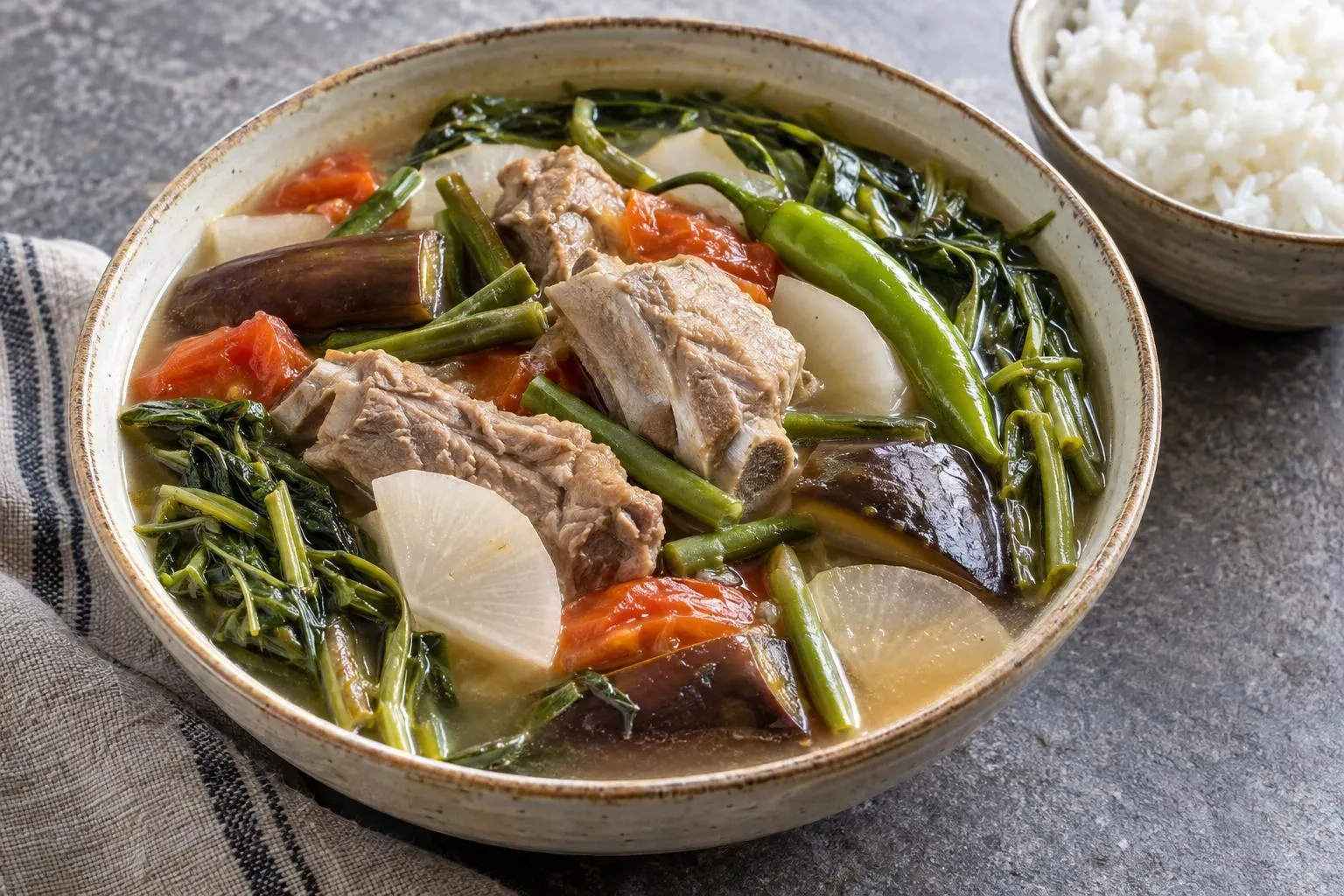
Sinigang na baboy with tamarind broth
◷ 127 mineasy
Tender pork ribs in a distinctly sour, savoury Filipino broth with tomatoes, radish, aubergine, long beans and just-wilted water spinach. Gentle simmering keeps the broth light and the vegetables intact.
Oct 13
Slow-Braised Filipino Pork Asado Dumplings
◷ 165 minmedium
These Filipino-inspired dumplings feature slow-braised pork asado, infused with traditional Asian spices and served in a delicate wrapper. Perfect for a comforting weeknight meal, they highlight seasonal vegetables and showcase the slow braising technique for tender, flavorful filling.
Feb 1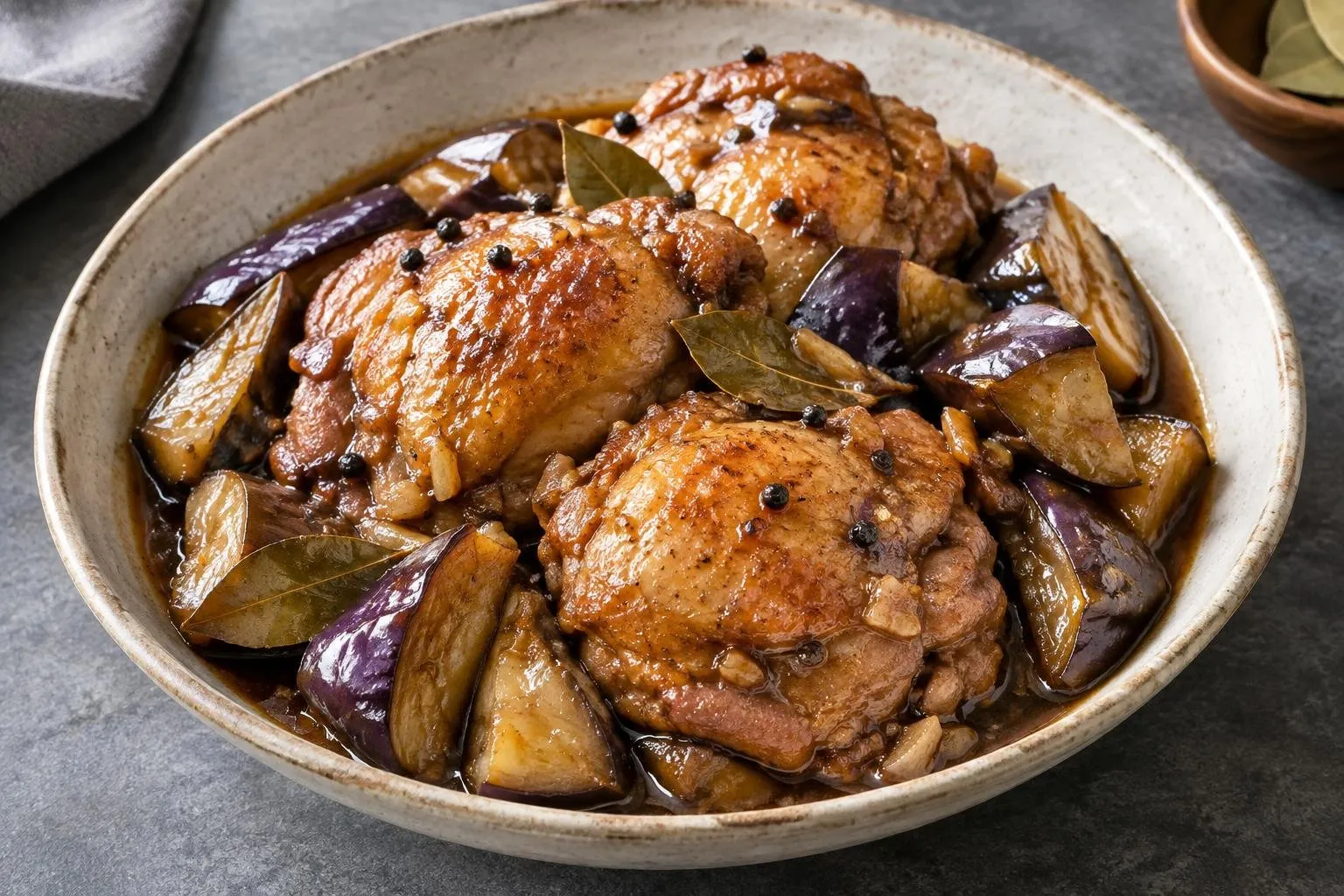
Chicken Adobo Braise with Seasonal Eggplant
◷ 75 minmedium
A traditional Filipino chicken adobo prepared as a braise, featuring seasonal eggplant and a savory blend of soy sauce, vinegar, garlic, and bay leaves. This comforting dish highlights a gentle poaching start before slow braising to tenderize the chicken and infuse deep flavors.
Jan 29