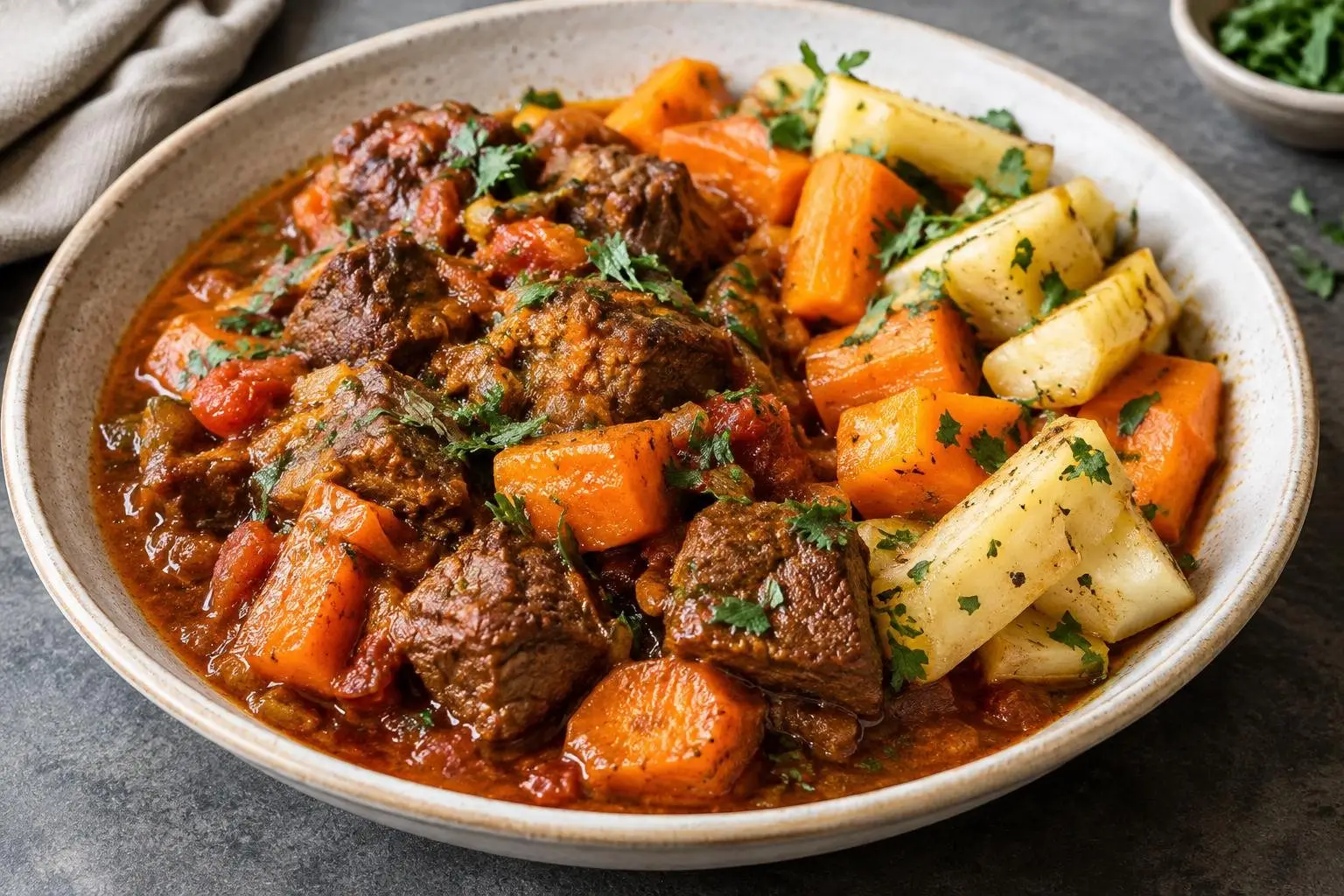
Ethiopian-Inspired Seasonal Beef Stew With Steamed Root Vegetables
A hearty Ethiopian-style beef stew braised slowly with fragrant spices and seasonal root vegetables, paired with steamed carrots and parsnips to highlight fresh, local produce. This dish offers deep, warming flavors using pressure cooking for tender results on busy weeknights.
Advert
Let’s get cooking.
Cook mode
Scale servings, tick off ingredients, and run step timers without losing your place.
Servings
Originally developed for 4 servings.
Ingredient checklist
Method
- No timer neededPat the beef cubes dry with paper towels and season with salt and pepper.
- No timer neededSet the pressure cooker to sauté mode or heat on medium heat on the stovetop. Add vegetable oil and brown the beef cubes in batches until all sides are golden, about 5 minutes per batch. Remove and set aside.
- 05:00Add chopped onion to the cooker and sauté for 5 minutes until softened and translucent.
- 02:00Stir in minced garlic, grated ginger, berbere spice, and turmeric. Cook for 1–2 minutes until fragrant.
- No timer neededReturn beef to the cooker and stir to coat with spices. Add canned diced tomatoes and beef stock. Season lightly with salt and pepper.
- 35:00Close and lock the pressure cooker lid. Cook at high pressure for 35 minutes.
- No timer neededQuick-release the pressure according to manufacturer instructions. Open the lid carefully.
- 10:00Meanwhile, bring a pot with 2–3 cm (1 inch) of water to a boil. Place carrots and parsnips in a steamer basket or heatproof colander over the boiling water. Cover and steam for 8–10 minutes until just tender.
- No timer neededAdjust seasoning of the stew if needed. Serve the beef stew hot with the steamed root vegetables. Garnish with fresh coriander leaves, if desired.
Chef tips
- If you don’t have berbere spice, use a combination of paprika, cayenne, ground ginger, cinnamon, and fenugreek to mimic the flavor.
- Make sure to dry the beef before browning to get a good sear and enhance flavor.
- Use a natural pressure release for added tenderness if time allows, increasing cook time to 40 minutes.
- Ensure vegetables are steamed until just tender to retain sweetness and texture.
- Store leftovers in airtight containers and reheat gently to preserve flavor and texture.
Equipment check
- pressure cooker (electric or stovetop)
- steamer basket or heatproof colander
- large pot or deep pan
- wooden spoon
- knife
- cutting board
Nutrition per serving
- Calories450
- Protein38 g
- Carbs25 g
- Fat18 g
Tags
Behind the dish.
Overview
This Ethiopian-inspired beef stew highlights the richness of slow-braised beef combined with aromatic spices like berbere and warm ginger. Pressure cooking significantly reduces the cooking time while ensuring that the meat becomes tender and infused with deep flavor. The stew is complemented by steamed seasonal root vegetables such as carrots and parsnips, bringing fresh local flavors to the plate.
Why you’ll love it
- Quick tenderization of beef using pressure cooking, ideal for weeknight dinners.
- Fragrant and warming Ethiopian spice profile with familiar root vegetables.
- Balanced meal with protein, hearty vegetables, and vibrant spices.
Ingredient notes
Beef chuck: Well-marbled cuts like chuck or stewing beef deliver tenderness and flavor.
Berbere spice blend: Essential Ethiopian spice mix; can be made or bought pre-mixed.
Root vegetables: Carrots and parsnips add natural sweetness and pair nicely with the spices.
Serving & storage
Serve this stew hot with steamed root vegetables and optionally with injera or crusty bread. Leftovers keep well in an airtight container in the refrigerator for up to 3 days. Reheat gently on the stovetop or in the microwave until steaming. For longer storage, freeze for up to 3 months and thaw overnight in the fridge before reheating.
Related recipes
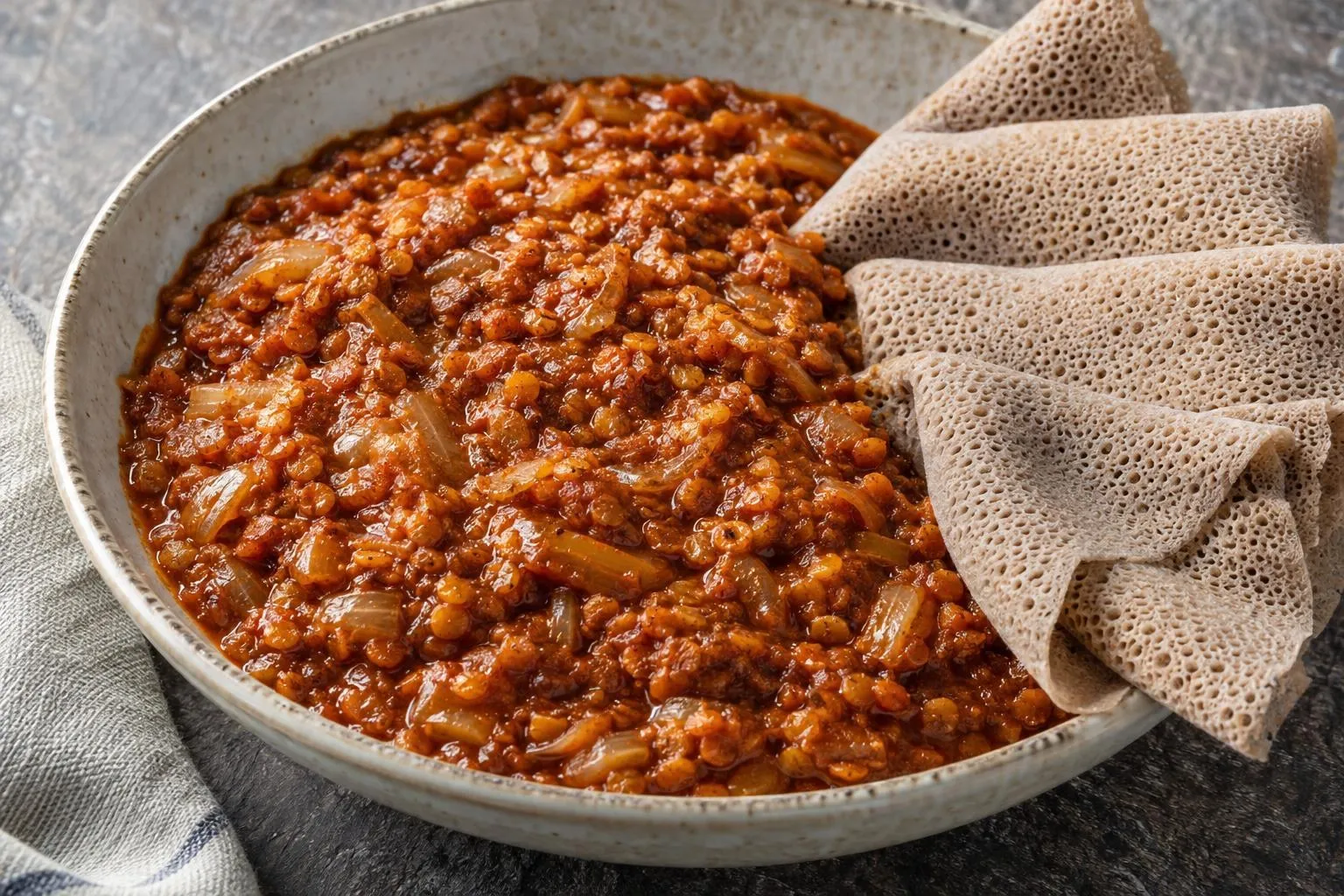
Misir wat with slow-cooked onions
◷ 85 mineasy
An Ethiopian red lentil stew with sweet, thoroughly softened onions, warm berbere heat and a thick, spoonable texture, served with injera. Allow about 1 hour 25 minutes, or longer if the onions or lentils need more cooking.
Oct 16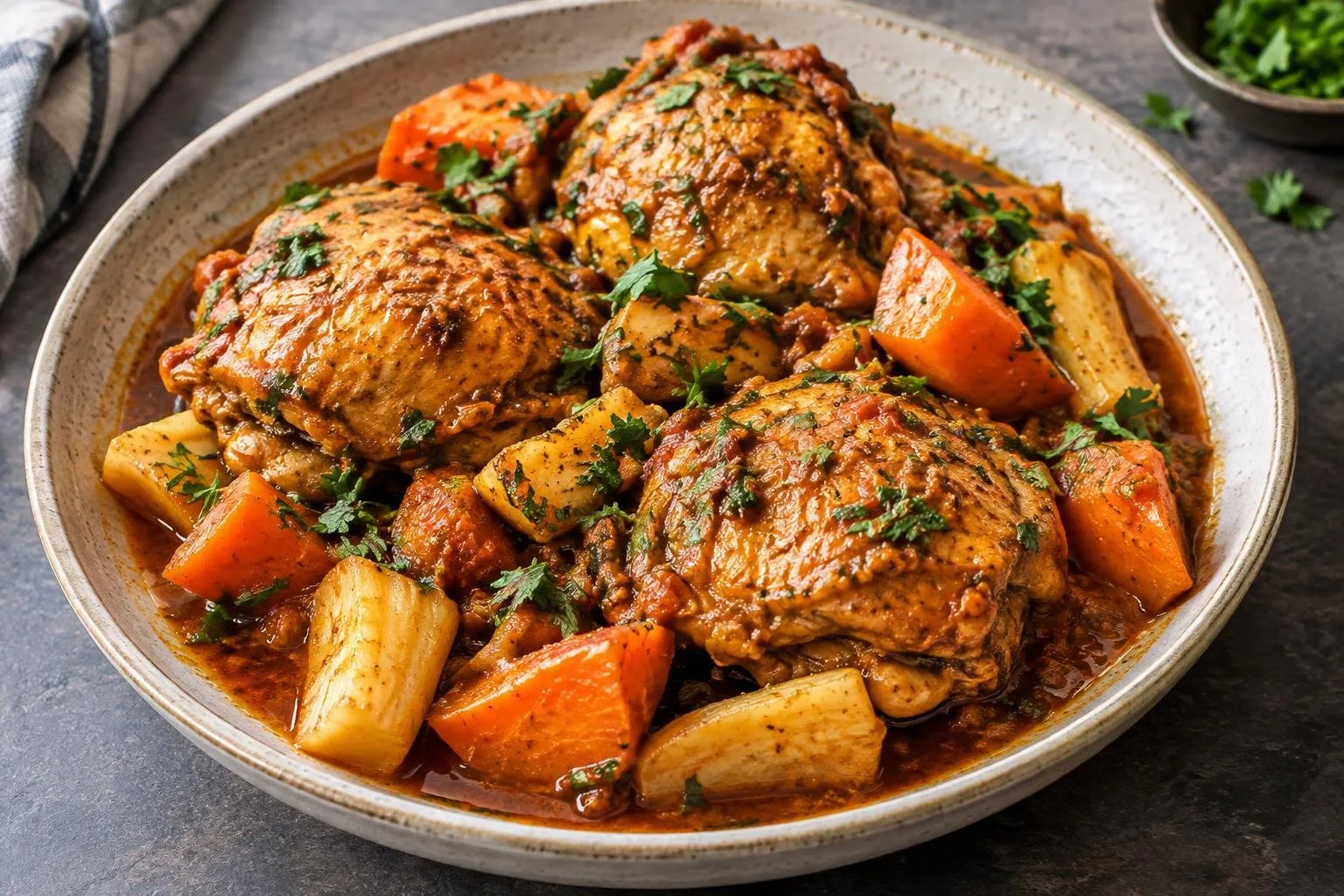
Ethiopian Doro Wat-Inspired Poached Chicken Stew
◷ 80 minmedium
A comforting and flavorful Ethiopian-inspired poached chicken stew featuring seasonal root vegetables and traditional spices, gently simmered to tender perfection. This recipe highlights poaching as a gentle cooking method, celebrating an authentic stew that honors Ethiopian culinary traditions while using accessible ingredients.
Jan 31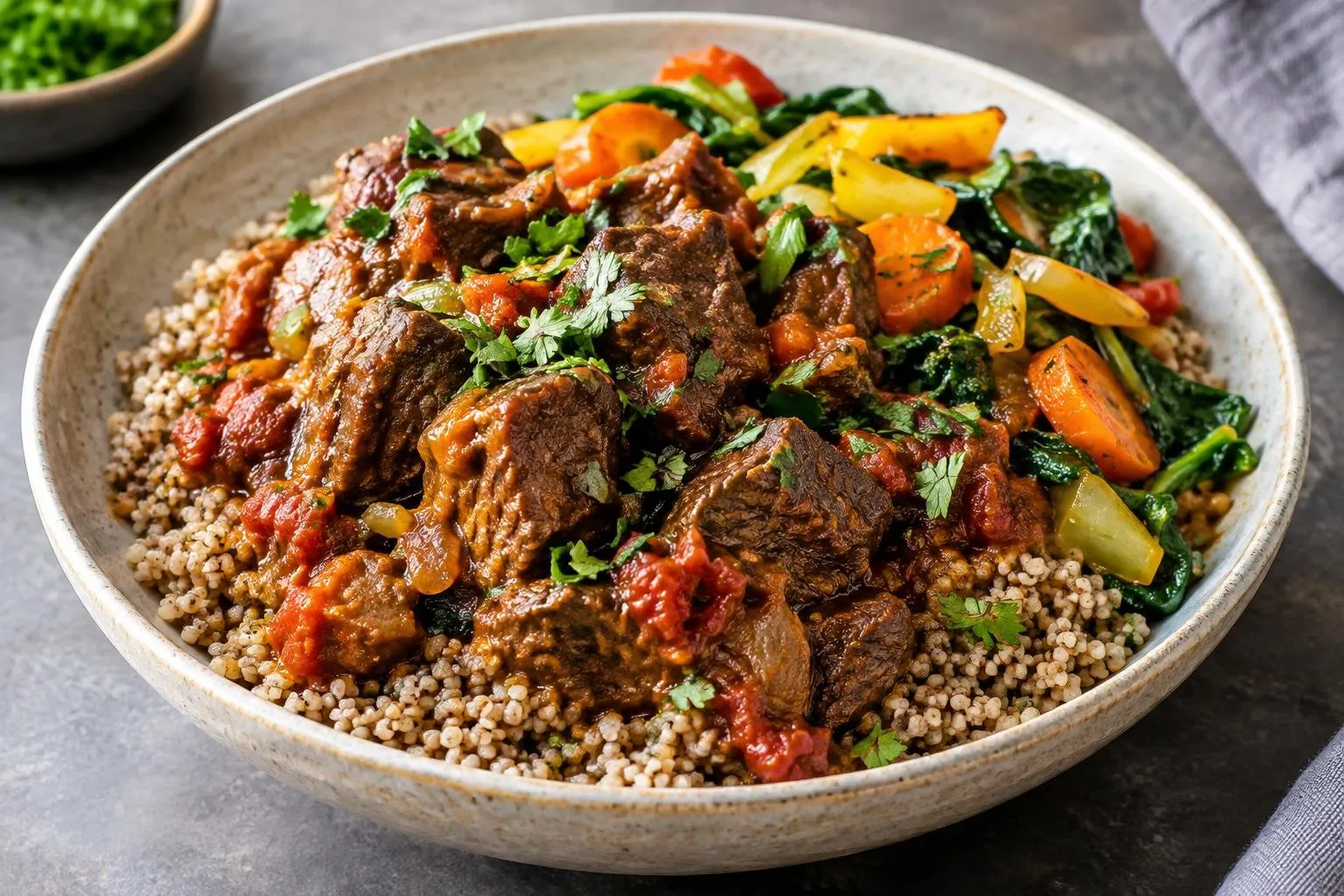
Ethiopian-Inspired Slow Braised Beef Tibs Grain Bowl
◷ 200 minmedium
This hearty grain bowl features slow braised Ethiopian-style beef tibs infused with traditional spices, served over a bed of fluffy injera-inspired teff grains and topped with sautéed seasonal vegetables. It embraces slow braising as a comforting cooking method and highlights Ethiopian flavors without fusion elements, making it perfect for a wholesome weeknight meal.
Jan 29