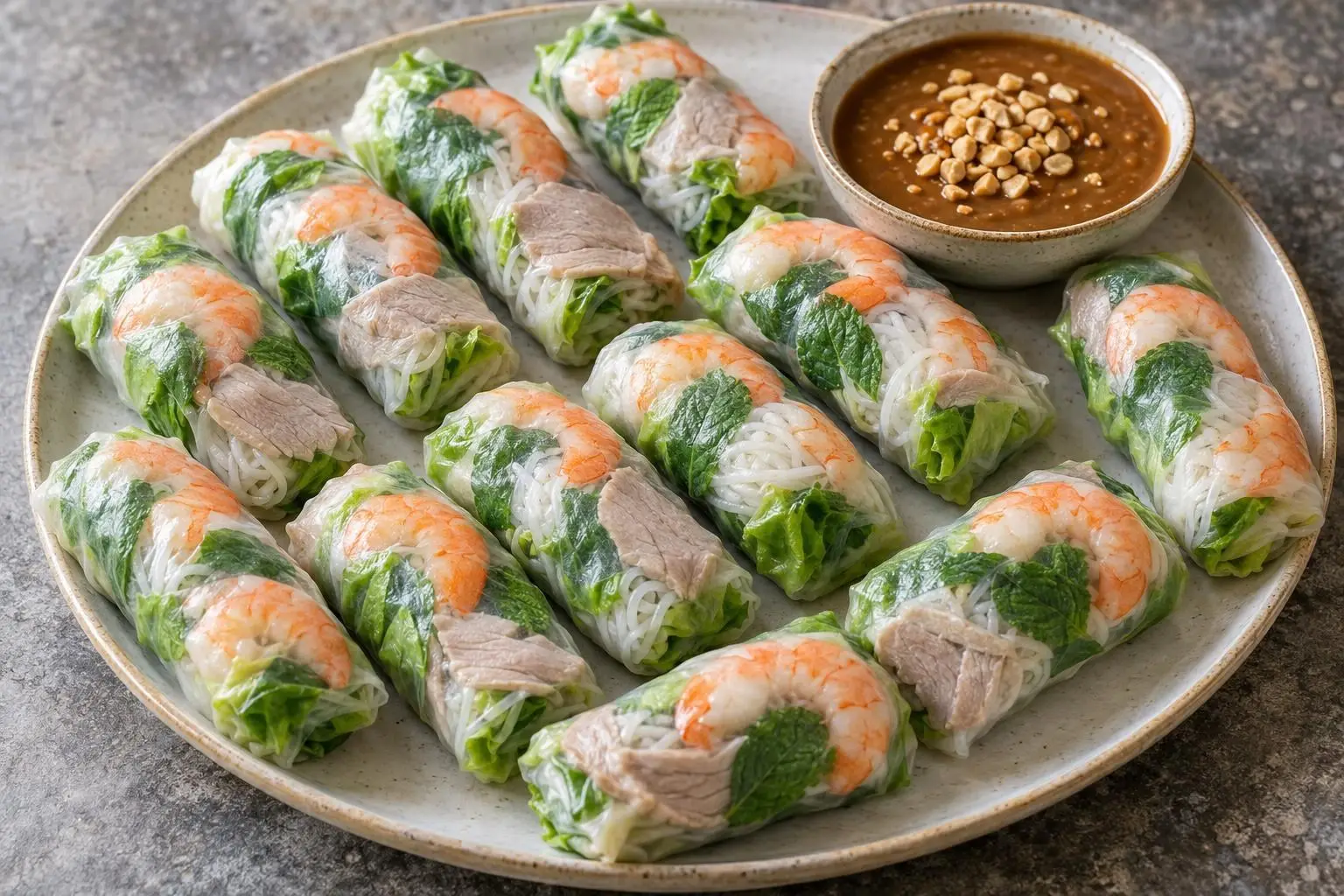
Vietnamese fresh spring rolls with peanut sauce
Tender pork, juicy prawns, rice vermicelli, crisp lettuce and mint wrapped in supple rice paper, with a creamy hoisin-peanut dipping sauce. Makes 12 rolls, serving 6 as a starter or side.
Advert
Let’s get cooking.
Cook mode
Scale servings, tick off ingredients, and run step timers without losing your place.
Servings
Originally developed for 6 servings.
Ingredient checklist
Method
- No timer needed
Put the 1.2 litres poaching water and salt in a 2.5–3 litre saucepan and bring to the boil. While it heats, wash and thoroughly dry the lettuce and mint, then refrigerate them. On a separate board, trim the pork without washing it. Lower the pork into the boiling water and return to a gentle simmer. Immediately wash your hands and clean the raw-meat board and utensils before starting the sauce or preparing any cooked or ready-to-eat ingredients.
- No timer needed
Poach the pork, partially covered, for about 20–23 minutes, turning halfway through. Keep it submerged, adding boiling water only if needed. Meanwhile, make the sauce and noodles as below. Check the thickest centre with a thermometer: it must reach 75°C and remain there for 30 seconds; continue poaching if necessary. Transfer to a clean plate, keeping the poaching liquid for the prawns. Rest for at least 5 minutes, then slice across the grain about 2 mm thick. The pork should be cooked through, with no pink meat and clear juices, and tender enough to bite through easily; these cues supplement, rather than replace, the thermometer check. Spread the slices in a shallow container and refrigerate promptly until cool; expect about 150 g cooked pork.
- 02:00
While the pork poaches, and after cleaning the raw-meat equipment, put the hoisin, grated garlic and 80 ml sauce water in a small saucepan. Bring to a gentle simmer and cook for 2 minutes, stirring occasionally. Remove from the heat and whisk in the peanut butter, then the lime juice and the reserved 20 ml water. Leave to cool. Before serving, loosen with up to 20 ml extra water if needed: the sauce should fall from a spoon in a thick ribbon, not sit in a paste. Transfer to a dipping bowl and top with the finely chopped peanuts.
- No timer needed
Once the sauce is cooling, and while the pork continues poaching, heat the noodle water and cook or soak the vermicelli according to its packet, including any required boiling stage. Thin rice vermicelli commonly takes 3–5 minutes, but brands vary. It should be tender without becoming mushy. Rinse under cold running water, drain very thoroughly and cut into roughly 8–10 cm lengths. Spread in a shallow container and refrigerate promptly while finishing the other fillings.
- 03:00
After removing the pork, bring its poaching liquid back to the boil, then reduce to a gentle simmer. Meanwhile, combine the cold water and ice in a clean bowl. Add the raw prawns to the pan and poach gently, checking after 3 minutes: they should be firm and opaque throughout, usually taking 2–4 minutes depending on size. Lift out with clean utensils into the iced water for about 3 minutes. While they cool, slice and refrigerate the rested pork as described above. Drain the prawns, pat dry and halve lengthways to make 24 pieces, then refrigerate. Discard the poaching liquid and clean any equipment that touched raw prawns before setting up for rolling.
- No timer needed
Once all the fillings are cool, divide the pork, noodles, lettuce and mint into 12 portions; allow two prawn halves per roll. Pour the room-temperature wrapper water into a wide shallow dish and place a smooth, lightly damp board beside it. Have your serving platter ready. If the kitchen is warm, work with half the filling at a time and keep the remainder refrigerated.
- No timer needed
Dip one rice-paper wrapper in the water for about 5–10 seconds, or follow its packet instructions. Lift it out while still slightly firm and lay it on the damp board; it will continue softening. Arrange one portion of lettuce, noodles, pork and mint across the lower third, leaving 3–4 cm clear at either side. Place two prawn halves just above the filling, coloured sides against the wrapper. Fold the lower edge over the filling, fold in the sides, then roll forward snugly without stretching. Repeat to make 12 rolls, about 11–12 cm long, allowing roughly 25 minutes for rolling. Use a spare wrapper if one tears badly.
- No timer needed
Arrange the rolls in a single layer without touching and serve promptly with the peanut sauce. If they must wait briefly, cover with a barely damp clean cloth and refrigerate rather than leaving them on the worktop.
Chef tips
- If wrappers tear or stick, shorten the dip and keep the board lightly damp rather than wet. Rice paper continues hydrating after it leaves the water.
- Divide the filling before rolling and preserve the side margins. An overfilled wrapper is more likely to burst; roll snugly without pulling the paper.
- Dry lettuce and prawns thoroughly and drain noodles well. Warm or wet filling makes the wrappers slippery and fragile.
- Pork thickness matters more than weight for poaching time. Use the thermometer endpoint and extend cooking if needed; keep the simmer gentle to avoid toughening the meat.
- If the sauce becomes pasty as it cools, whisk in water 5–10 ml at a time. Do not add more hoisin simply to loosen it, as this also increases sweetness and saltiness.
- Do not stack unwrapped rolls: they stick together. Serve freshly rolled where possible.
Equipment check
- 2.5–3 litre saucepan with lid
- Small saucepan and whisk
- Saucepan or heatproof bowl for noodles, as required by their packet
- Digital food thermometer
- Fine colander
- Separate boards and utensils for raw and cooked ingredients
- Shallow cooling containers and a bowl for iced water
- Shallow dipping dish at least 24 cm across
- Smooth rolling board
- Platter large enough for 12 rolls without touching
- Refrigerator at 5°C or colder
Tags
Behind the dish.
Overview
These gỏi cuốn combine cool, tender fillings with supple, slightly chewy rice paper. Briefly dip each wrapper and let it finish softening on the board: soaking it until floppy makes it harder to handle. Thinly sliced pork and thoroughly drained noodles make the rolls easier to bite through.
Ingredient notes
Use 22 cm Vietnamese rice-paper wrappers intended for fresh rolls, not wheat spring-roll pastry. Choose thin rice vermicelli rather than mung-bean glass noodles. Unsweetened smooth peanut butter gives the most control over the sauce; stir separated peanut butter before weighing. Hoisin varies in sweetness, saltiness and thickness, so loosen the sauce with water rather than adding more hoisin.
For a shortcut, replace the raw prawns with 150 g chilled, cooked, peeled king prawns: skip poaching and chilling them, then pat dry and halve. Follow their use-by and opened-pack instructions. Contains crustaceans and peanuts; hoisin commonly contains soya and wheat, and may contain sesame. Check sauce and wrapper labels, including any substitutions. A gluten-free version requires verified gluten-free hoisin and wrappers.
Serving & storage
Serve two rolls per person with the peanut sauce. For a brief hold, refrigerate in a single layer under a barely damp clean cloth. For longer storage, wrap each roll individually in food-safe wrap and refrigerate in a covered container; keep the sauce separate.
Cool cooked fillings promptly and refrigerate within 2 hours at 5°C or colder; cool the rice noodles as quickly as possible, ideally within 1 hour. Use noodles and assembled rolls within 24 hours. Separately stored pork, prawns and sauce should be used within 48 hours, or sooner if the packaging requires it. These rolls are eaten cold; if reheating separately stored cooked components, reheat only once until steaming hot throughout. For gatherings, serve small batches and keep the remainder refrigerated.
Related recipes
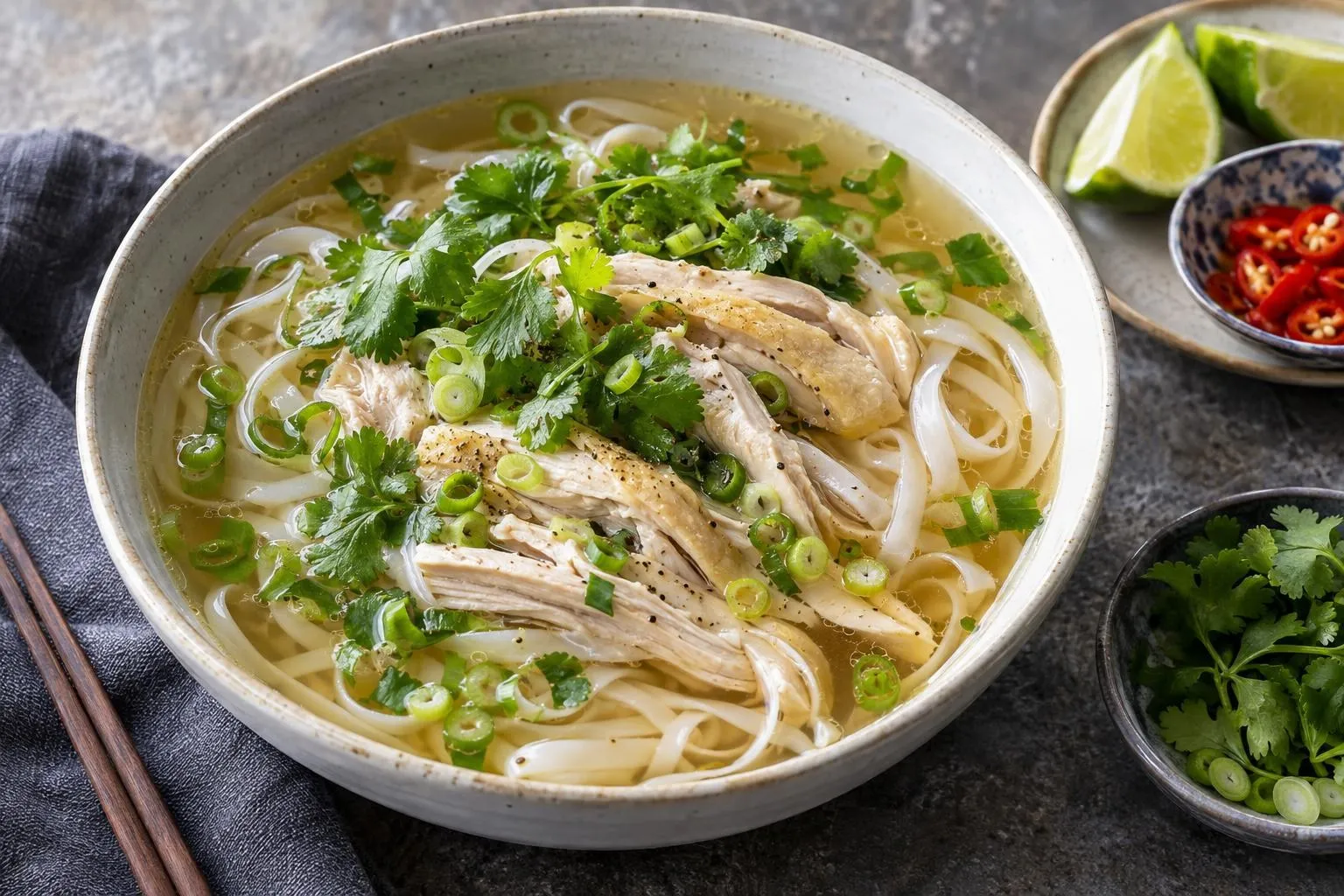
Pho ga with charred ginger and onion
◷ 144 minmedium
Vietnamese chicken noodle soup with tender poached chicken, flat rice noodles and a clear, golden broth scented with charred ginger, onion and restrained toasted spices. Finish with spring onions, coriander and lime. Allow about 2½ hours, with extra time possible depending on chicken doneness and noodle instructions.
Oct 14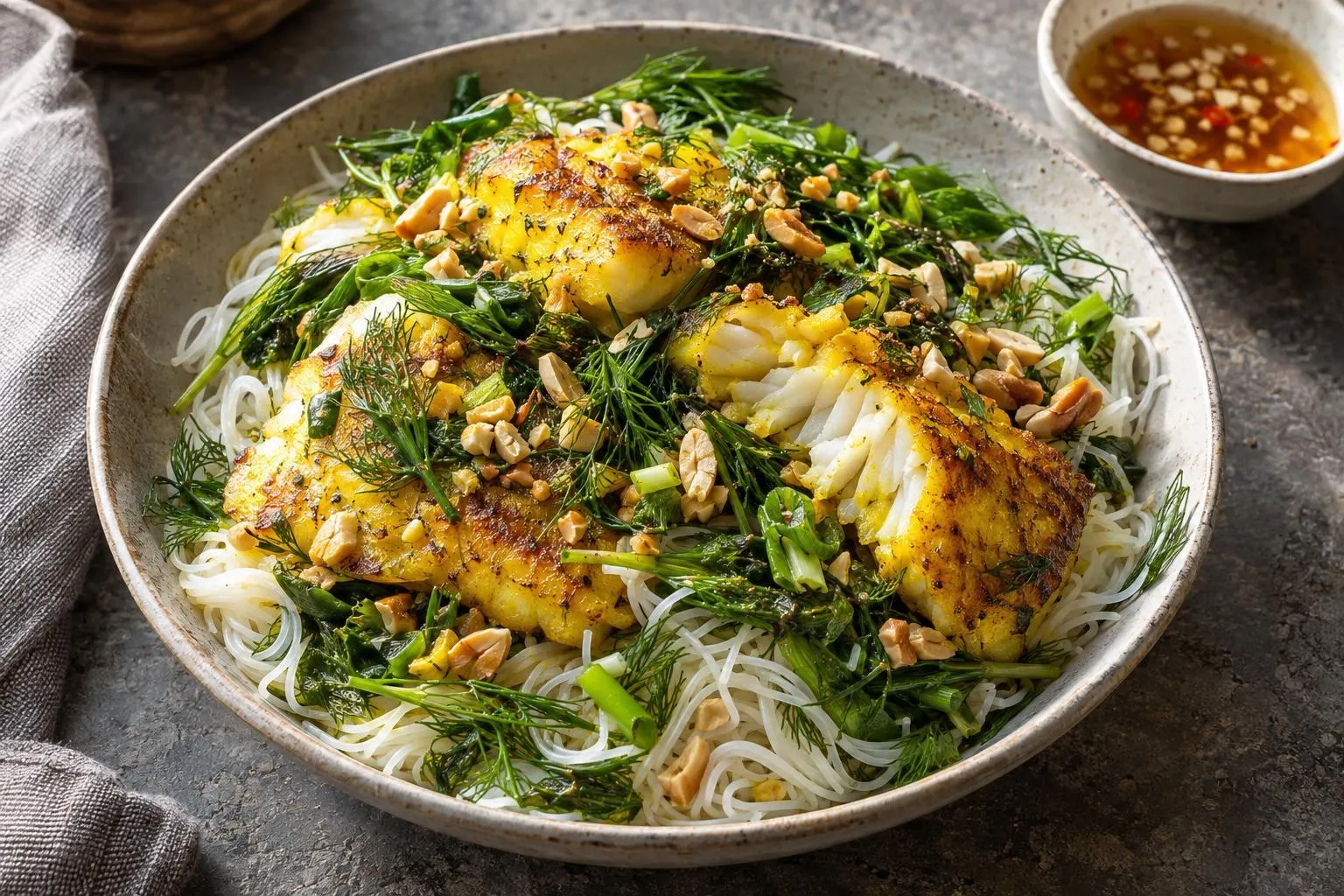
Turmeric fish with dill and rice noodles
◷ 55 minmedium
Golden, turmeric-marinated fish with a moist, flaky centre, generously wilted dill and spring onions, soft rice noodles, lime–fish sauce dressing and crunchy roasted peanuts.
Oct 7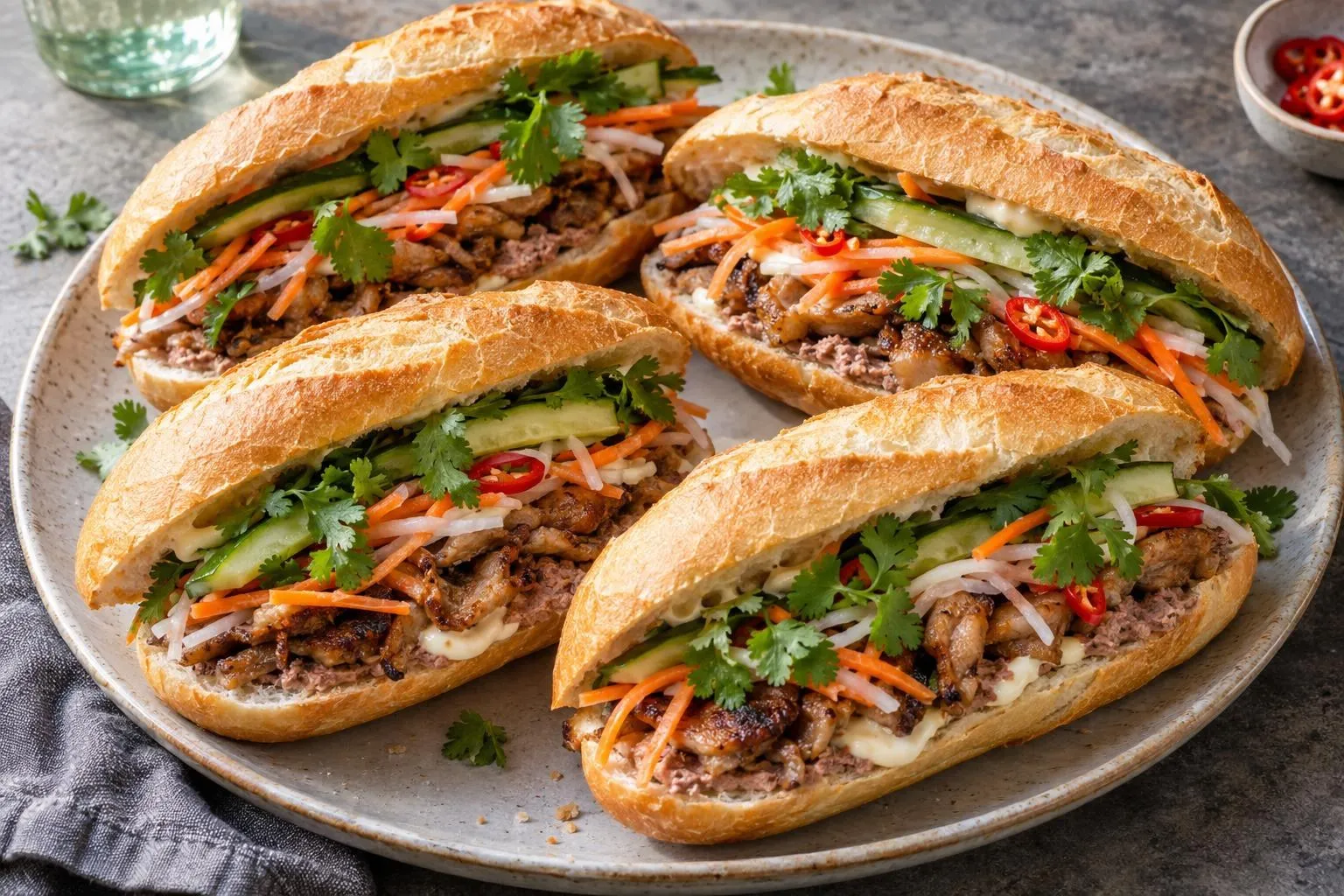
Bánh mì with lemongrass pork
◷ 79 minmedium
Light, crisp baguettes filled with browned lemongrass pork, pâté and mayonnaise, balanced by sharp-sweet carrot and daikon pickles, cucumber, coriander and fresh chilli.
Oct 3