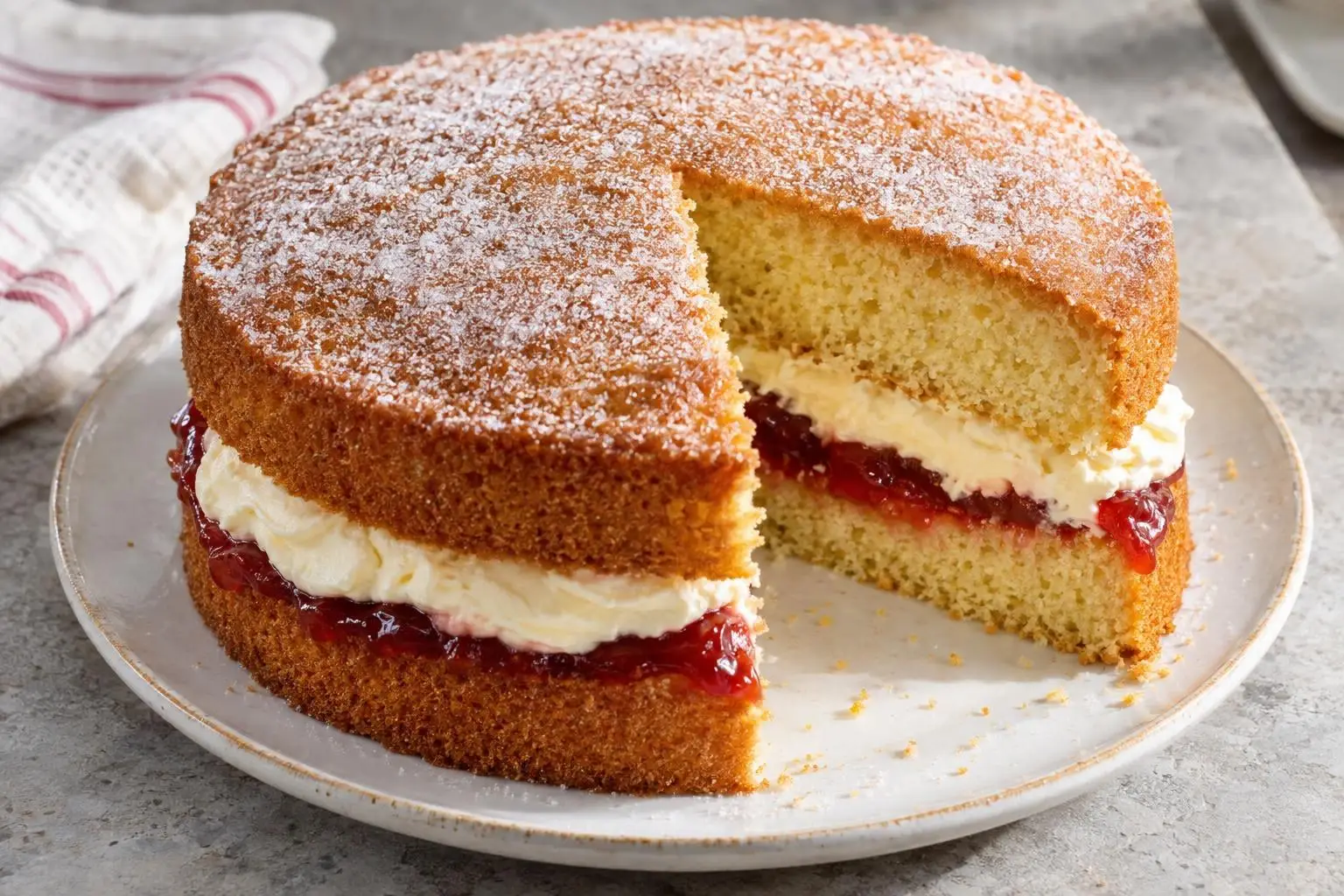
Victoria sponge cake with jam and cream
Two tender butter sponges made by the creaming method, sandwiched with strawberry jam and softly whipped, unsweetened cream, then finished with caster sugar. Makes one 20 cm cake.
Advert
Let’s get cooking.
Cook mode
Scale servings, tick off ingredients, and run step timers without losing your place.
Servings
Originally developed for 10 servings.
Ingredient checklist
Method
- 60:00
Set out the 200 g sponge butter and whole eggs to reach about 18–21°C; allow roughly 60 minutes from fridge-cold, longer in a cold kitchen. The butter should indent easily but not look oily. Keep the cream refrigerated. Once the eggs have tempered, crack them into a jug, beat with a fork and weigh out exactly 200 g. Wash hands and utensils after handling raw egg, keeping raw batter away from filling and serving equipment.
- No timer needed
While the butter and eggs finish tempering, heat the oven to 180°C conventional / 160°C fan, allowing at least 15 minutes to preheat fully. Use the 10 g greasing butter to grease two 20 cm sandwich tins and line their bases with baking parchment. Arrange a shelf so both tins fit with a gap between them and the oven walls. If using two shelves, swap their positions only after the cakes have set, when checking them after about 25 minutes.
- No timer needed
Weigh the 200 g caster sugar into a large bowl with the softened sponge butter. Beat with an electric mixer for 4–5 minutes, scraping down the bowl twice, until noticeably paler, fluffy and increased in volume.
- No timer needed
Weigh the flour into a separate bowl. Add the beaten egg to the creamed butter in 6–8 small additions, beating until incorporated after each and scraping the bowl as needed. Allow about 5 minutes. If the mixture begins to split, beat in 1 tablespoon of the measured flour; do not add extra flour or keep beating to remove every trace of curdling.
- No timer needed
Mix the salt into the remaining flour, then gently fold it into the batter in two additions. Fold in 15 ml milk. The batter should fall from a tilted spoon with a gentle shake. Only if it is too stiff, fold in up to another 15 ml milk, 5 ml at a time. Stop mixing as soon as the batter is evenly combined with no dry flour remaining.
- 25:00
Immediately divide the batter equally between the tins, approximately 410 g per tin, and gently level the tops. Bake for 22–27 minutes, checking at about 25 minutes; do not open the oven during the first 20 minutes. Both cakes should be golden, spring back lightly in the centre and just begin to pull away from the edges. A skewer inserted centrally should come out without wet batter. If needed, bake for another 2–3 minutes and check again. Do not taste raw batter.
- 10:00
Leave the cakes in their tins for 10 minutes, then turn them out carefully, peel off the parchment and place upright on a wire rack. Cool completely, allowing approximately 60–90 minutes. Check the centres and undersides: neither should feel warm before adding cream. Extend cooling if necessary.
- No timer needed
When the cakes are completely cold, whisk the chilled double cream in a clean bowl until it forms softly holding peaks with gently drooping tips, about 2–4 minutes with an electric whisk. Stop before it becomes stiff or grainy.
- No timer needed
Stir the jam until spreadable. Put the flatter sponge on a serving plate and spread the jam over it, stopping about 1 cm from the edge. Spoon the cream over the jam and spread gently, leaving a small border. Set the second sponge on top without pressing down and sprinkle with the 5 g finishing caster sugar. Serve soon or cover and refrigerate promptly at 5°C or colder. Keep cumulative time out of refrigeration, including assembly and serving, below 2 hours; shorten this in a hot room.
Chef tips
- For a light sponge, use softened rather than melted butter and cream until visibly fluffy. Once the flour is added, fold only until combined.
- Slight curdling after adding the eggs is preferable to prolonged beating. A tablespoon of the measured flour can help stabilise the mixture.
- Check the centres as well as the colour: dark tins can brown the edges before the middle is cooked. Return cakes with wet batter to the oven immediately.
- If the filling softens during assembly, refrigerate the cake rather than pressing the layers together. Warm sponge or runny jam will make the filling slide.
- Stop whipping as soon as the cream holds soft peaks. Cream that has separated into butter and liquid needs replacing.
- The schedule assumes fridge-cold butter and eggs and a moderate room temperature. Extend tempering or cooling according to the stated texture and temperature cues.
Equipment check
- Two 20 cm round sandwich tins, each at least 3 cm deep
- Baking parchment
- Digital scales
- Large mixing bowl and separate flour bowl
- Electric hand mixer or stand mixer
- Jug and fork for beating the eggs
- Flexible spatula or large metal spoon
- Skewer
- Wire cooling rack
- Clean bowl and whisk for the cream
- Serving plate and covered cake container that fit in the fridge
Nutrition per serving
- Calories485
- Protein5 g
- Carbs45 g
- Fat32 g
Tags
Behind the dish.
Overview
This Victoria sponge has a light, fine crumb, a distinct layer of strawberry jam and soft, unsweetened cream. Creaming softened butter and sugar builds aeration; gradual egg additions and gentle folding help preserve it. Use two 20 cm sandwich tins rather than one deep tin.
Ingredient notes
Weigh the beaten eggs: the sponge uses equal weights of butter, sugar, egg and flour. Butter and eggs should be around 18–21°C before mixing, while the cream stays refrigerated. Use fresh self-raising flour without extra baking powder. Alternatively, replace it with 200 g plain flour thoroughly mixed with 8 g baking powder. Choose a thick, spreadable strawberry jam rather than a runny one.
Allergens: wheat/gluten, eggs and milk. Check baking powder and any substituted ingredients for additional allergen declarations.
Serving & storage
Cut with a sharp knife, wiping it between slices. Serve soon after filling or refrigerate promptly in a covered cake container. Keep the filled cake at 5°C or colder and limit its cumulative time out of the fridge, including assembly and serving, to 2 hours; shorten this in a hot room. Refrigerate leftovers within that limit and use within 48 hours or the cream's use-by date, whichever is sooner.
For advance preparation, wrap the completely cooled, unfilled layers airtight and keep in a cool place overnight, or freeze for up to 2 months. Thaw frozen layers, still wrapped, in the fridge until fully defrosted before filling. This frozen-layer option requires additional thawing time and is not included in the schedule for making the cake from fresh ingredients. Whip the cream and fill on the day of serving.
Related recipes

Mustard chicken with cider and apples
◷ 119 minmedium
Browned chicken thighs braised gently in dry cider, stock and wholegrain mustard, with late-added apple wedges. The sauce stays savoury and lightly reduced, while the apples soften without falling apart.
Oct 16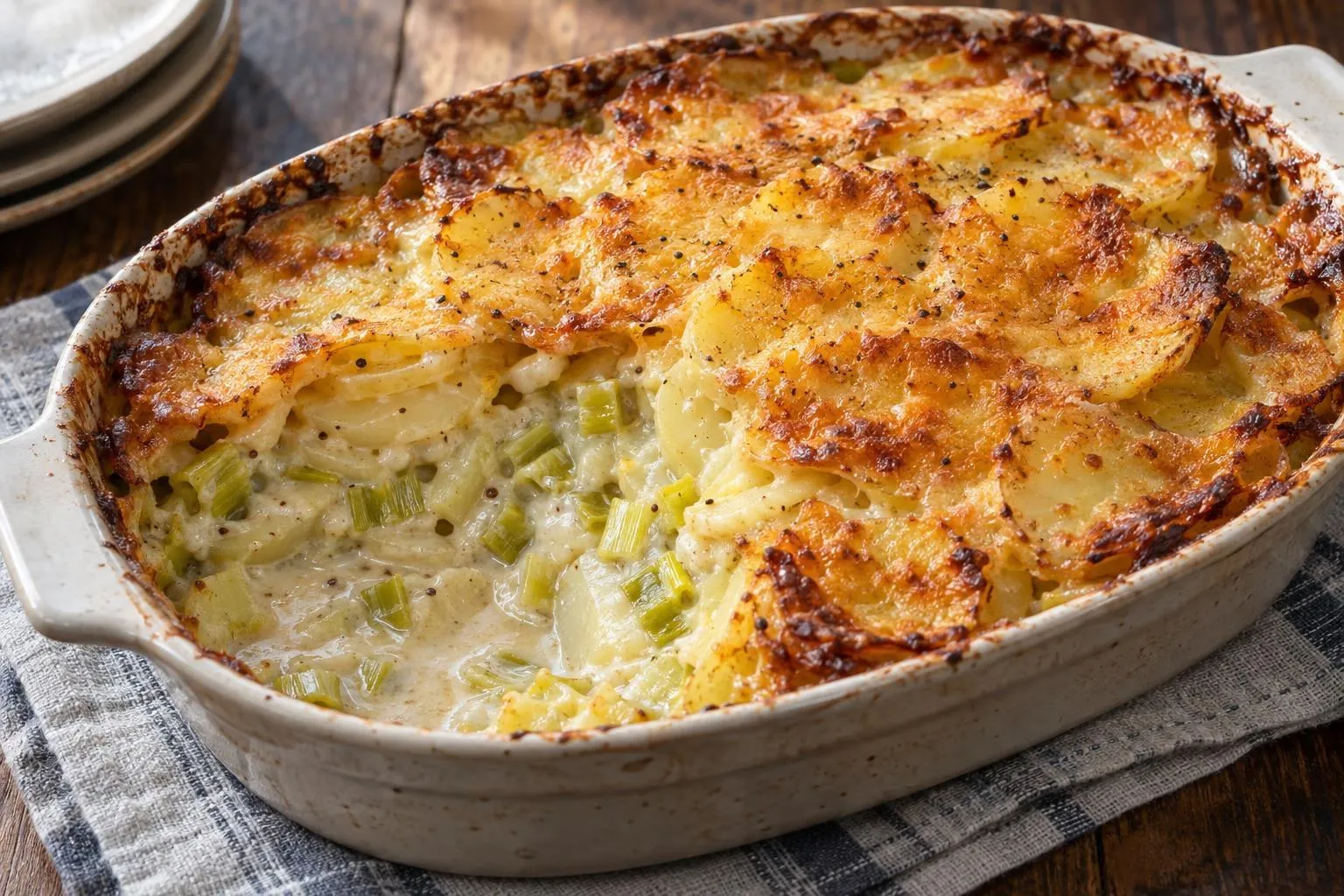
Cheddar and leek potato pie
◷ 91 mineasy
Sweet leeks in a creamy mustard sauce sit beneath tender sliced potatoes and a golden mature Cheddar crust. This pastry-free British pie takes about 90 minutes, including resting; allow longer if the leeks need more evaporation or the potatoes need further baking.
Oct 8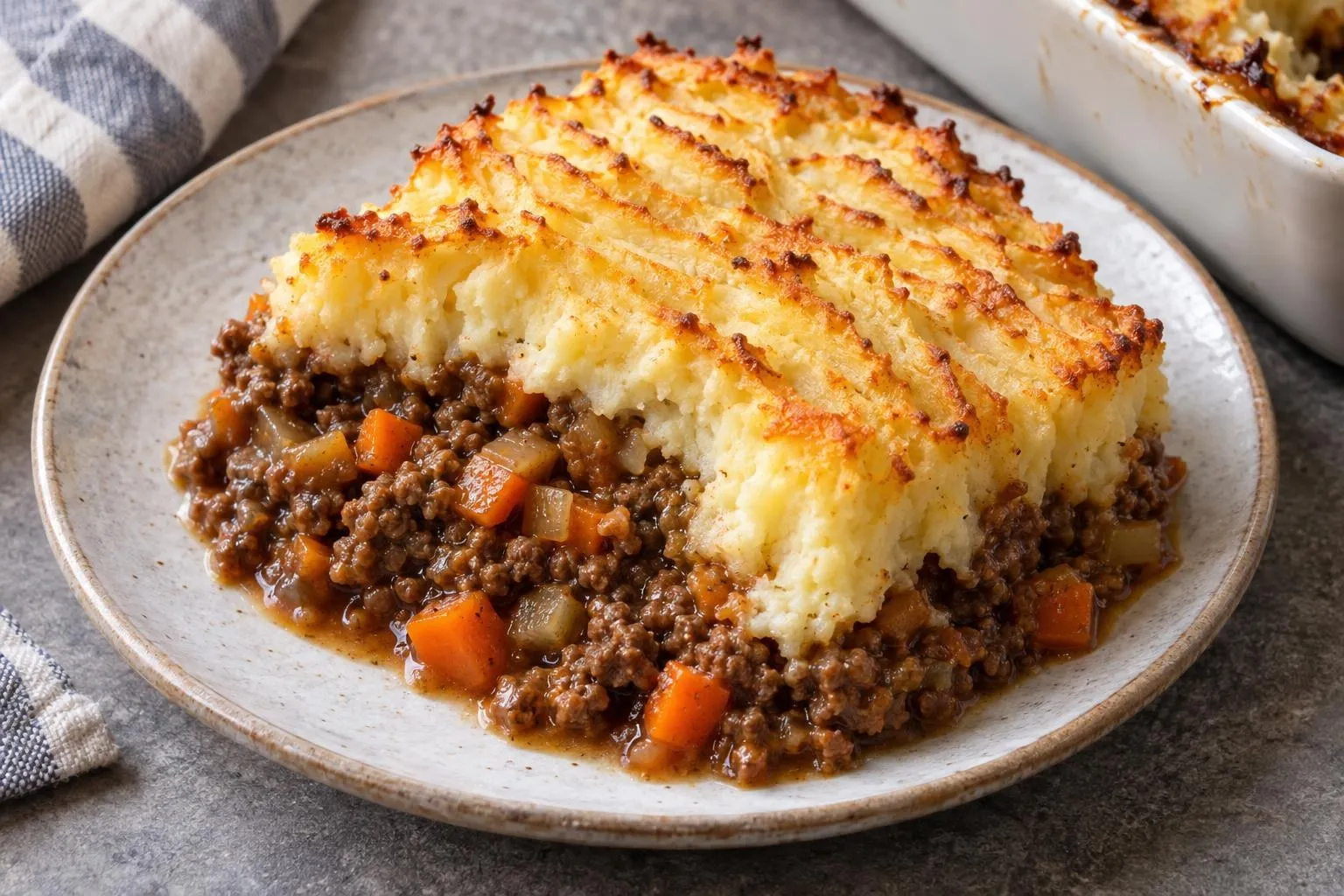
Cottage pie with golden mashed potato
◷ 121 minmedium
Browned beef mince, onions and carrots in a thick, savoury gravy beneath fluffy mash with golden ridges. Allow approximately 2 hours, including resting; extra gravy reduction, baking or an optional grill finish may extend this.
Oct 5