Cottage pie with golden mashed potato
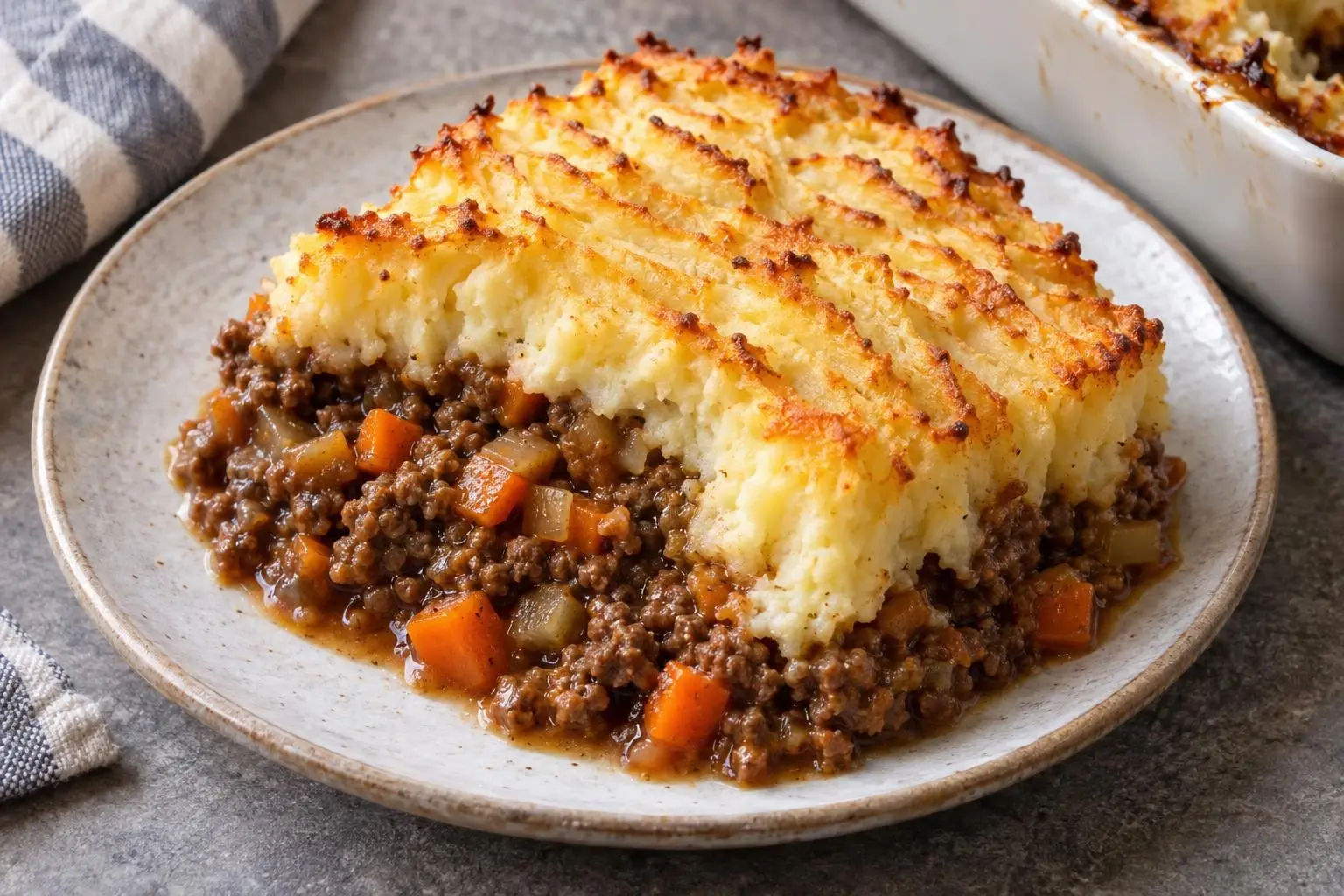
Browned beef mince, onions and carrots in a thick, savoury gravy beneath fluffy mash with golden ridges. Allow approximately 2 hours, including resting; extra gravy reduction, baking or an optional grill finish may extend this.
Advert
Let’s get cooking.
Cook mode
Scale servings, tick off ingredients, and run step timers without losing your place.
Servings
Originally developed for 4 servings.
Ingredient checklist
Method
- No timer needed
Weigh and prepare the onion, carrots, garlic and potatoes as listed. Have the ovenproof dish ready. Keep raw mince and its utensils separate from the vegetables and serving equipment. Put the potatoes in the saucepan, cover with cold water by about 2 cm and set over high heat to come to the boil while you brown the beef.
- 06:00
Heat the frying pan over medium-high heat. Add 5 ml oil and 250 g mince; brown for about 6 minutes, breaking it into small crumbles and letting released moisture evaporate so the meat colours. Transfer to a bowl and repeat with the remaining 5 ml oil and 250 g mince. Wash your hands after handling raw mince and clean any contaminated surfaces before preparing the mash. Once the potato water boils, reduce it to a steady simmer and cook for 15–20 minutes, until a knife passes through the chunks easily. Browning the mince is for flavour, not the final safety check.
- No timer needed
Leave approximately 1 tbsp fat in the frying pan, spooning off any substantial excess. Add the prepared onion and carrots and cook over medium heat for about 9 minutes, stirring regularly, until the onion softens. Add the garlic and cook for 1 minute, then stir in the tomato purée for 1 minute and the flour for a further minute.
- 22:00
Return the beef and its juices. Gradually stir in the stock, scraping up the browned residue, then add the Worcestershire sauce, thyme and ¼ tsp pepper. Bring to the boil, then simmer uncovered for about 22 minutes, stirring occasionally, until the carrots are tender and the gravy clings to the mince without a watery layer. While it comes to the boil, heat the oven to 200°C conventional / 180°C fan; make the mash while the filling simmers. If the filling is loose, reduce it further before assembling; if too dry, add the optional water in 25 ml increments. Taste and add up to 2 g salt only if needed. Remove from the heat and let stand for 5 minutes before topping.
- No timer needed
When the potatoes are tender, drain thoroughly. Return them to the warm saucepan over low heat for 1–2 minutes, shaking gently, until their surfaces look dry. Warm the milk without boiling. Mash the potatoes with 40 g butter, 90 ml warm milk, 3 g salt and the remaining ¼ tsp pepper. Add some or all of the reserved 30 ml milk only if needed: the mash should spread easily but hold a ridge. Use a masher or ricer, never a blender. Cover to keep warm until the filling is ready.
- No timer needed
Spread the filling in the dish, leaving at least 1 cm headroom once topped. Distribute small spoonfuls of mash over the surface, then join them gently without pushing them into the gravy. Seal to the edges, rake the surface with a fork and dot with the remaining 10 g butter. Place the dish on a baking tray.
- 25:00
Bake for 25–30 minutes, checking after 25 minutes, until the ridges are golden and gravy bubbles around the edges. Check that the centre of the beef filling reaches 75°C and stays there for 30 seconds, with the probe in the filling rather than just the topping; continue baking if needed. Bubbling edges alone do not establish that the centre is cooked through. These times assume freshly cooked, warm filling and mash. If the filling is hot but the top is pale, an optional 2–4 minutes under the grill will colour it: use only a grill-safe dish and watch continuously.
- 10:00
Rest for 10 minutes, then spoon into four generous portions. The filling should remain moist and spoonable rather than cut into rigid slices.
Chef tips
- The schedule assumes the filling reaches the right consistency after its simmer and the pie is ready at the first baking check. Additional reduction, baking or the optional grill finish will extend it.
- If the beef stays grey, let its released liquid evaporate before stirring again. A smaller frying pan needs more batches and more time.
- Correct a watery filling before assembly: once covered with mash, excess liquid cannot evaporate efficiently. Use water rather than extra stock to loosen an overly thick filling without increasing saltiness.
- If the mash is stiff, add the reserved warm milk gradually. If it is wet, dry it gently over low heat before topping the pie.
- For advance preparation, cool the cooked filling and mash promptly in separate shallow portions and refrigerate within 2 hours at 5°C or colder. Assemble them cold and use within 48 hours of cooking. Bake at 200°C conventional / 180°C fan, initially loosely covered with foil, allowing approximately 45–60 minutes and uncovering to brown. Confirm the central filling reaches 75°C for 30 seconds. This is reheating: reheat only once. The main schedule is for cooking and serving immediately, not this make-ahead option.
Equipment check
- Deep 28 cm frying pan or sauté pan, approximately 3 litres capacity
- 3-litre saucepan with lid
- Bowl for the browned beef
- Colander
- Potato masher or ricer
- Small saucepan or microwave-safe jug for warming milk
- Ovenproof dish with at least 2.5 litres capacity, approximately 26 × 20 × 6 cm
- Baking tray
- Instant-read food thermometer
Tags
Behind the dish.
Overview
This British cottage pie makes four generous main-course portions. The filling should be beef-forward and moist, with gravy that clings to the mince; the topping should be fluffy inside with golden, lightly crisp ridges. Brown the beef in two batches, reduce the gravy before assembly and steam-dry the potatoes before mashing.
Ingredient notes
Use floury potatoes such as Maris Piper or King Edward; buy about 1.1 kg to obtain 900 g after peeling. Beef mince with roughly 10% fat gives a good balance of flavour and richness. Stock and Worcestershire sauce vary in saltiness, so use reduced-salt stock and season the filling only after reduction.
For a flour-free thickener, omit the plain flour and instead mix 10 g cornflour with 20 ml cold water. Stir this into the filling near the end of simmering and simmer for at least 2 minutes, until thickened. This substitution alone does not make the whole recipe gluten-free. A fish-free Worcestershire-style sauce can replace the standard sauce; check its seasoning and label.
Allergens include milk in the butter and milk, wheat in the flour, and commonly fish and barley in Worcestershire sauce. Stock may contain celery, wheat or other allergens. Check all product labels and substitutions.
Serving & storage
Rest the pie for 10 minutes before spooning into four portions. No side dish is required; steamed cabbage or peas are optional. Cook frozen vegetables according to their packet instructions.
Cool leftovers promptly in shallow portions and refrigerate within 2 hours at 5°C or colder. Use within 48 hours or freeze sooner. Thaw frozen portions in the fridge and reheat only once, until steaming hot throughout. Covered portions can be reheated at 180°C conventional / 160°C fan; check the centre rather than relying on a fixed time.
Related recipes

Mustard chicken with cider and apples
◷ 119 minmedium
Browned chicken thighs braised gently in dry cider, stock and wholegrain mustard, with late-added apple wedges. The sauce stays savoury and lightly reduced, while the apples soften without falling apart.
Oct 16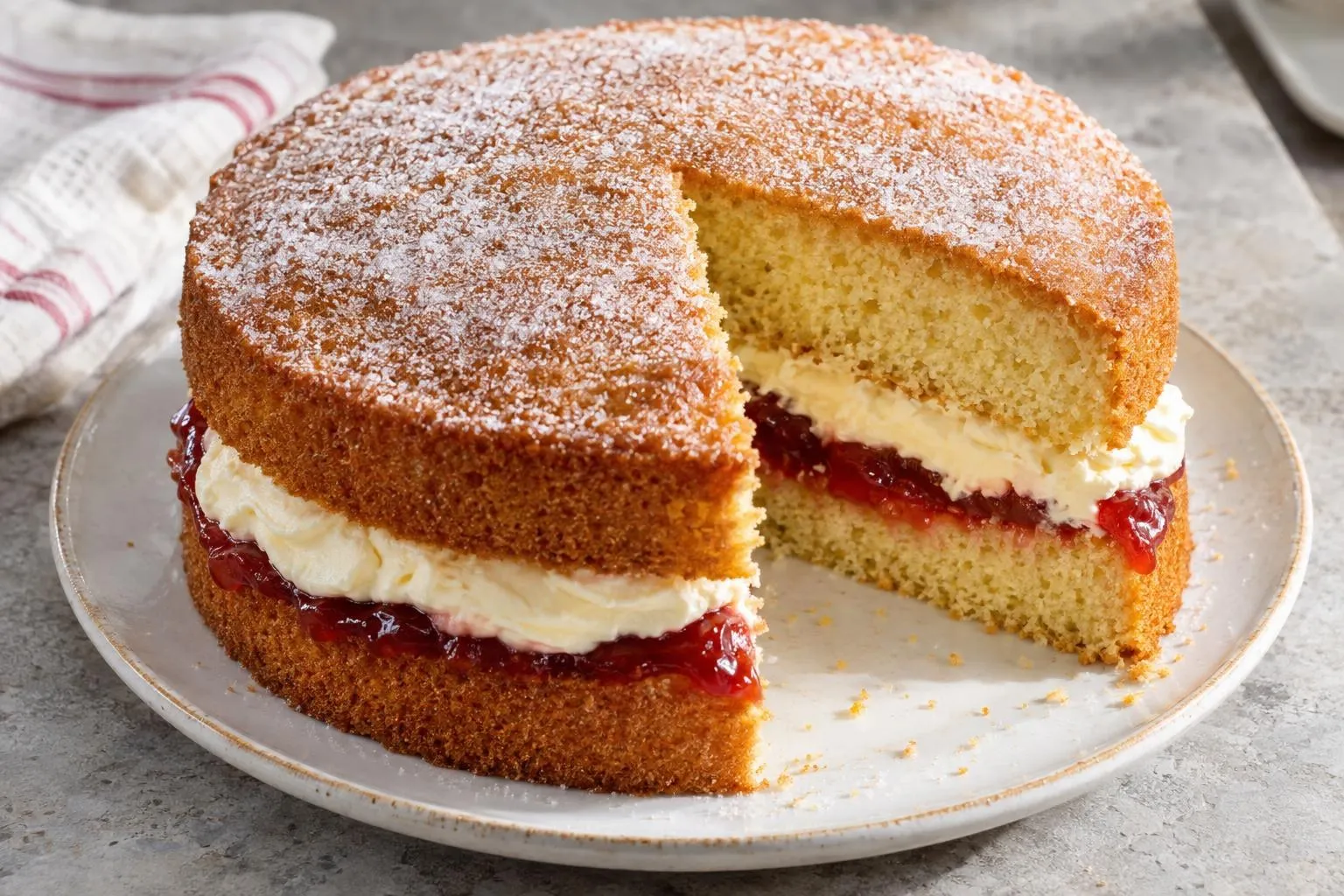
Victoria sponge cake with jam and cream
◷ 205 minmedium
Two tender butter sponges made by the creaming method, sandwiched with strawberry jam and softly whipped, unsweetened cream, then finished with caster sugar. Makes one 20 cm cake.
Oct 15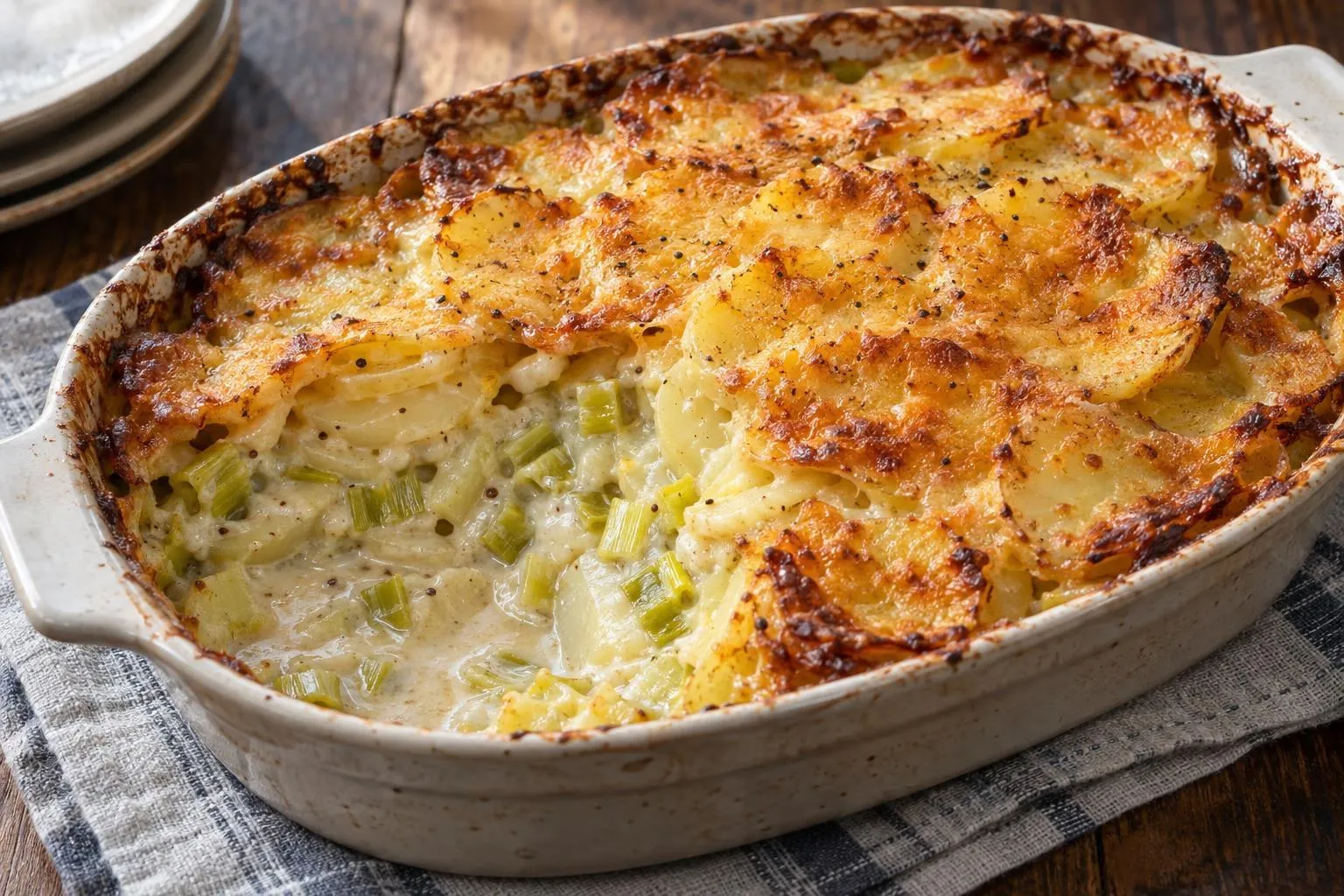
Cheddar and leek potato pie
◷ 91 mineasy
Sweet leeks in a creamy mustard sauce sit beneath tender sliced potatoes and a golden mature Cheddar crust. This pastry-free British pie takes about 90 minutes, including resting; allow longer if the leeks need more evaporation or the potatoes need further baking.
Oct 8