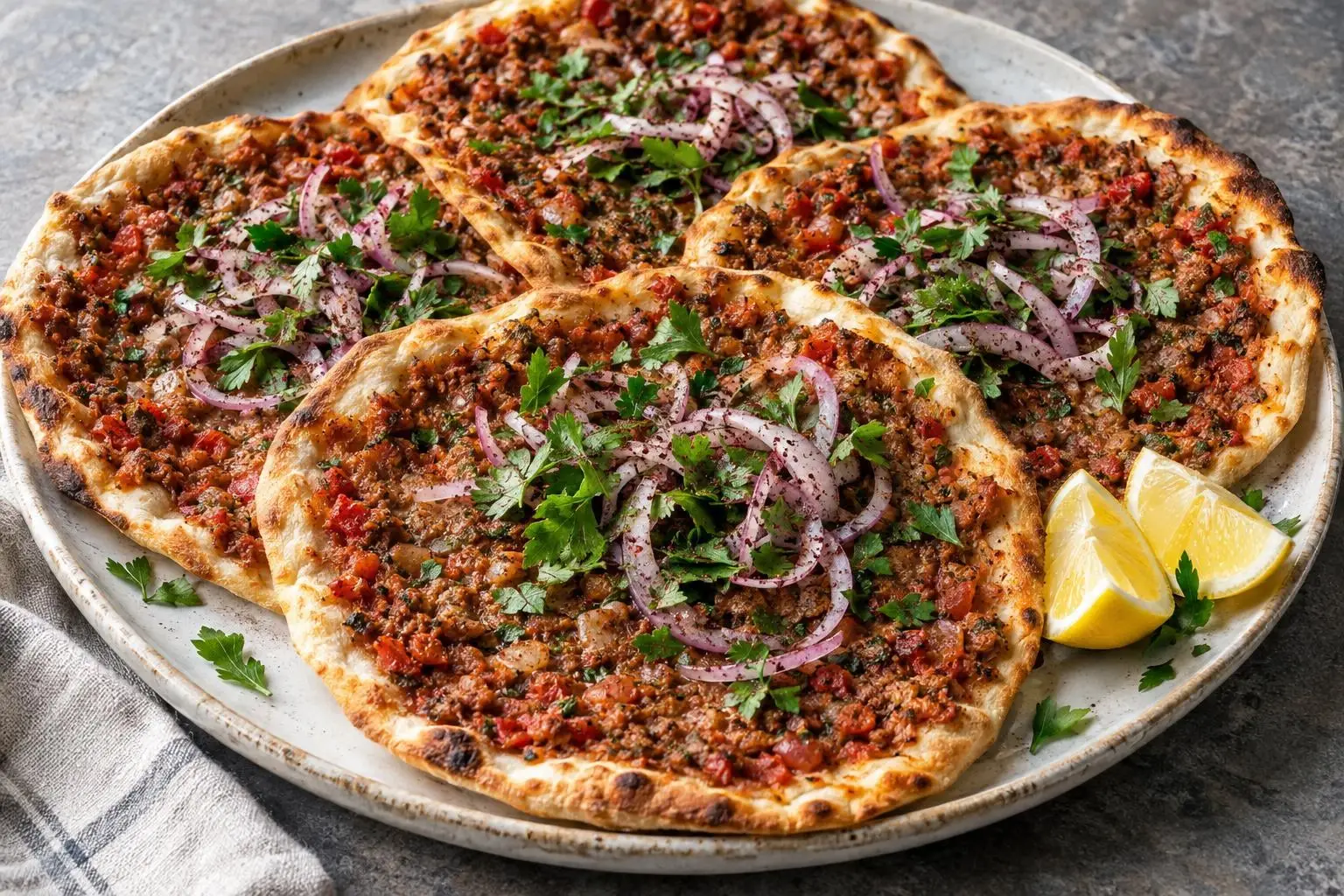
Spiced lamb flatbreads with sumac onions
Thin, lahmacun-style flatbreads with a juicy lamb, tomato and pepper topping, crisp edges and flexible centres. Finish with sharp sumac onions, parsley and lemon, serving in two freshly baked rounds.
Advert
Let’s get cooking.
Cook mode
Scale servings, tick off ingredients, and run step timers without losing your place.
Servings
Originally developed for 4 servings.
Ingredient checklist
Method
- 60:00
Mix 300 g flour with the yeast, then add the lukewarm water, dough salt and 10 g dough oil. Bring together and knead for 8–10 minutes until smooth and elastic. Cover and leave at room temperature for about 60 minutes, or until visibly expanded and roughly doubled; a cool kitchen may require longer.
- No timer needed
While the dough rises, finely chop the topping onion, prepared tomato flesh and 15 g parsley into pieces no larger than 3 mm. Mix thoroughly with the raw lamb, pepper paste, tomato purée, cumin, paprika, pul biber, topping salt and black pepper. It should smear easily with a spoon without releasing a puddle of liquid; add the optional cold water a little at a time only if needed. Do not taste the raw mixture. Cover and refrigerate until needed.
- No timer needed
Wash your hands and clean the utensils and work surface after handling the raw lamb. Slice the red onion and mix with the sumac, lemon juice, 10 g onion oil and onion salt. Massage for about 30 seconds, then leave for at least 15 minutes to soften slightly. Roughly chop the remaining 15 g parsley and cut the serving lemon into four wedges; keep these separate from the raw topping.
- 10:00
About 20 minutes before the expected end of the rise, heat the oven to 230°C conventional / 210°C fan, with the two heavy trays on the upper-middle and lower-middle shelves. Give the oven and trays at least 30 minutes to heat. Once the dough has risen, divide it into four equal pieces, approximately 124 g each. Shape into balls, cover and rest for 10 minutes.
- No timer needed
Using the reserved 15 g dusting flour as needed, roll the first two dough balls into 28 cm rounds, approximately 2 mm thick. If the dough springs back, cover and rest it for another 5 minutes before continuing. Move each round onto its own sheet of parchment on a rigid board. Divide the topping into four equal portions, approximately 208 g each, and spread one portion over each round, leaving a 1 cm border. Break up all thick clumps. Keep the remaining topping chilled. Repeat the rolling and topping for the second pair while the first pair bakes, pausing to exchange the oven trays.
- 07:00
Wearing oven gloves, slide the first pair, with their parchment, onto the hot trays. Keep loose parchment away from heating elements. Bake for 7 minutes, exchange the trays between shelves, then bake for another 5–9 minutes. The edges should be browned and the undersides dry and lightly coloured. Check each flatbread's thickest lamb areas with a thin-tip thermometer, without touching the tray or measuring only the bread: the lamb must reach 75°C and stay there for 30 seconds. Continue baking if necessary; colour alone is not a safety check.
- 07:00
Transfer the cooked first pair to a wire rack without stacking, and return the empty trays to the oven for about 3 minutes. Serve the first pair as described below while the trays reheat. Load the second pair and bake in the same way: 7 minutes, exchange shelves, then another 5–9 minutes. Check both flatbreads for the same lamb temperature endpoint before removing them.
- No timer needed
Serve each batch promptly, open-faced, topped with the sumac onions and finishing parsley, with a lemon wedge alongside. Add the garnish only just before eating so the edges stay crisp.
Chef tips
- The schedule assumes a 60-minute rise and two trays. Extend it if the dough has not roughly doubled or the lamb needs more cooking.
- Avoid a wet topping: remove tomato seed pulp, chop rather than liquidise, and omit optional water unless the mixture is too stiff to spread.
- If the lamb is safely cooked but the underside is pale, move that tray to the lower shelf for another 1–2 minutes, watching the edges closely.
- A thick thermometer probe can touch the bread or tray and give a misleading reading; use a thin tip suitable for shallow mince.
- With only one suitable tray, bake four individual batches, reheating the tray briefly between them and serving progressively. This extends the schedule.
- Keep finished flatbreads on a rack, uncovered and unstacked; prolonged holding or early garnishing softens the edges.
Equipment check
- Digital scales
- Mixing bowls and a cover for the dough
- Rolling pin
- Two heavy baking trays, each with at least 30 × 30 cm usable surface, fitting on separate oven shelves
- Four sheets of baking parchment rated for at least 230°C
- Flat board or inverted cold tray for transferring flatbreads
- Wire rack
- Oven gloves
- Thin-tip food thermometer suitable for a shallow layer of mince
- Knife and chopping board
Tags
Behind the dish.
Overview
This makes four 28 cm flatbreads, one substantial flatbread per person. A thin, evenly spread topping and thoroughly heated trays let the bases brown before the lamb dries out. Bake two at a time and serve progressively rather than stacking them, which softens the edges.
Ingredient notes
Use lamb mince with about 15–20% fat. Remove the tomato's watery seed pulp before weighing the flesh, and chop the topping vegetables finely rather than liquidising them. Turkish sweet red pepper paste, labelled tatlı biber salçası, varies in salt: reduce the topping salt to 1 g for a particularly salty brand. If using hot paste, omit the pul biber.
To replace the 35 g pepper paste, use an additional 25 g tomato purée, 10 g water and 2 g sweet paprika; the result will be more tomato-led. The dough contains wheat/gluten. Check pastes, spices and substitutions for other declared allergens.
Serving & storage
Add the onions and parsley just before serving, with lemon wedges alongside. Keep any unused raw topping refrigerated during baking and keep its utensils separate from the garnishes.
Cool cooked leftovers promptly in shallow portions and refrigerate within 2 hours at 5°C or colder. Store the onion garnish separately. Use within 48 hours or freeze sooner; thaw in the fridge. Reheat flatbreads only once, at 200°C conventional / 180°C fan until steaming hot throughout, then add the cold garnish.
Related recipes
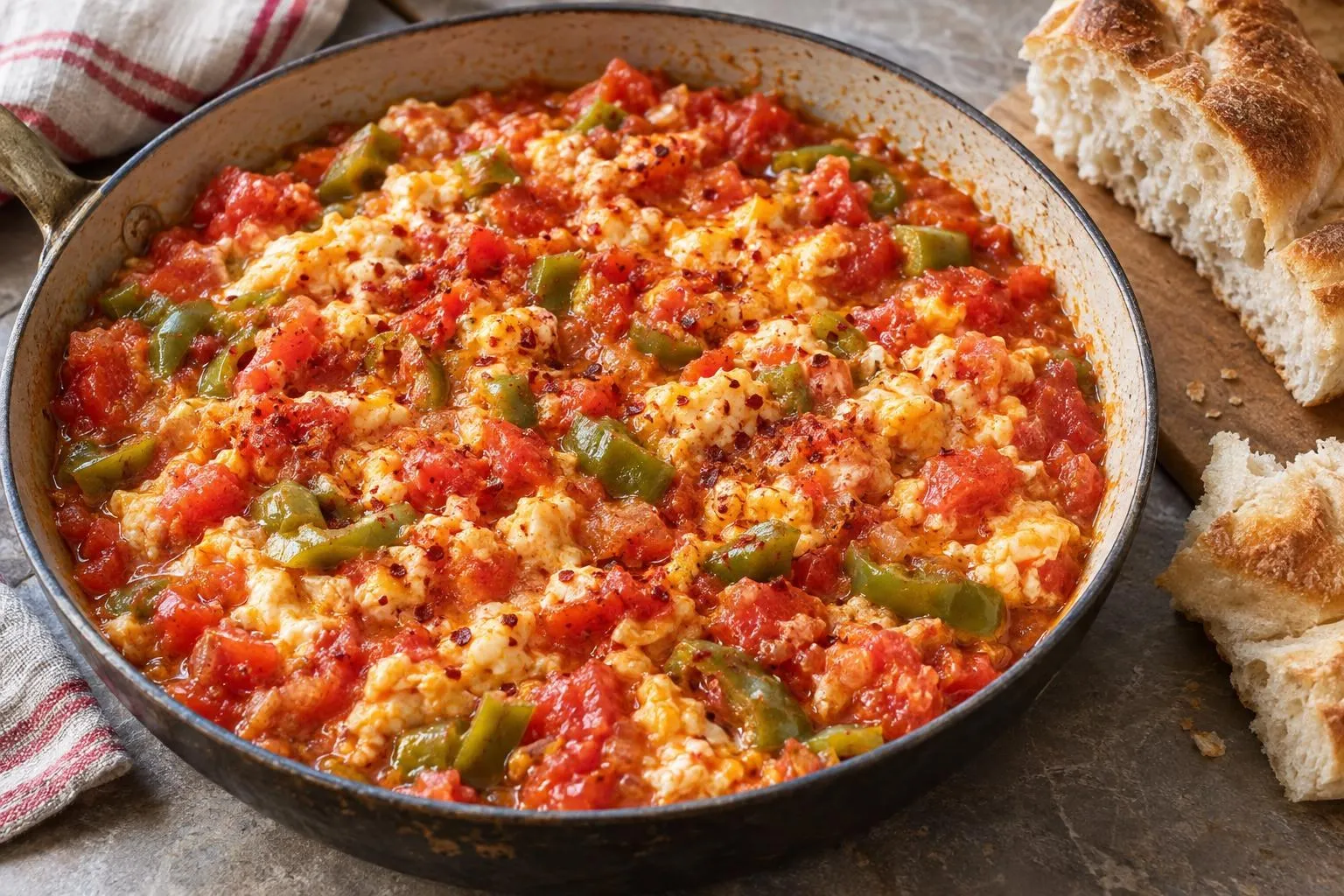
Menemen with Softly Scrambled Eggs
◷ 37 mineasy
Gently fold eggs through softened green peppers and juicy tomatoes for a tender, saucy Turkish breakfast, served straight from the skillet with bread for scooping.
Oct 6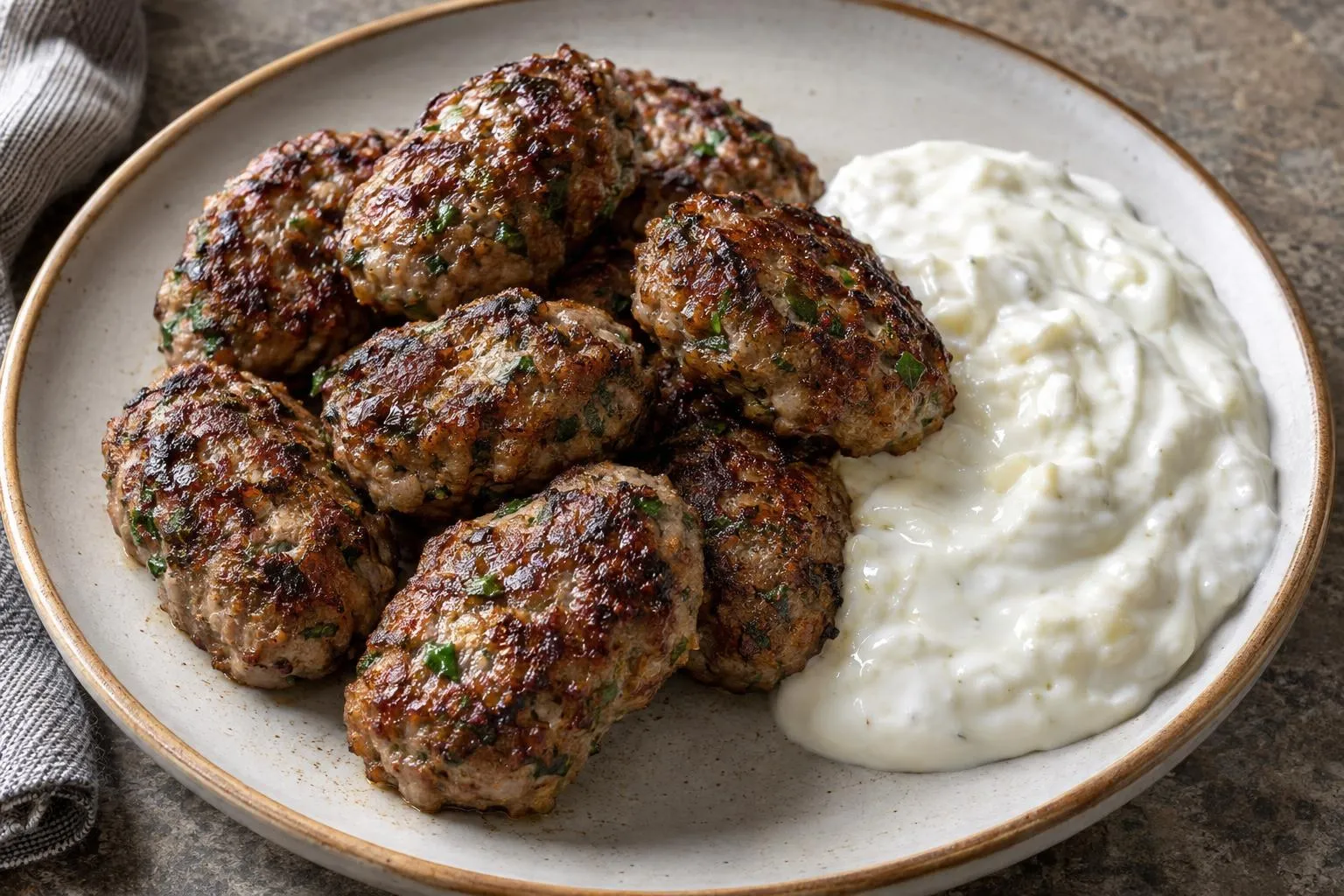
Pan-Fried Köfte with Garlic Yogurt
◷ 47 mineasy
Beef köfte seasoned with grated onion, cumin and parsley, bound with breadcrumbs and pan-fried until browned and juicy. Serve these small, oval patties with creamy garlic yogurt.
Oct 2