Pressure Cooker Chicken Afritada With Seasonal Vegetables
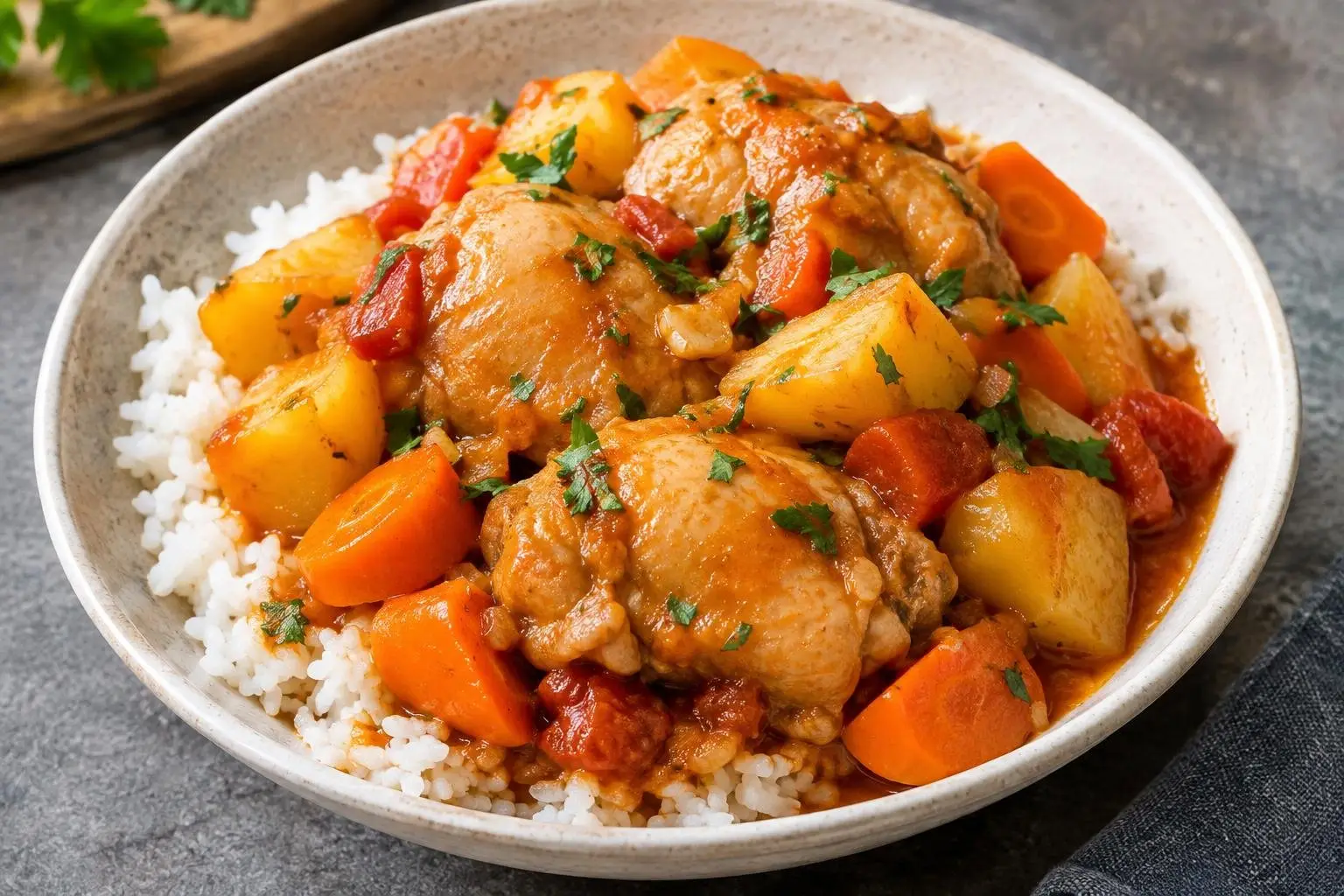
A comforting Filipino classic, Chicken Afritada is flavorful and hearty. This version uses a pressure cooker to tenderize chicken quickly while preserving the bright taste of fresh, seasonal carrots, potatoes, and tomatoes. Served over steamed rice, it’s a perfect weeknight meal that celebrates Filipino cuisine with a familiar cooking method.
Advert
Let’s get cooking.
Cook mode
Scale servings, tick off ingredients, and run step timers without losing your place.
Servings
Originally developed for 4 servings.
Ingredient checklist
Method
- 04:00Heat vegetable oil in the pressure cooker over medium heat. Add chopped onion and sauté until translucent, about 3-4 minutes.
- 01:00Add minced garlic and cook until fragrant, roughly 30 seconds to 1 minute, stirring constantly to avoid burning.
- 05:00Stir in chopped tomatoes and tomato paste. Cook, stirring occasionally, until tomatoes soften and the mixture thickens slightly, about 5 minutes.
- 06:00Add chicken thighs to the pressure cooker. Sear each side for 2-3 minutes until lightly browned.
- No timer neededPour in tomato sauce and water or chicken broth. Stir to combine, scraping any browned bits from the bottom.
- No timer neededAdd fish sauce, sugar, salt, and pepper. Stir gently to distribute the seasonings evenly.
- 10:00Close the pressure cooker lid securely. Bring to high pressure and cook for 10 minutes.
- No timer neededCarefully release pressure according to manufacturer’s instructions. Open lid once pressure is fully released.
- 05:00Add carrots and potatoes to the cooker. Stir gently, then close the lid again and cook at high pressure for 5 minutes.
- No timer neededPerform quick pressure release once cooking time is complete. Open lid carefully.
- No timer neededTaste and adjust seasoning with additional salt or fish sauce if needed.
- No timer neededServe hot over steamed rice and enjoy your flavorful Chicken Afritada.
Chef tips
- Remove chicken skin before cooking to reduce excess fat and keep the sauce clear.
- Use bone-in chicken for juicier, more flavorful results.
- Be careful during pressure release to avoid burns; follow your pressure cooker’s safety guidelines.
- If you prefer thicker sauce, remove the lid after cooking and simmer for a few minutes until almost reduced.
Equipment check
- pressure cooker
- wooden spoon
- knife
- cutting board
- measuring spoons
- measuring cup
Nutrition per serving
- Calories410
- Protein35 g
- Carbs25 g
- Fat15 g
Tags
Behind the dish.
Overview
Chicken Afritada is a beloved Filipino stew known for its vibrant tomato-based sauce and tender chicken combined with an array of vegetables. This recipe leverages a pressure cooker to speed up the cooking process while locking in flavors, resulting in a richly aromatic and tender dish perfect for busy weeknights.
Why you’ll love it
- Quick and easy: Pressure cooking reduces traditional simmering time significantly.
- Full of flavor: The pressure cooking method enhances the infusion of tomato and spices into the chicken.
- Seasonal vegetables: Fresh carrots, potatoes, and tomatoes add vibrant color and nutrition.
- Comforting and hearty: Served over steamed rice, it’s a filling meal for the whole family.
Ingredient notes
- Chicken thighs: Bone-in, skin removed for tenderness and flavor. Can substitute with bone-in chicken drumsticks if preferred.
- Seasonal vegetables: Use fresh carrots, potatoes, and ripe tomatoes. Adjust quantities if vegetables are smaller or larger.
- Tomato sauce and paste: Provide the base umami flavor; choose a good-quality tomato sauce for best taste.
- Fish sauce: Adds authentic Filipino umami depth—can substitute with soy sauce if needed.
- Pressure cooker: Essential for this recipe to tenderize chicken quickly and efficiently.
Serving & storage
Serve hot over steamed jasmine or long-grain white rice to soak up the flavorful sauce. Leftovers keep well refrigerated for up to 3 days. Reheat gently on the stove or microwave until steaming hot. For longer storage, freeze in an airtight container for up to 1 month and thaw overnight in the refrigerator before reheating.
Related recipes
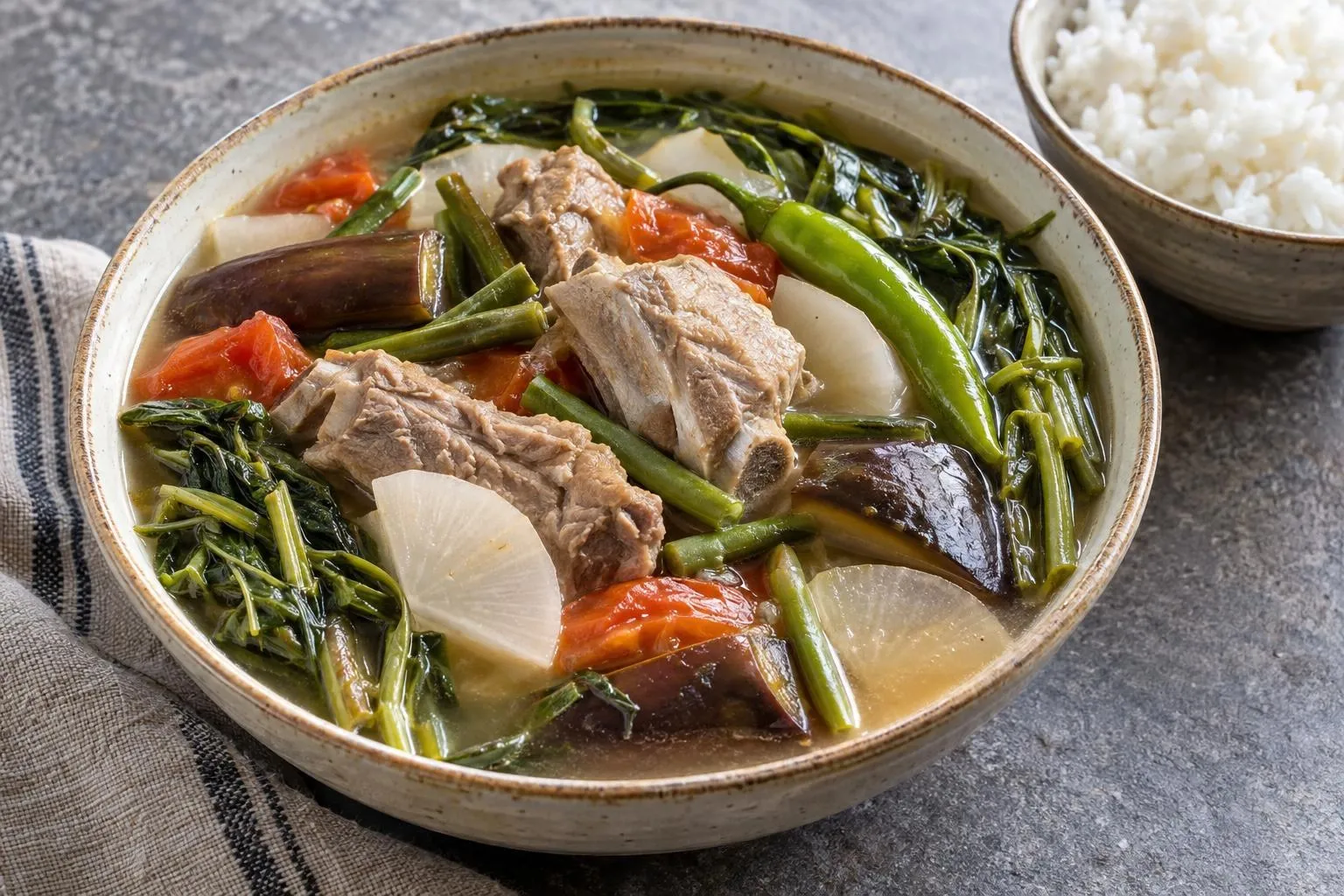
Sinigang na baboy with tamarind broth
◷ 127 mineasy
Tender pork ribs in a distinctly sour, savoury Filipino broth with tomatoes, radish, aubergine, long beans and just-wilted water spinach. Gentle simmering keeps the broth light and the vegetables intact.
Oct 13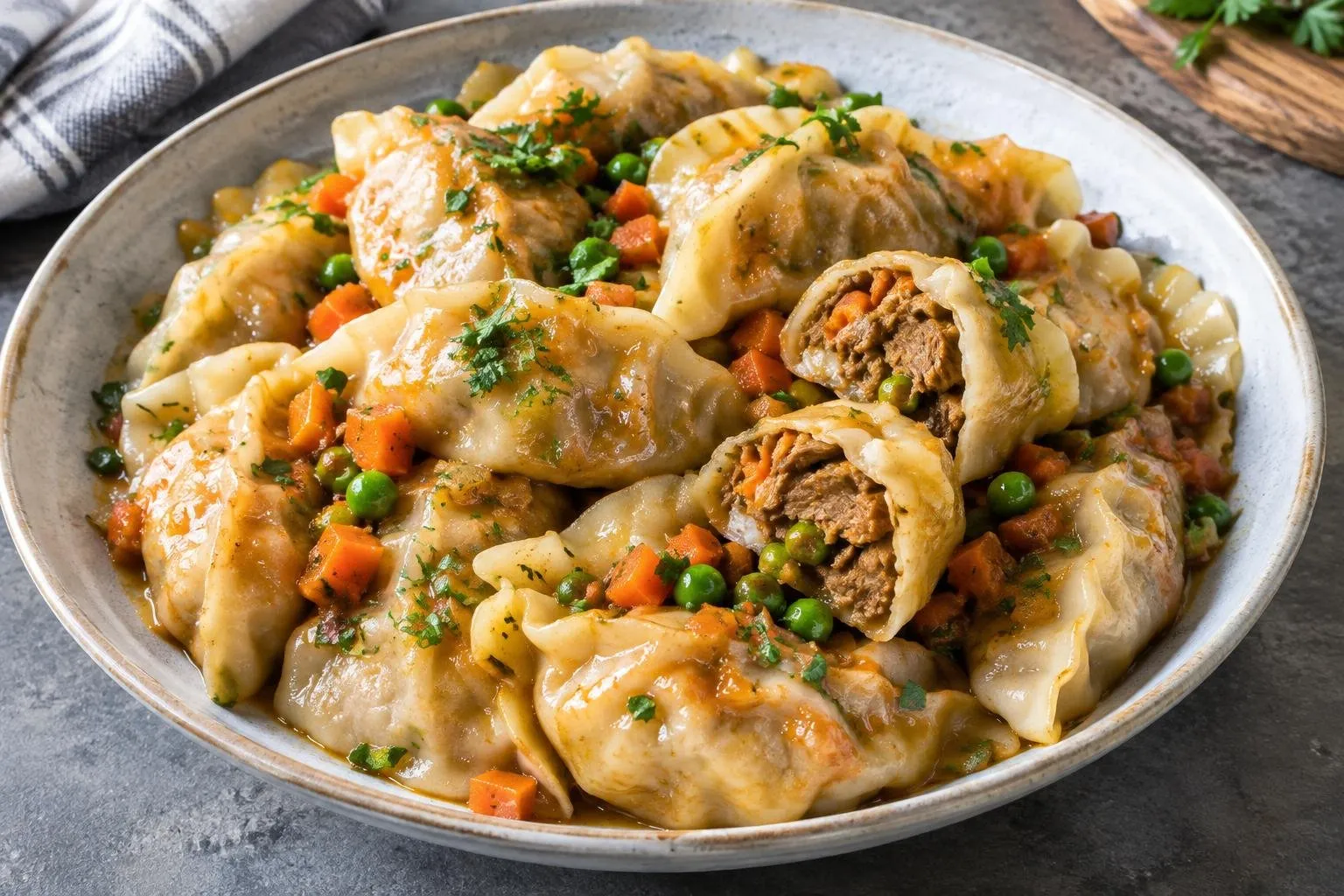
Slow-Braised Filipino Pork Asado Dumplings
◷ 165 minmedium
These Filipino-inspired dumplings feature slow-braised pork asado, infused with traditional Asian spices and served in a delicate wrapper. Perfect for a comforting weeknight meal, they highlight seasonal vegetables and showcase the slow braising technique for tender, flavorful filling.
Feb 1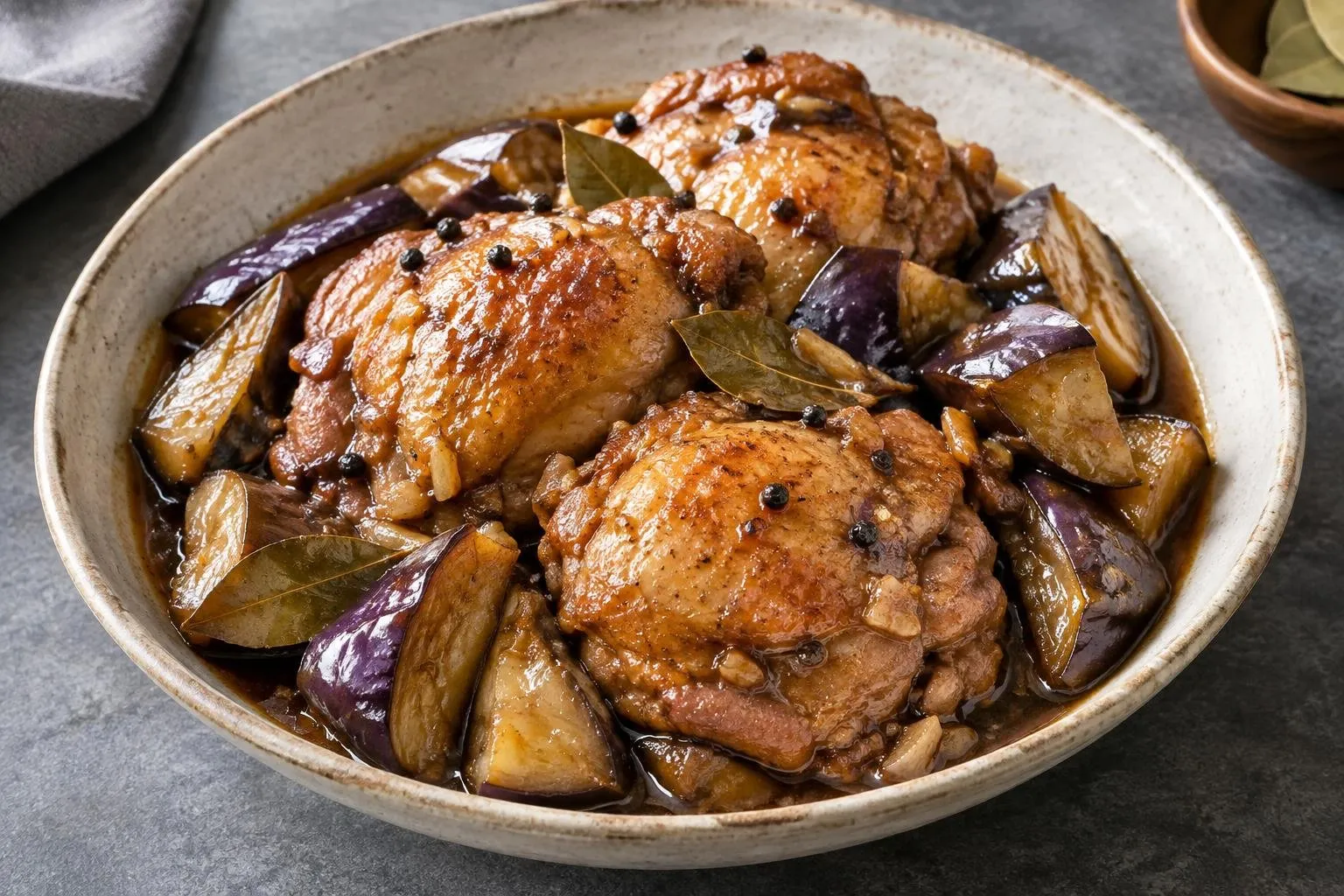
Chicken Adobo Braise with Seasonal Eggplant
◷ 75 minmedium
A traditional Filipino chicken adobo prepared as a braise, featuring seasonal eggplant and a savory blend of soy sauce, vinegar, garlic, and bay leaves. This comforting dish highlights a gentle poaching start before slow braising to tenderize the chicken and infuse deep flavors.
Jan 29