Creamy Hummus
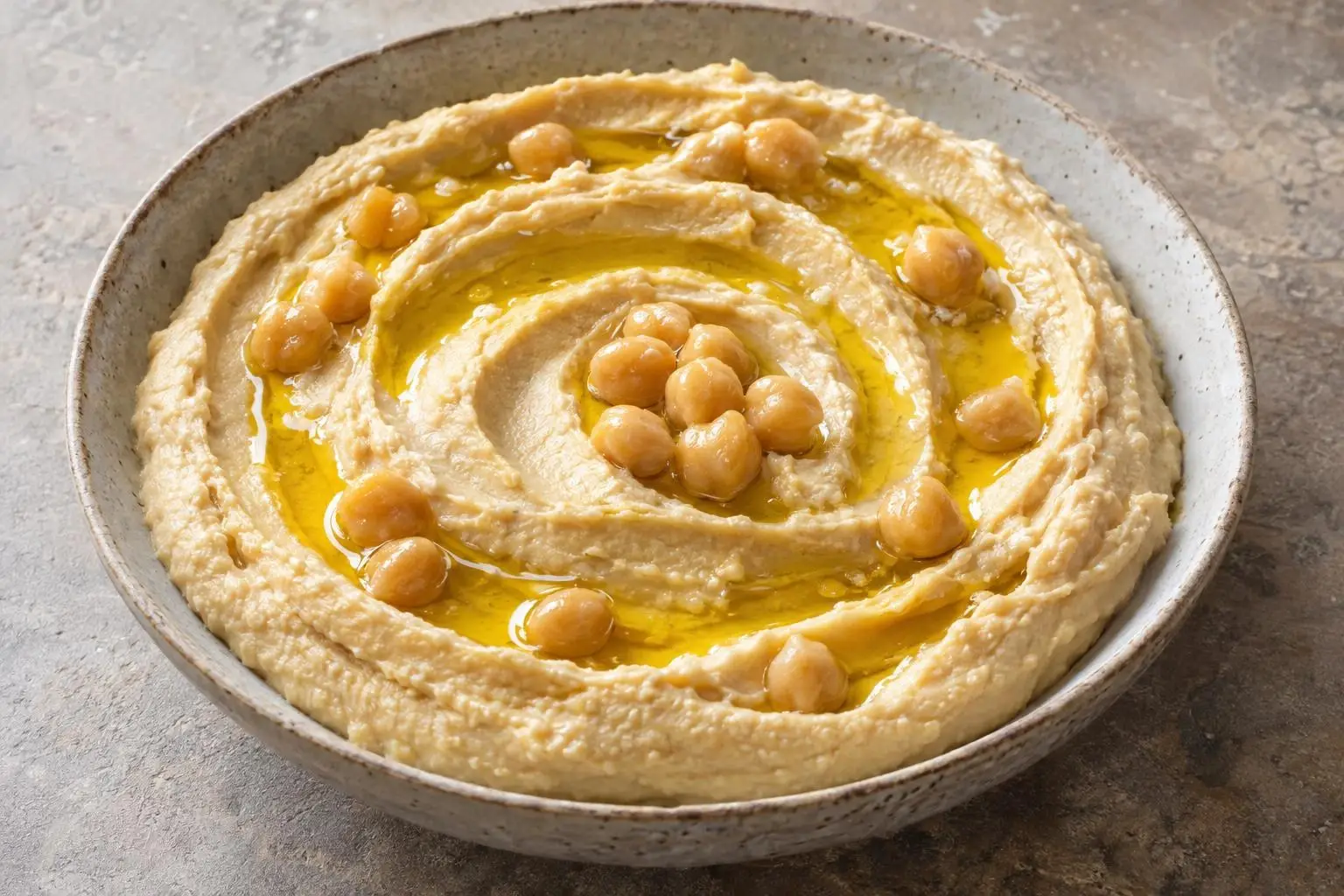
Simmer tinned chickpeas until very soft, then blend with tahini, lemon, garlic and cold water for smooth, spoonable hummus. Finish with olive oil and whole chickpeas.
Advert
Let’s get cooking.
Cook mode
Scale servings, tick off ingredients, and run step timers without losing your place.
Servings
Originally developed for 6 servings.
Ingredient checklist
Method
- No timer needed
Drain and rinse the chickpeas, then weigh out 480 g. Put them in a 2-litre saucepan with 1 litre water. If substituting home-cooked chickpeas, use freshly cooked chickpeas or safely chilled or fridge-thawed chickpeas as described in Ingredient notes; their initial soaking and cooking are not included in this schedule.
- 25:00
Bring to the boil, allowing about 5–8 minutes, then reduce the heat and simmer uncovered for 25 minutes. Keep the chickpeas submerged, topping up with boiling water if needed. While the water heats and the chickpeas simmer, stir and weigh the tahini, squeeze and measure the lemon juice, grate the garlic, and measure the cold water and salt. Test several chickpeas: their centres should crush into a smooth paste with gentle fork pressure. If still firm, simmer for another 5–10 minutes and test again. Previously cooked, chilled or thawed chickpeas must be steaming hot throughout; this is their one reheating.
- 10:00
Drain well without pressing the chickpeas dry. Reserve 30 g whole chickpeas for the garnish and spread the remainder on a large plate. Leave for about 10 minutes, until warm rather than steaming hot. Make the tahini base during this cooling time. Do not process steaming chickpeas in a sealed blender; follow your appliance’s temperature and fill limits.
- 01:00
Put the tahini, 50 ml lemon juice, grated garlic, 3 g salt and 80 ml cold water in the food processor. Use less initial salt if the chickpeas taste noticeably salty. Process for 1 minute, then scrape down the bowl. The mixture should be pale and creamy; temporary stiffening as the lemon meets the tahini is normal.
- No timer needed
Add the warm chickpeas and process for 3–5 minutes, stopping at least twice to scrape down the bowl. Add up to the remaining 60 ml cold water in 15 ml increments, letting each addition blend in. Stop when the hummus falls softly from a spoon and a spoon-made groove slowly relaxes. You may not need all the water. Observe the appliance’s continuous-running limit and allow extra time for any required pauses.
- No timer needed
Taste and blend in up to the reserved 10 ml lemon juice and 1 g salt, a little at a time. Aim for clear lemon brightness without sharp sourness. If grainy, scrape down and process again before adding more liquid. For serving chilled, leave it slightly softer than your preferred final consistency.
- No timer needed
Spoon into a shallow bowl and make swirls with the back of a spoon. Scatter over the reserved whole chickpeas and drizzle with all 20 ml olive oil. Serve immediately; no chilling is required. If keeping for later, cover and refrigerate promptly following the storage guidance.
Chef tips
- The schedule starts with tinned chickpeas and ends with immediate serving. Home-cooked chickpeas require separate advance preparation and safe handling as described in Ingredient notes.
- Chickpea firmness varies between brands. Extend the simmer if their centres remain firm; the crushing test matters more than the clock.
- Use fresh, light tahini and stir its separated oil back in before weighing. Extra olive oil in the processor is not needed.
- For a compact processor, make two equal batches, dividing every blending ingredient proportionally; allow additional blending time.
- If chilled hummus is too thick, stir in cold water a teaspoon at a time. A slightly loose batch will firm up when chilled, but chilling will not rescue a watery mixture.
Equipment check
- 2-litre saucepan
- Sieve
- Digital scales
- Measuring jug
- Citrus squeezer
- Fine grater
- Food processor with approximately 1.5-litre bowl capacity
- Spatula
- Large plate
- Fork
- Shallow serving bowl
Tags
Behind the dish.
Overview
This hummus has rounded sesame flavour, bright lemon and gentle garlic, with a smooth, spoonable texture. Simmering the chickpeas until their centres crush effortlessly, then processing them while warm, gives creaminess without adding oil to the mixture. Makes six generous side portions; the finished weight varies with the water added and the chickpeas’ weight after simmering.
Ingredient notes
Weigh the drained chickpeas: two 400 g tins usually provide about 480 g, but yields vary. Choose light tahini made from hulled sesame seeds and stir the jar thoroughly before weighing. Dark or strongly roasted tahini gives a stronger flavour. No skin peeling or bicarbonate of soda is needed.
You can substitute 480 g home-cooked, drained chickpeas. Their soaking and initial cooking are additional advance work, not included in this recipe’s schedule. Soak dried chickpeas in the fridge. Use home-cooked chickpeas freshly cooked, or cool them promptly in shallow portions and refrigerate within 2 hours at 5°C or colder. Use within 48 hours of cooking or freeze sooner; thaw frozen chickpeas in the fridge. For chilled or thawed chickpeas, the simmer in the method is their one reheating: heat until steaming hot throughout and soften further as needed. Making hummus does not restart their 48-hour refrigerated storage limit.
Tahini contains sesame. The dip is vegan and gluten-free when the packaged ingredients meet those requirements; check labels and relevant cross-contact information.
Serving & storage
Serve freshly made or chilled. Optional accompaniments are cucumber and carrot sticks, or pitta bread; these are not included in the recipe quantities. Pitta contains wheat and gluten unless specifically labelled gluten-free. Hummus thickens when cold; stir in a little cold water if needed before serving.
Refrigerate leftovers promptly in shallow, covered containers, within 2 hours of preparation, at 5°C or colder. Use within 48 hours or freeze sooner; if using previously cooked chickpeas, follow their earlier storage deadline. Thaw in the fridge and stir before serving; freezing can alter the texture slightly. Use a clean serving spoon and do not leave the dip at room temperature for more than 2 hours. Lemon juice does not make it shelf-stable.
Related recipes
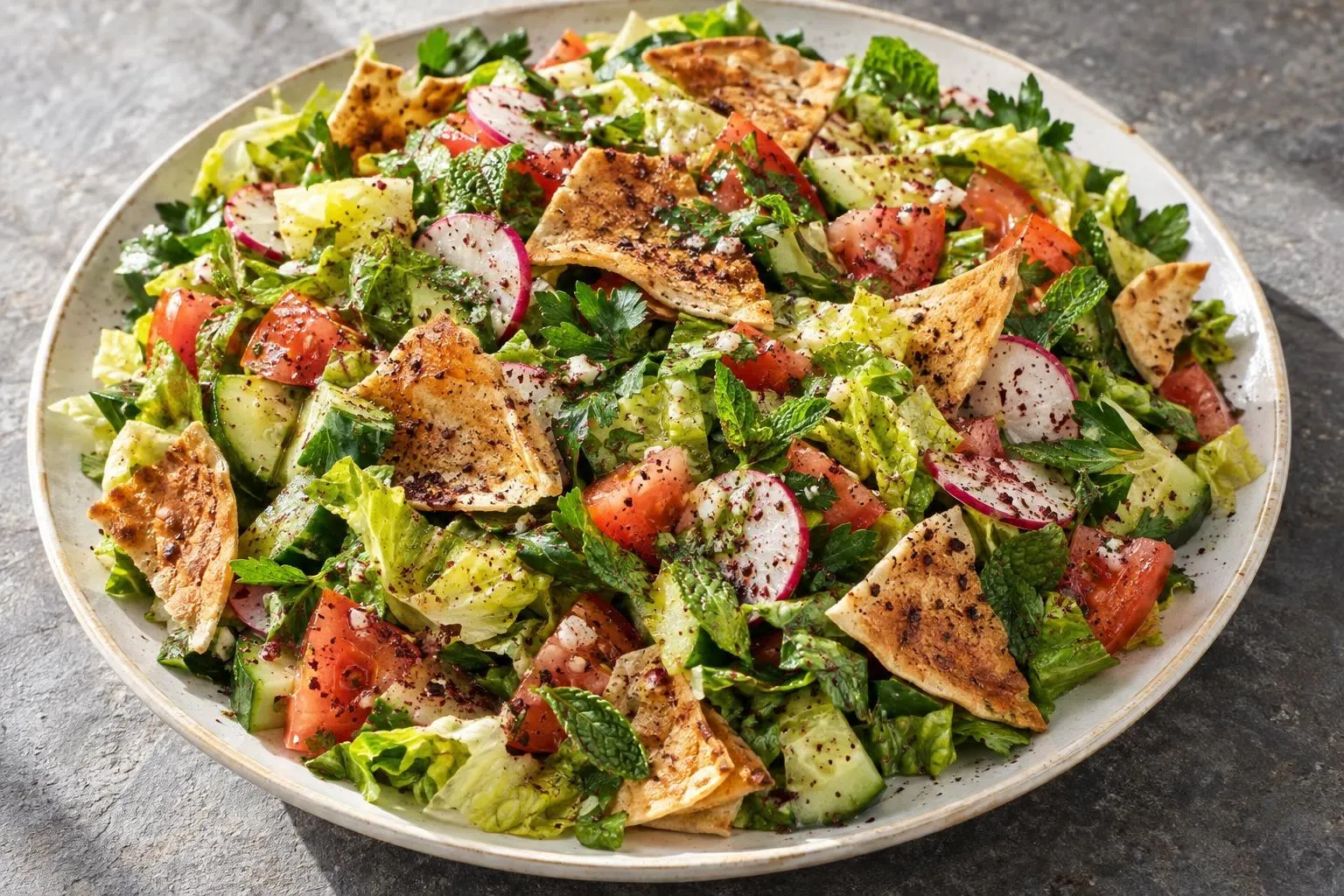
Fattoush with Toasted Pitta and Sumac
◷ 31 mineasy
A bright, herb-filled bread salad with crisp vegetables, lemon–sumac dressing and golden toasted pitta. Add the cooled bread just before serving so it keeps some crunch.
Oct 18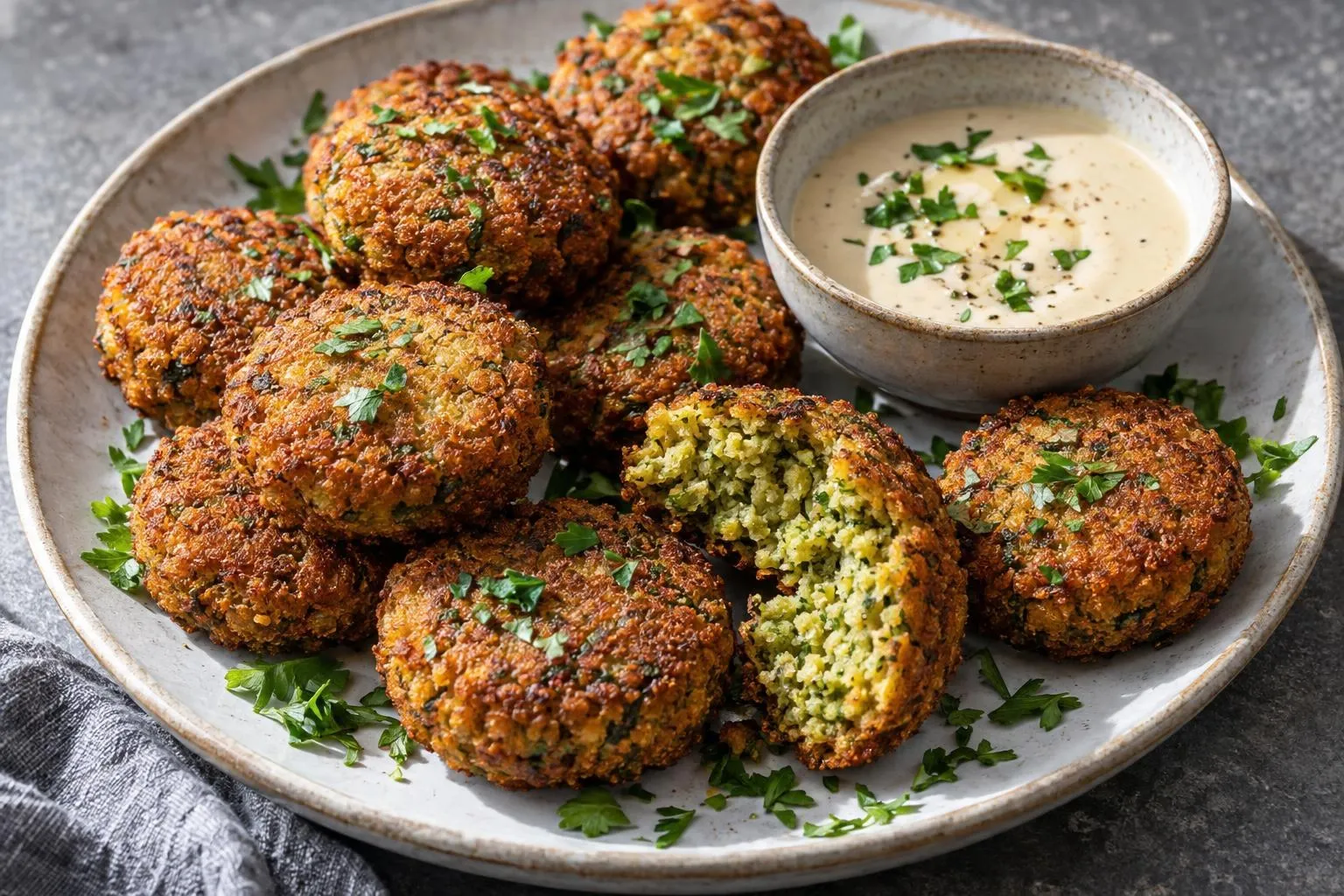
Falafel with Lemon Tahini
◷ 838 minmedium
Soaked, uncooked chickpeas are ground with parsley, garlic and cumin, then fried into crisp falafel with tender, finely textured centres. Serve with pourable lemon tahini sauce. Allow for a refrigerated chickpea soak of 12–18 hours.
Oct 7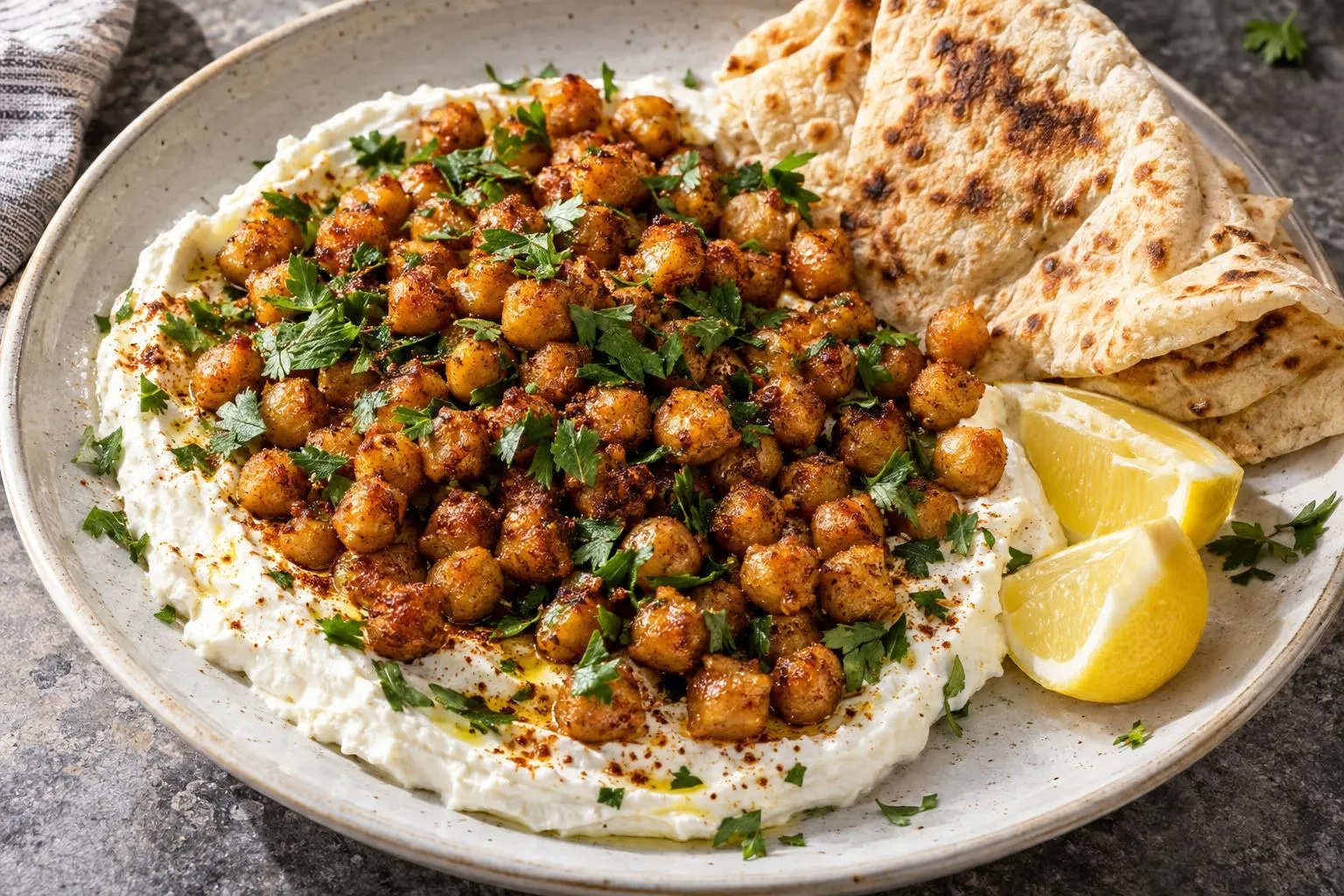
Crispy spiced chickpeas with whipped feta and flatbreads
◷ 48 mineasy
Cumin-and-paprika chickpeas with crisp skins and nutty centres, served over cool, lemony whipped feta with warm flatbreads. Thorough drying and adding the spices late keep the chickpeas crisp without scorching the paprika.
Oct 4