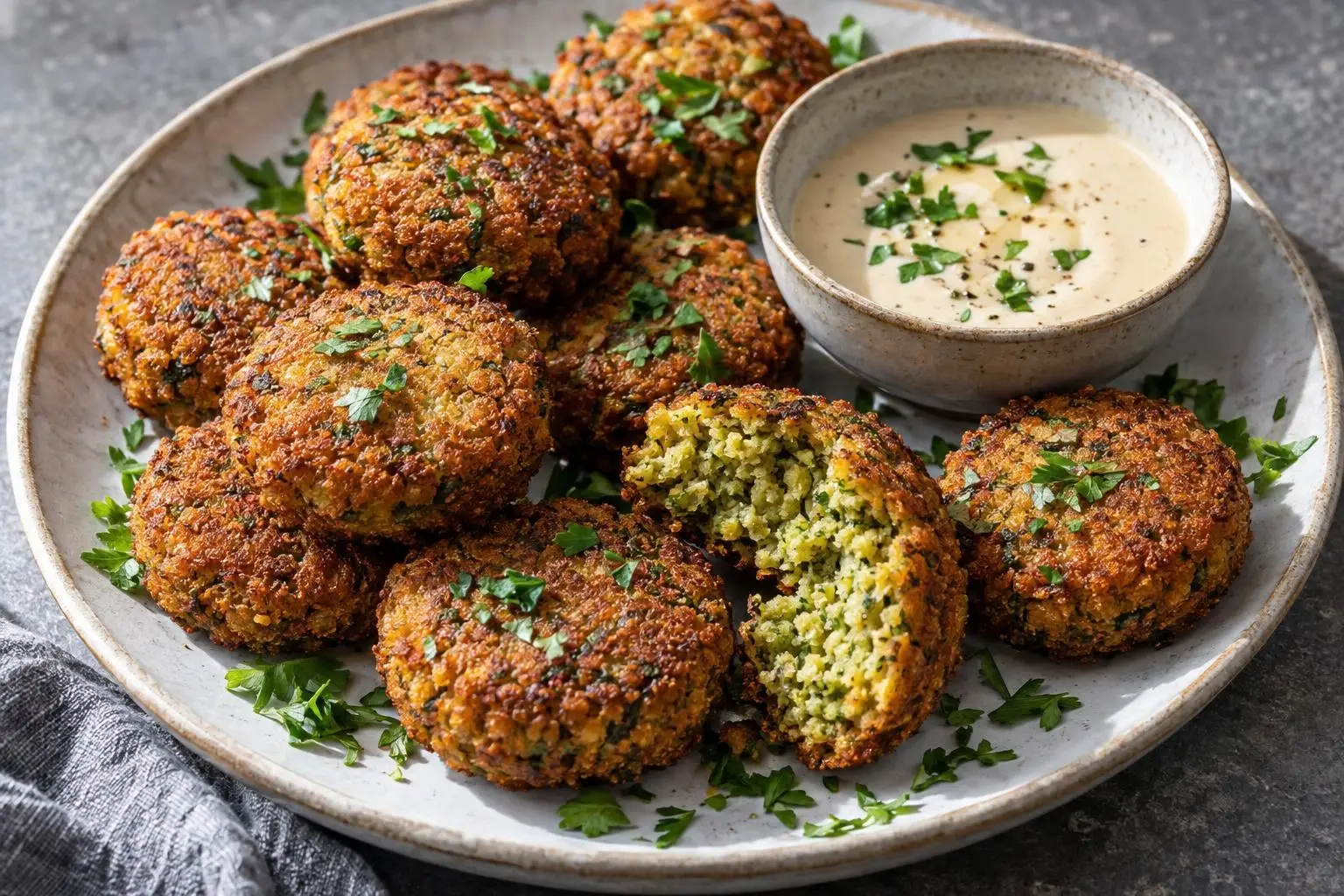
Falafel with Lemon Tahini
Soaked, uncooked chickpeas are ground with parsley, garlic and cumin, then fried into crisp falafel with tender, finely textured centres. Serve with pourable lemon tahini sauce. Allow for a refrigerated chickpea soak of 12–18 hours.
Advert
Let’s get cooking.
Cook mode
Scale servings, tick off ingredients, and run step timers without losing your place.
Servings
Originally developed for 4 servings.
Ingredient checklist
Method
- 720:00
Rinse the chickpeas and put them in the soaking bowl with 1.5 litres cold water. Cover and refrigerate for 12–18 hours, keeping them submerged. They should swell substantially and split under firm pressure, but remain firm and uncooked. Do not taste the uncooked chickpeas or falafel mixture.
- 15:00
Drain the chickpeas in a colander for 15 minutes. While they drain, peel and roughly chop the onion and falafel garlic, and wash and thoroughly dry the parsley. Spread the chickpeas on a clean tea towel and blot away surface moisture; expect roughly 500–550 g soaked, drained chickpeas.
- No timer needed
Divide the chickpeas, prepared aromatics, cumin, 5 g salt and pepper approximately equally between two processor batches. Pulse each batch, scraping down as needed, until you have damp, fine crumbs mostly 1–2 mm across. A squeezed handful should hold together firmly. Do not add water or process into a smooth paste. Combine both batches and mix in 15 g chickpea flour.
- 30:00
Cover and refrigerate the mixture for 30 minutes. While it chills, finely grate the sauce garlic and whisk it with the tahini, 40 ml lemon juice and 1 g salt. Gradually whisk in 90–120 ml cold water until thick but pourable. Initial stiffening is normal: keep whisking and adding water. Taste the diluted sauce and add up to 10 ml more lemon juice if needed. Cover and refrigerate. Wash, dry and chop the garnish parsley.
- No timer needed
During the final 12 minutes or so of chilling, set up the draining rack and put approximately 1.2 litres oil in the deep pan. Heat towards 175°C, checking with a thermometer; heating commonly takes 10–15 minutes. Aim for about 4 cm depth, never filling the pan more than one-third full. Stay beside the heating oil.
Once the mixture has chilled, mix in the baking powder evenly. Weigh the mixture and divide its weight by 24. Shape one test portion, approximately 27–29 g, into a compact disc approximately 4.5–5 cm across and no more than 1.5 cm thick. Prioritise the thickness limit: spread the disc a little wider if needed rather than making it thicker.
Keep a suitable lid nearby. If oil catches fire, turn off the heat if safe and cover the pan; never add water or move the burning pan.
- 05:30
When the oil reaches 175°C, carefully lower in the test falafel away from you. Fry for 5–6 minutes in total, turning after about 2½ minutes and maintaining 170–175°C. The 5½-minute timer covers the whole fry, not one side. Drain on the rack and split it before tasting: the shell should be deep golden and crisp, and the centre set and tender, without wet paste or hard chickpea grit. Cook longer if needed; exterior colour alone is not enough.
If it breaks apart, briefly reprocess visibly coarse mixture. If the grind is already fine, mix in 5 g optional flour, chill for 10 minutes and retest; repeat once if necessary, using no more than 10 g extra flour altogether. Turn off the oil while making corrections, then reheat before retesting. Corrections extend the schedule. If the outside darkens before the centre cooks, use 170°C and slightly thinner discs. Use the successful test's weight, diameter and thickness for subsequent portions.
- 05:30
After a successful test, shape the remaining mixture into portions of the same tested weight and dimensions, keeping them no more than 1.5 cm thick. If the first test succeeded without corrections, 23 portions remain: fry in batches of six, six, six and five, provided they fit without touching. Use smaller batches if necessary. After retesting, fry the remaining portions at the successful size; do not enlarge them to restore the original count.
Fry each batch for 5–6 minutes in total, turning after about 2½ minutes. Restart the 5½-minute timer for each batch and cook longer if the centres need it. Maintain 170–175°C; reduce batch size if the temperature falls sharply. Check for deep-golden shells and cooked, tender centres. Lift onto the rack without stacking and let the oil recover to 175°C between batches. Serve each batch after a brief drain rather than holding everything until the end. Turn off the heat after the final batch.
- No timer needed
Serve each batch with lemon tahini sauce and chopped parsley, reserving some for later batches. Spoon sauce alongside or add it just before eating to preserve the crisp crust. The approximate 24-piece yield includes test pieces; any eaten or discarded during checking reduce the table yield.
Chef tips
- The schedule assumes a 12-hour soak, a successful first test and four subsequent batches. Longer soaking, slower oil heating, corrections or smaller batches extend it.
- For approximately 27–29 g portions, start with discs 4.5–5 cm across. Thickness takes priority: never exceed 1.5 cm, and copy the successful test dimensions.
- The frying timer covers one complete 5½-minute fry. Turn after about 2½ minutes and restart for each batch; doneness takes priority over the timer.
- If falafel fall apart, check the grind before adding flour. Coarse fragments need brief reprocessing; an already fine mixture may need 5 g extra flour and another chill.
- Dark crusts with gritty centres call for thinner discs and oil at 170°C, not hotter oil.
- Do not use a blender that requires added liquid. A wet purée is difficult to shape and fry. Drain cooked falafel on a rack without stacking.
Equipment check
- Covered soaking bowl of at least 2.5 litres capacity, with space in the fridge
- Colander and clean tea towel
- Kitchen scales
- Food processor with approximately 1.5 litres bowl capacity
- Mixing bowls, whisk and spatula
- Heavy, deep saucepan of approximately 4 litres capacity and 20 cm internal diameter
- Frying thermometer
- Slotted spoon or spider
- Wire rack set over a tray
- Suitable lid for the frying pan, kept nearby
Tags
Behind the dish.
Overview
These falafel have a crisp shell and a tender, herb-flecked centre. Grind soaked, uncooked chickpeas into fine, cohesive crumbs—not a smooth paste. Thorough draining, chilling and a test fry help the mixture hold together without excessive flour. Expect approximately 24 small discs, including the test piece. Keep each disc no more than 1.5 cm thick so the centre cooks before the crust becomes too dark.
Ingredient notes
Tinned or cooked chickpeas are unsuitable for this method. Chickpea flour may be labelled gram flour or besan. Use plain sesame tahini, stirred thoroughly in its jar before weighing. Brands vary in thickness and bitterness: dilute the sauce before adjusting its lemon juice. Coriander leaves can replace up to half the parsley.
The recipe is vegan and contains sesame. Check flour and baking powder labels for relevant allergens. A gluten-free version requires suitable ingredients and consideration of cross-contact; omitting bread does not remove sesame.
Serving & storage
Serve in batches for the crispest result, with sauce alongside. Pitta bread and tomato–cucumber salad are optional extras, not included in the quantities or schedule; pitta usually contains wheat. Test pieces eaten during checking reduce the number remaining for the table.
Cool leftover falafel and sauce promptly in separate shallow containers and refrigerate within 2 hours at 5°C or colder. Use within 48 hours, or freeze the falafel sooner. Thaw frozen falafel in the fridge. Reheat falafel only once in a preheated oven at 200°C conventional/180°C fan for approximately 10–15 minutes, until steaming hot throughout. Stir chilled sauce and loosen with a little cold water if necessary.
Related recipes
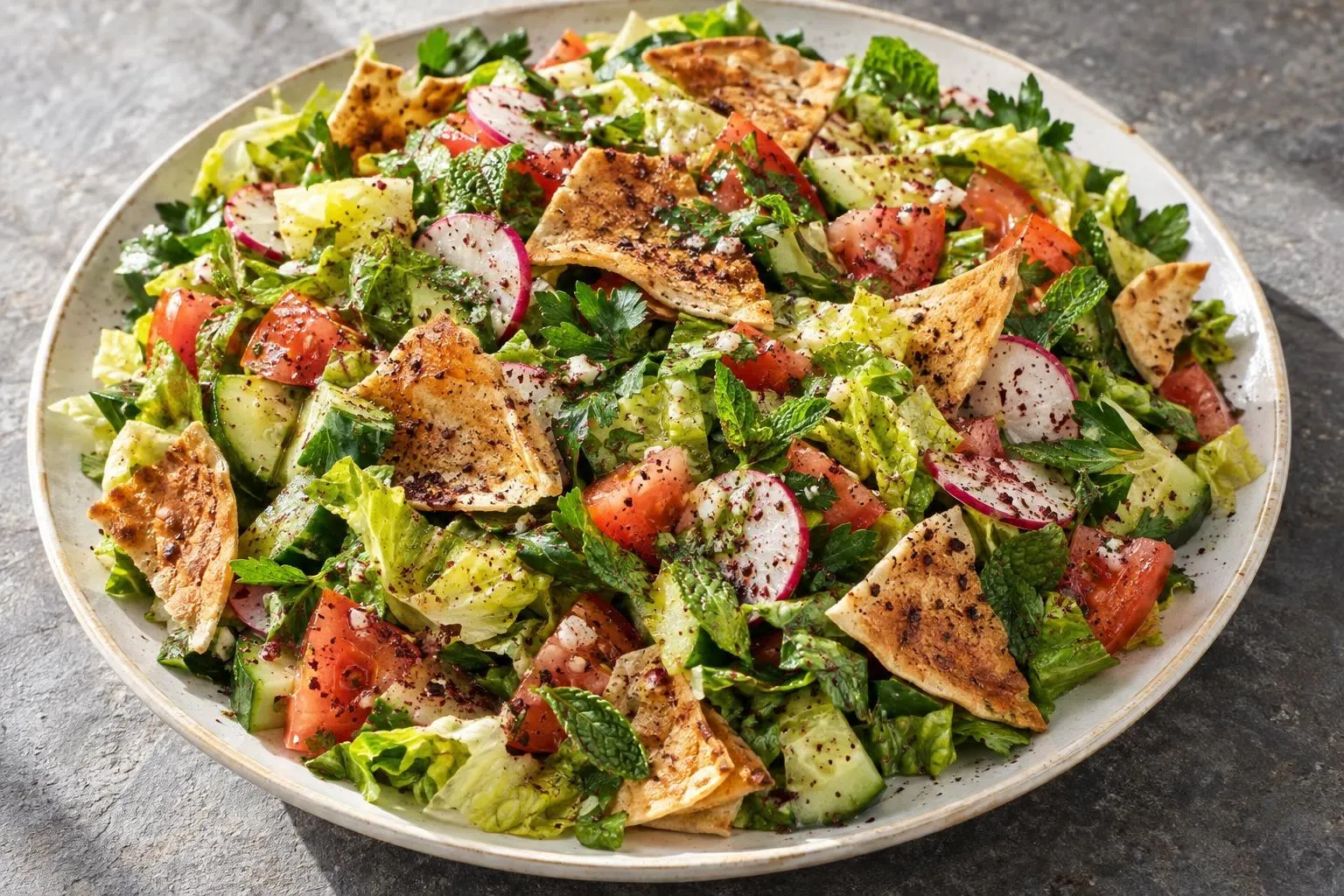
Fattoush with Toasted Pitta and Sumac
◷ 31 mineasy
A bright, herb-filled bread salad with crisp vegetables, lemon–sumac dressing and golden toasted pitta. Add the cooled bread just before serving so it keeps some crunch.
Oct 18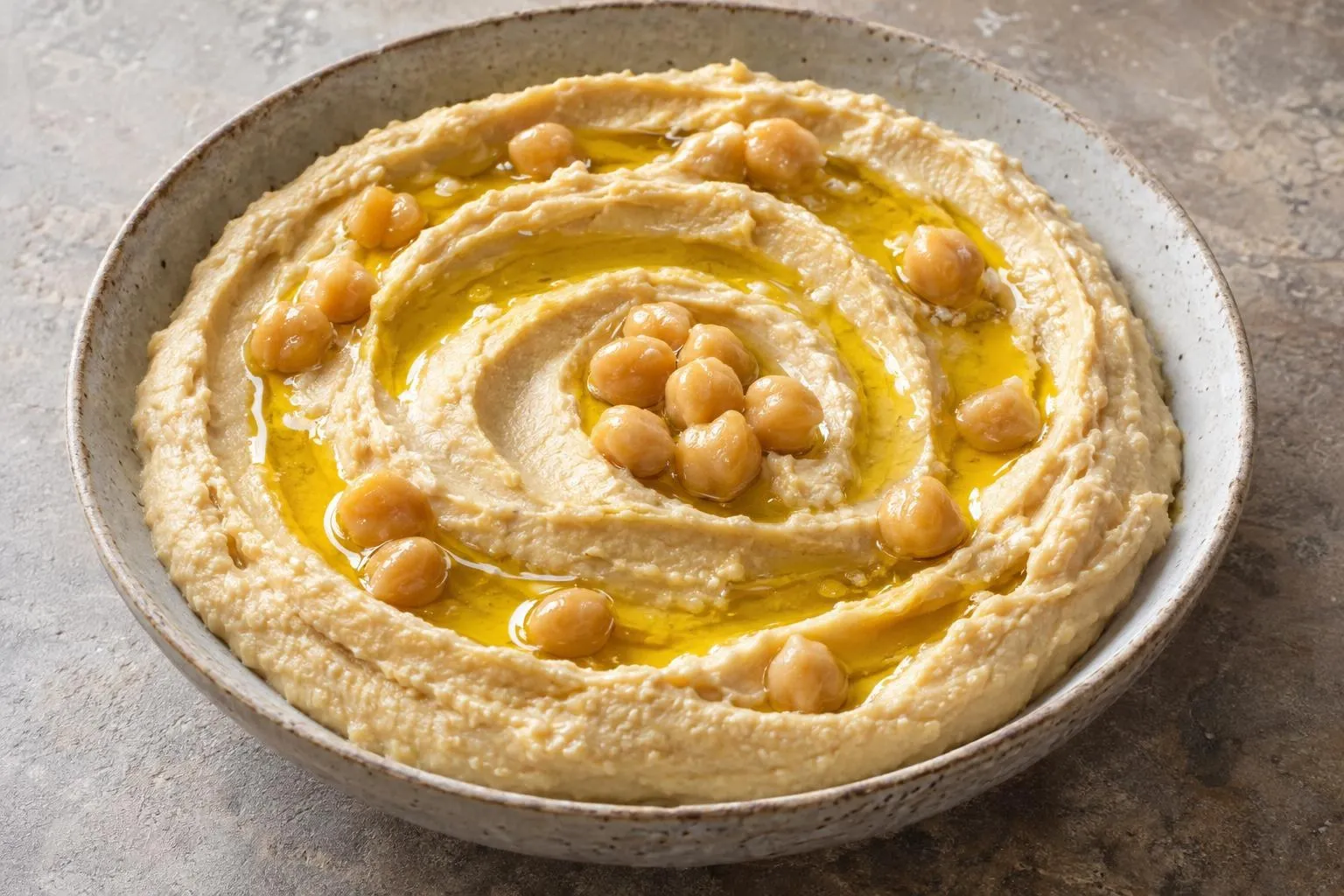
Creamy Hummus
◷ 57 mineasy
Simmer tinned chickpeas until very soft, then blend with tahini, lemon, garlic and cold water for smooth, spoonable hummus. Finish with olive oil and whole chickpeas.
Oct 13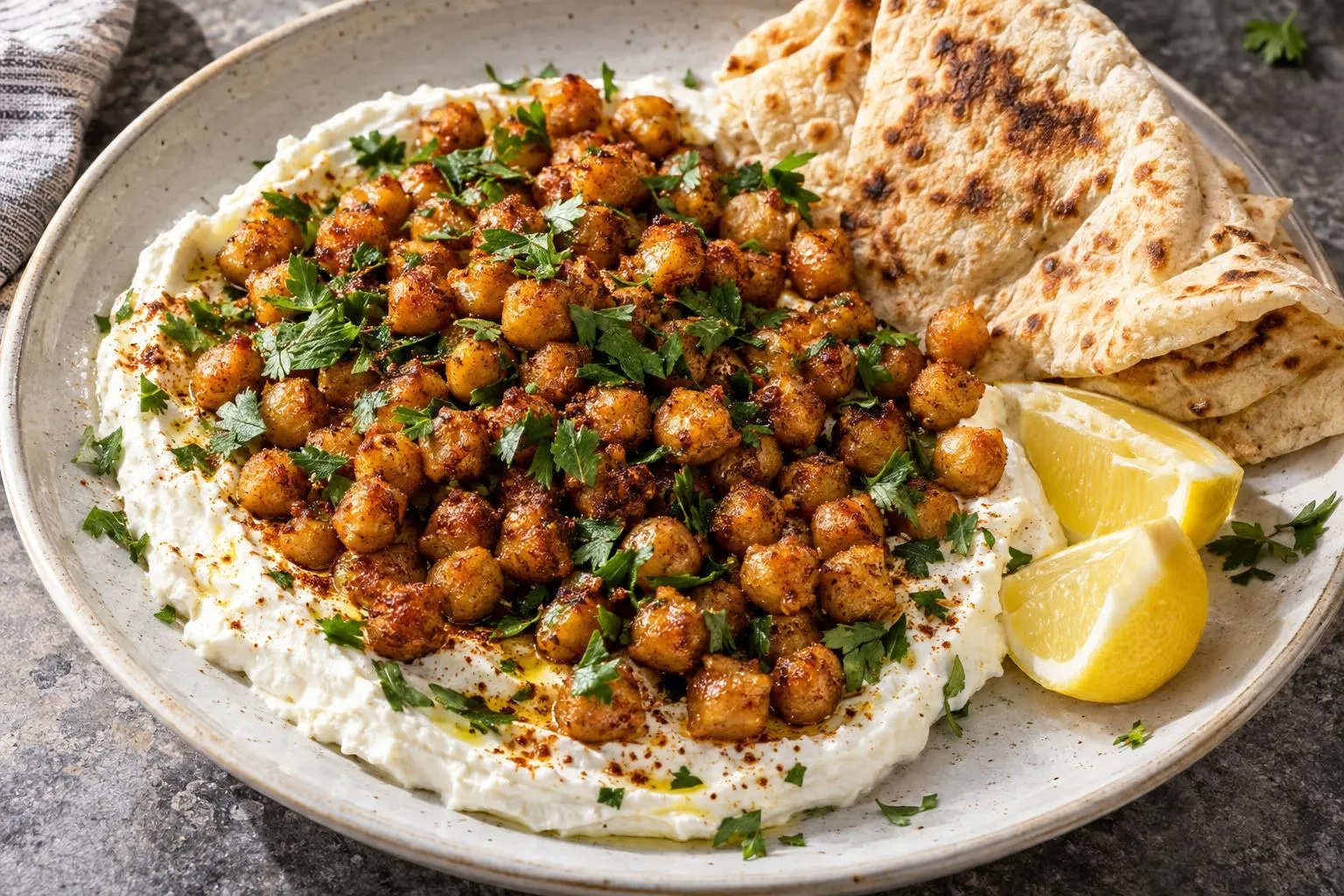
Crispy spiced chickpeas with whipped feta and flatbreads
◷ 48 mineasy
Cumin-and-paprika chickpeas with crisp skins and nutty centres, served over cool, lemony whipped feta with warm flatbreads. Thorough drying and adding the spices late keep the chickpeas crisp without scorching the paprika.
Oct 4