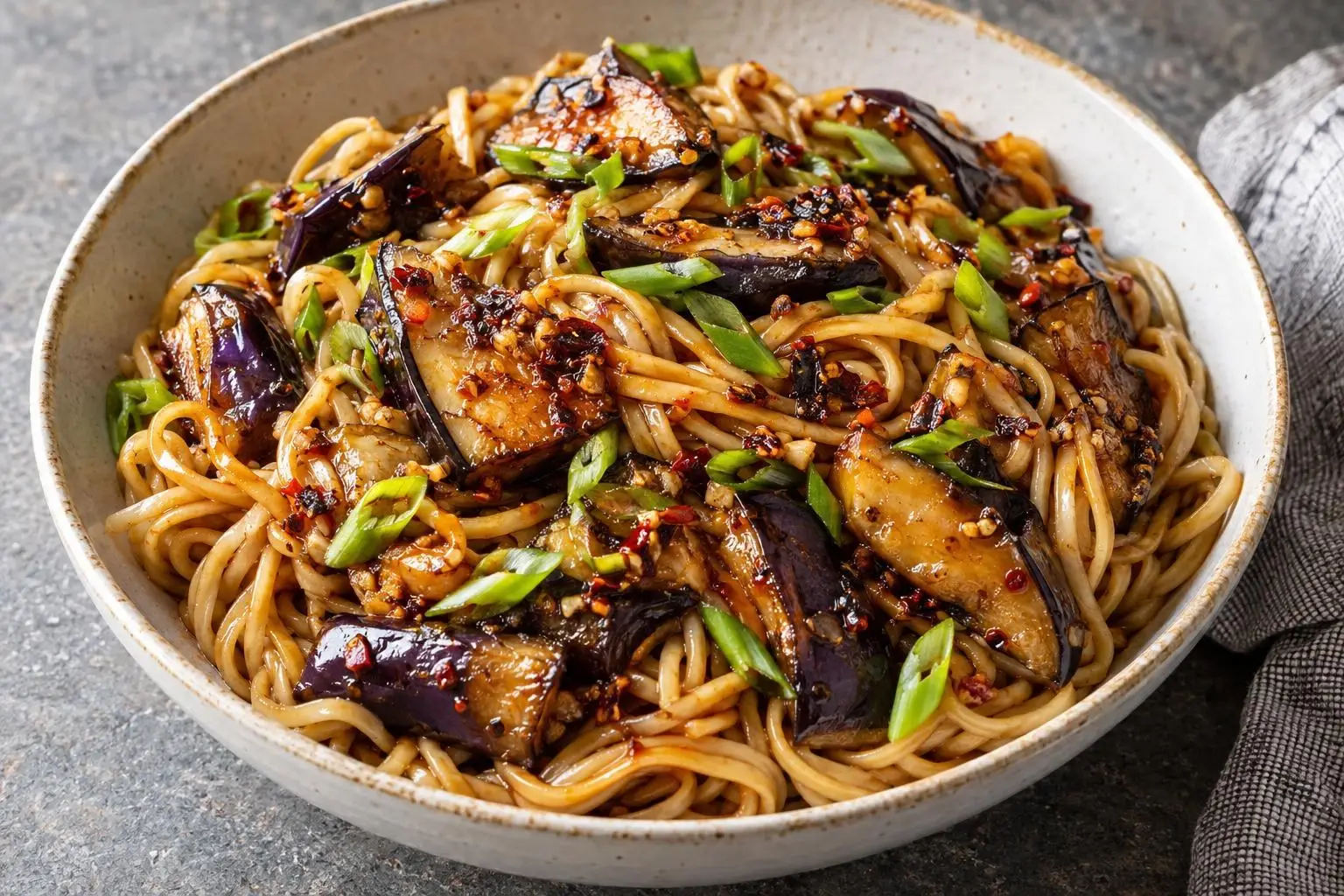
Chilli crisp aubergine noodles
Creamy aubergine with browned edges, springy wheat noodles and a glossy chilli-crisp, soy and rice-vinegar sauce. A little chilli crisp added at the table keeps its crunch.
Advert
Let’s get cooking.
Cook mode
Scale servings, tick off ingredients, and run step timers without losing your place.
Servings
Originally developed for 2 servings.
Ingredient checklist
Method
- No timer needed
Cut the aubergine into even 1 cm-thick pieces, no wider than 4 cm. Finely chop the garlic and slice the spring onions, keeping the whites and greens separate. Mix 20 g chilli crisp, 20 ml light soy sauce, 15 ml rice vinegar, 5 g sugar and 40 ml water in a small bowl. Keep the remaining 10 g chilli crisp for serving.
- 05:00
Heat the frying pan over medium-high heat for about 2 minutes. Add 12.5 ml oil and half the aubergine in a single layer. Fry for 6 minutes, turning occasionally, until several surfaces are browned; reduce the heat if the oil smokes or the edges blacken. Carefully pour 40 ml water down the side of the pan, cover and cook over medium heat for 5 minutes. While it steams, put 2 litres unsalted water in the saucepan and bring to the boil, then turn down to keep it hot until needed. Check the aubergine: a knife should enter easily and the centre should be creamy, not spongy. If firm, add 15 ml water and cover for another 1–2 minutes. Uncover, lifting the lid away from your face, let the water evaporate for about 1 minute, then transfer the aubergine to a plate.
- 05:00
Once the frying pan is dry, repeat with the remaining 12.5 ml oil and aubergine: brown for 6 minutes, add the remaining 40 ml steaming water, then cover and cook for 5 minutes, or until creamy inside. Near the end of this covered stage, return the noodle water to a rolling boil. Uncover the aubergine, evaporate any remaining water and transfer it to the plate. Turn the frying-pan heat to medium-low and let the pan cool slightly for 1 minute before adding the sauce.
- 04:00
As the second aubergine batch finishes steaming, add the noodles to the boiling water and stir to separate. Cook for 4 minutes, following the packet instructions, until cooked through but still resilient. If your noodles require a different time, adjust their start so they finish just after the sauce has simmered. Do not drain them yet.
- 01:00
While the noodles finish cooking, add the mixed sauce, garlic and spring-onion whites to the slightly cooled frying pan. Bring to a gentle simmer over medium-low heat and stir for 1 minute. Keep the sauce wet: do not fry the chilli solids in a dry, very hot pan.
- No timer needed
Reserve 150 ml noodle cooking water, then drain the noodles. Immediately return the aubergine to the frying pan and add the noodles. Fold and toss gently over medium heat for about 2 minutes, until hot and evenly coated. Add reserved cooking water 15 ml at a time only if needed: the sauce should cling glossily without leaving a puddle. Taste before adding any further seasoning; avoid prolonged simmering, which concentrates the salt and softens the noodles.
- No timer needed
Divide between two shallow bowls. Top with the reserved 10 g chilli crisp and the spring-onion greens, then serve immediately.
Chef tips
- If 250 g aubergine will not fit in a single layer, use three batches and divide the measured frying oil and steaming water between them. Allow extra cooking time.
- A temporarily dry-looking pan is not a reason to keep adding oil. The covered steaming stage finishes softening the aubergine.
- If the aubergine remains spongy, extend the covered stage with 15 ml additional water for 1–2 minutes, then check again. Delay the noodles until the aubergine is nearly ready.
- For a salty or overly concentrated sauce, add a little reserved noodle water rather than reducing it further. Add water gradually so the finished noodles are not soupy.
- Fold gently with a broad spatula if the pan is too shallow for vigorous tossing. Keep the finishing stage brief to avoid breaking the aubergine or softening the noodles.
Equipment check
- Deep 28–30 cm frying pan with a close-fitting lid
- Saucepan of at least 3 litres
- Colander
- Measuring jug
- Small mixing bowl
- Broad spatula or tongs
- Plate for the cooked aubergine
- Knife and chopping board
Tags
Behind the dish.
Overview
Brown the aubergine in two batches, then briefly steam each batch under a lid. This gives creamy centres and browned edges without continually adding oil. Toss with resilient noodles and a lightly sweet, savoury sauce; reserve some chilli crisp for a crunchy finish.
Ingredient notes
Stir the chilli-crisp jar before weighing to distribute its oil and solids. Choose a moderate-heat product: brands vary considerably in heat and salt. Chinese light soy sauce means the seasoning sauce, not necessarily reduced-salt soy. Use unseasoned rice vinegar; if yours is seasoned, omit the sugar initially.
The method uses dried wheat noodles with a four-minute packet cooking time. For a different cooking time, start them earlier or later so they finish with the sauce. Alternatively, use about 300 g raw fresh wheat noodles and follow their packet instructions.
Allergens include wheat/gluten and soya; noodles may also contain egg. Chilli crisp can contain sesame, peanuts, other nuts, fish or crustaceans. Check all labels. The dish is vegetarian or vegan only if the noodles and chilli crisp are suitable; changing the noodles alone does not remove the wheat in ordinary soy sauce.
Serving & storage
Serve immediately in shallow bowls with the reserved chilli crisp and spring-onion greens. Cool leftovers promptly in shallow portions and refrigerate within two hours at 5°C or colder. Use within 48 hours or freeze sooner. Reheat only once, until steaming hot throughout, adding a splash of water to loosen the noodles. Add any fresh chilli-crisp topping after reheating.
Related recipes
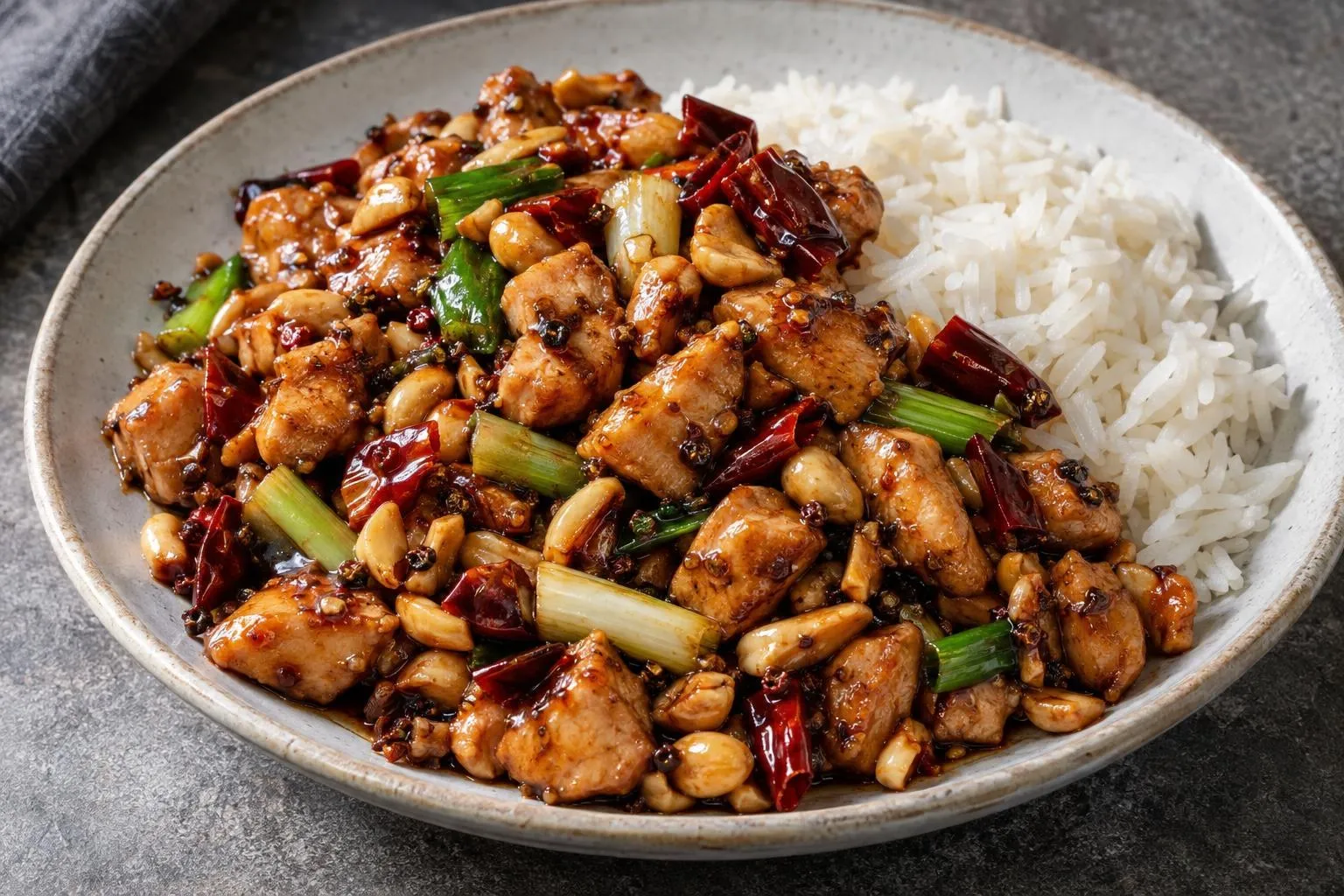
Kung pao chicken with crunchy peanuts
◷ 47 minmedium
Tender chicken, crunchy roasted peanuts and spring onions in a glossy, tangy sauce with dried chillies and Sichuan pepper. Cook the chicken in small batches for lightly browned edges, then serve with jasmine rice.
Oct 17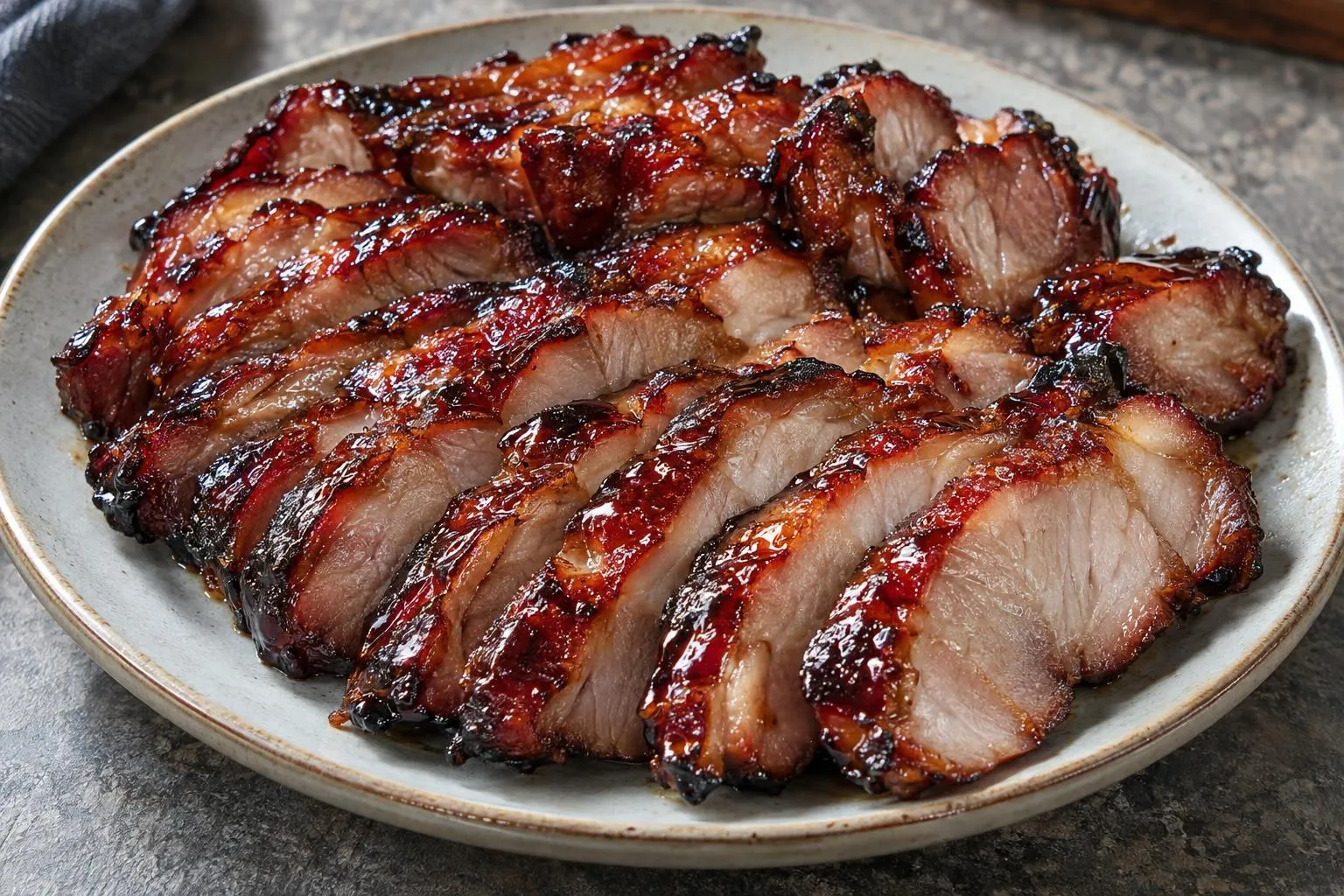
Char siu pork with a sticky honey glaze
◷ 600 minmedium
Marinated strips of pork shoulder, oven-roasted and finished with thin coats of honey–hoisin glaze for glossy, caramelised edges and juicy, sweet-savoury slices. Allow 8–24 hours for refrigerated marinating.
Oct 14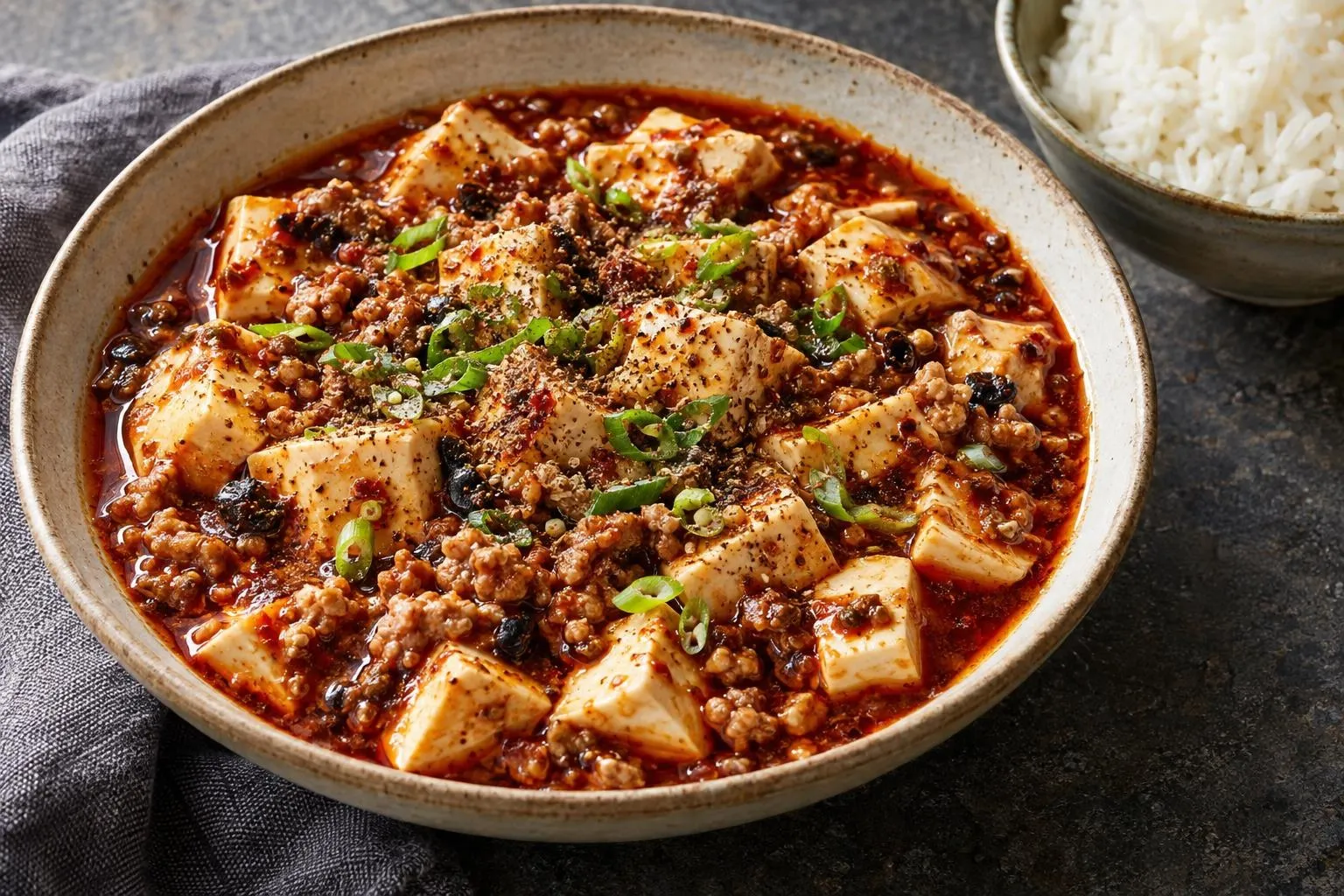
Mapo tofu with Sichuan pepper
◷ 51 minmedium
Soft tofu and minced pork in a glossy, chilli-hot sauce with doubanjiang, fermented black beans and tingling Sichuan pepper. Gentle simmering keeps the tofu tender, while a little cornflour gives the sauce a light gloss. Serve with steamed jasmine rice.
Oct 8