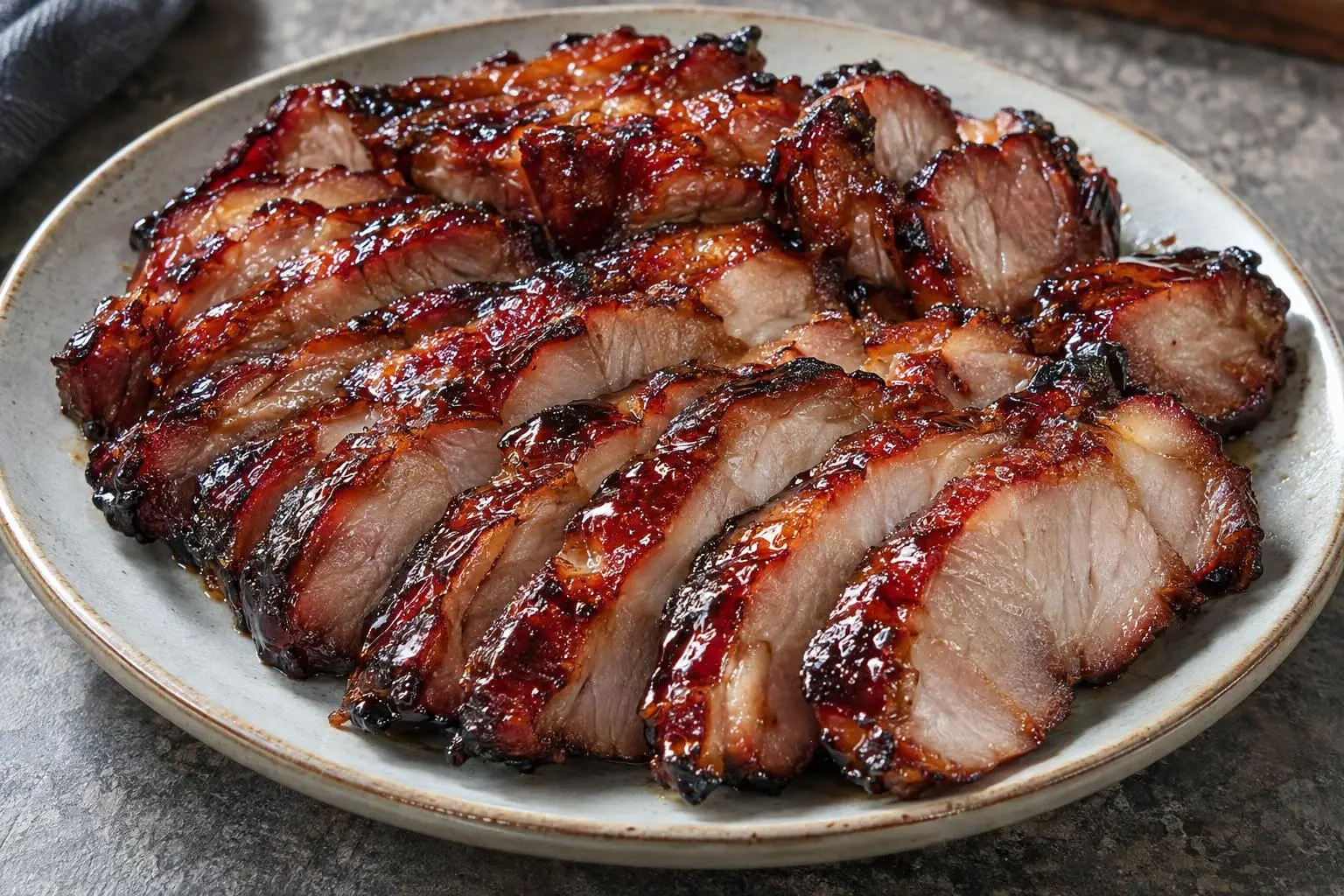
Char siu pork with a sticky honey glaze
Marinated strips of pork shoulder, oven-roasted and finished with thin coats of honey–hoisin glaze for glossy, caramelised edges and juicy, sweet-savoury slices. Allow 8–24 hours for refrigerated marinating.
Advert
Let’s get cooking.
Cook mode
Scale servings, tick off ingredients, and run step timers without losing your place.
Servings
Originally developed for 4 servings.
Ingredient checklist
Method
- 480:00
Pat the pork dry; do not wash it. Remove any remaining tough surface membranes and cut along the muscle seams into four long strips, approximately 250 g each and no more than 4 cm thick. Finely grate the garlic. Mix 80 g hoisin with the light soy, dark soy, Shaoxing wine, sugar, garlic and five-spice until the sugar is dispersed. Coat the pork in a snug container or food-safe bag, cover and refrigerate at 5°C or colder for 8–24 hours. Wash your hands and clean the work surface and equipment after handling raw pork.
- No timer needed
After marinating, heat the oven to 200°C conventional / 180°C fan, with a shelf in the upper-middle position and clearance above the meat; allow about 20 minutes to preheat. While it heats, mix the honey, remaining 20 g hoisin and 15 ml water in a clean bowl. It should brush on in a thin film; if paste-like, add water 5 ml at a time. Divide equally between three small bowls. Boil water in the kettle. Line the roasting tin with foil, lightly oil the rack and pour 150 ml hot water into the tin beneath it. The rack must hold the pork clear of the water.
- No timer needed
Lift the pork from its marinade, allowing excess to drip off without wiping away the coating. Arrange on the rack in one layer, leaving at least 2 cm between strips. Discard the used marinade; do not use it as a sauce or glaze. Clean the tongs and any surfaces touched by raw pork. Once the oven is fully heated, put the tin in the oven.
- 30:00
Roast for 30 minutes, then turn the strips with clean tongs and rotate the tin if browning is uneven. Roast for another 10 minutes, then check the thickest centres with a probe, avoiding large fat seams. Begin glazing when they reach approximately 65–70°C; if cooler, continue roasting and check at 5-minute intervals. If the tin dries out and the drippings begin to scorch, carefully add 50–100 ml hot water beneath the rack without splashing the pork.
- 05:00
Brush the pork thinly with the first bowl of glaze and roast for 5 minutes. Apply the second bowl and roast for another 5 minutes. Use a clean brush to apply the final bowl, then roast for 5 minutes, checking sooner if the glaze darkens quickly. Keep the unused glaze bowls separate from the brush and utensils used on the partly cooked meat.
- No timer needed
Check every strip: the thickest centre must reach 75°C and stay there for 30 seconds. Remove finished strips to a clean board while any others continue cooking. The fat should be softened and the meat yielding rather than rubbery, but colour alone is not a safety test. Roasting commonly takes 50–75 minutes, depending on thickness and the oven. If the glaze is dark enough before the pork is cooked through, loosely shield it with foil. If safely cooked but pale, use a preheated high grill for 1–3 minutes, watching continuously and stopping before the sugar blackens.
- 10:00
Rest the pork on the clean board for 10 minutes, loosely covered with foil. Slice across the grain into 5–8 mm slices, changing direction where the separate shoulder muscles run differently. Serve promptly.
Chef tips
- Thickness matters more than length: a whole shoulder joint is not an equivalent shortcut. Use a rack that fits all four strips without crowding.
- The timeline uses the minimum 8-hour marination and a representative roasting schedule. Longer marination, extra cooking to reach the safe endpoint or an optional grill finish extends it; follow the thermometer rather than the clock.
- Keep glaze coats thin. Honey applied at the start can burn before the pork cooks through; shield dark areas with foil if necessary.
- Shoulder remains sliceable rather than becoming pulled pork. Trim tough membranes, choose marbled meat and slice across each muscle’s grain instead of prolonging roasting in pursuit of falling-apart tenderness.
- Maintain a shallow layer of water below the rack to prevent scorched drippings, but never let it touch the pork.
Equipment check
- Deep roasting tin approximately 35 × 25 cm
- Fitted roasting rack large enough for four strips with at least 2 cm between them
- Probe thermometer
- Snug non-reactive marinating container with lid, or a food-safe bag
- Mixing bowl and three small glaze bowls
- Pastry brush, plus a clean brush for the final coat
- Tongs
- Foil
- Kettle
- Knife and separate clean carving board
Tags
Behind the dish.
Overview
This oven-roasted char siu aims for sweet-savoury flavour, restrained five-spice and a glossy, caramelised surface. Cut the shoulder into even strips and apply the honey glaze late: the meat cooks through before the sugars darken. The shoulder should be yielding but sliceable, not falling apart like pulled pork. Expect roughly 700–800 g cooked pork, enough for four generous portions alongside separately prepared accompaniments.
Ingredient notes
Use marbled, boneless shoulder rather than a whole joint. The listed pork weight is after removing rind, thick external fat and tough surface membranes; retain fine internal fat. Standard light soy sauce supplies seasoning, while dark soy adds colour. Hoisin varies in salt, sweetness and thickness, so add no extra salt and thin the finishing glaze only enough to brush on easily. Red colouring is unnecessary.
Dry sherry can replace Shaoxing wine in the same volume; for an alcohol-free version, use 30 ml water, with less aromatic depth. Chinese five-spice is not interchangeable with baking mixed spice. Allergens include soya and usually wheat in the soy sauces and hoisin; hoisin may contain sesame, and cooking wine or sherry may contain sulphites. Check all labels, including substitutions.
Serving & storage
Serve thinly sliced, optionally with separately prepared plain jasmine rice and steamed pak choi; these accompaniments are not included in the ingredient quantities or method. No garnish is needed.
Cool leftover pork promptly in shallow portions and refrigerate within 2 hours at 5°C or colder. Use within 48 hours or freeze sooner. Thaw in the fridge and reheat only once, covered with a splash of water, until steaming hot throughout. If serving rice, store it separately: cool as quickly as possible, ideally within 1 hour, refrigerate and use within 24 hours, reheating only once until steaming hot throughout.
Related recipes
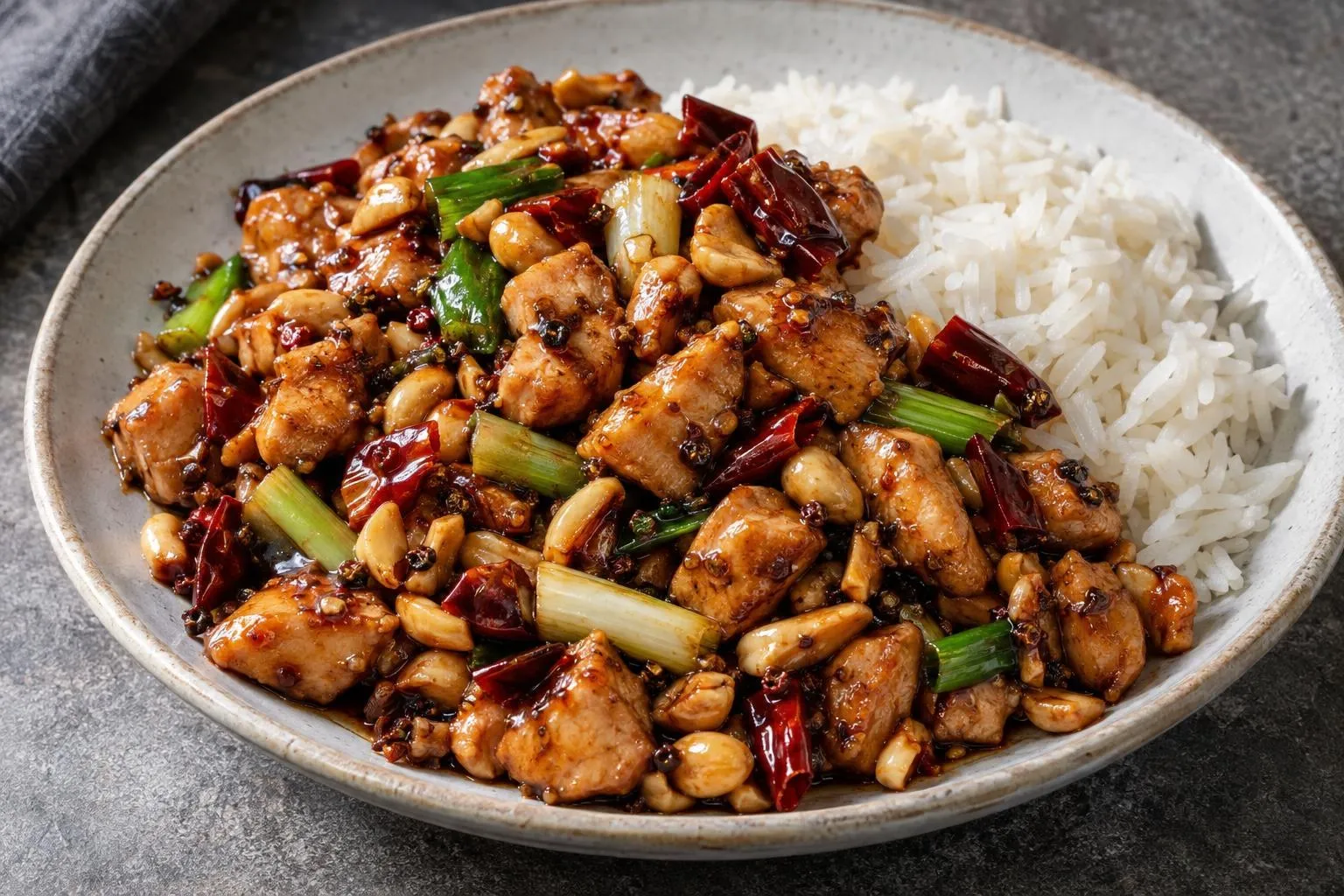
Kung pao chicken with crunchy peanuts
◷ 47 minmedium
Tender chicken, crunchy roasted peanuts and spring onions in a glossy, tangy sauce with dried chillies and Sichuan pepper. Cook the chicken in small batches for lightly browned edges, then serve with jasmine rice.
Oct 17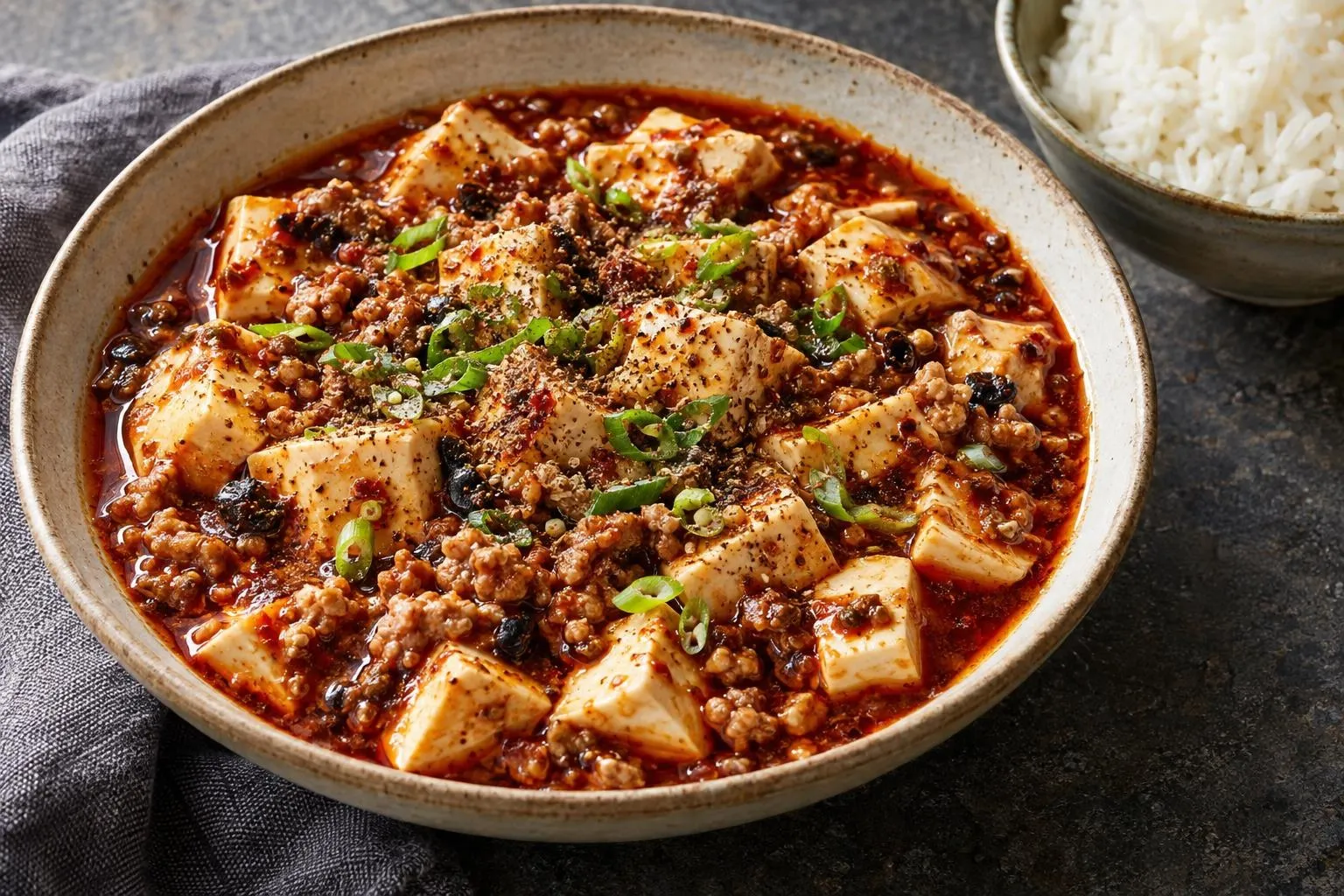
Mapo tofu with Sichuan pepper
◷ 51 minmedium
Soft tofu and minced pork in a glossy, chilli-hot sauce with doubanjiang, fermented black beans and tingling Sichuan pepper. Gentle simmering keeps the tofu tender, while a little cornflour gives the sauce a light gloss. Serve with steamed jasmine rice.
Oct 8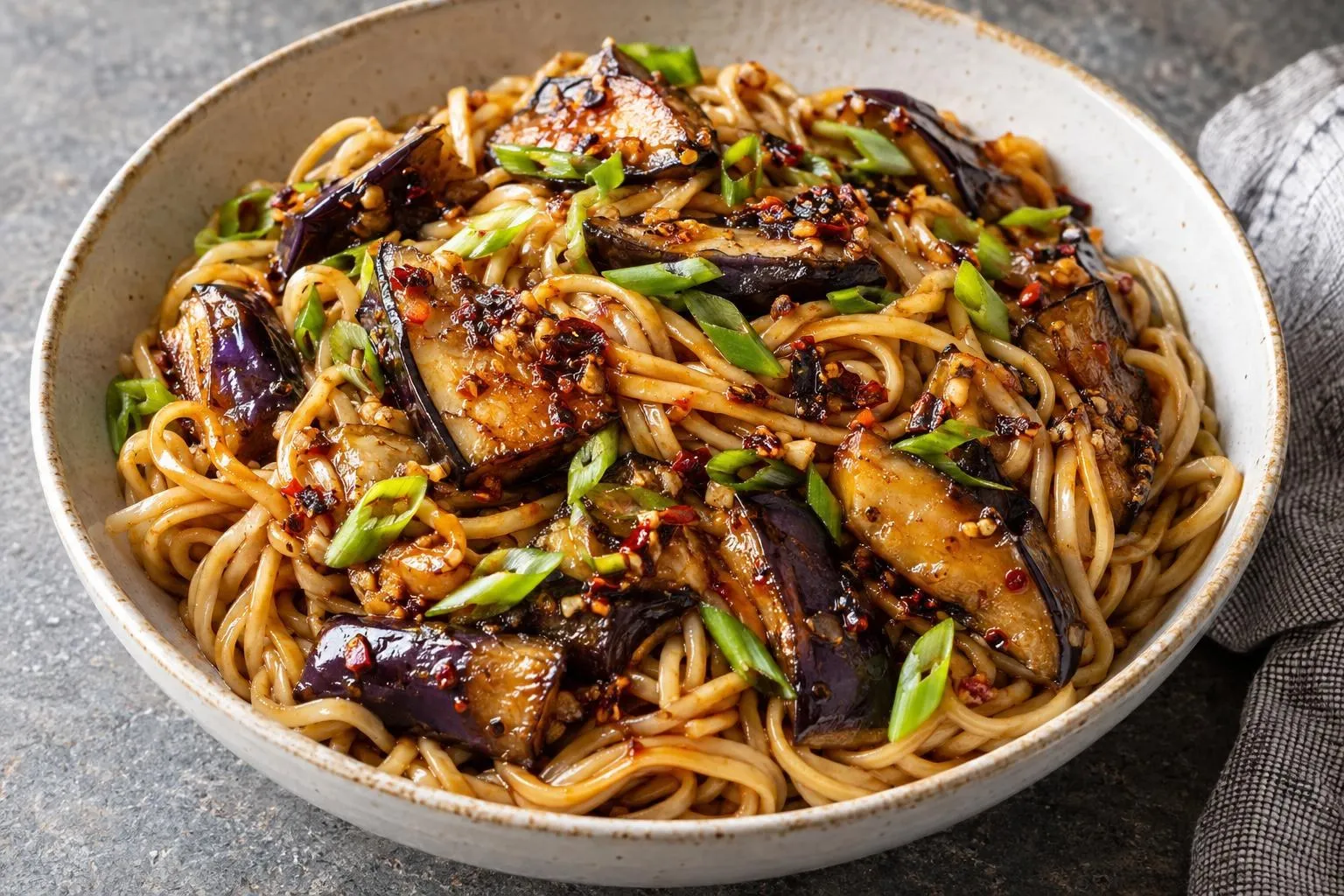
Chilli crisp aubergine noodles
◷ 47 mineasy
Creamy aubergine with browned edges, springy wheat noodles and a glossy chilli-crisp, soy and rice-vinegar sauce. A little chilli crisp added at the table keeps its crunch.
Oct 5