Jollof rice with a slow-fried tomato base
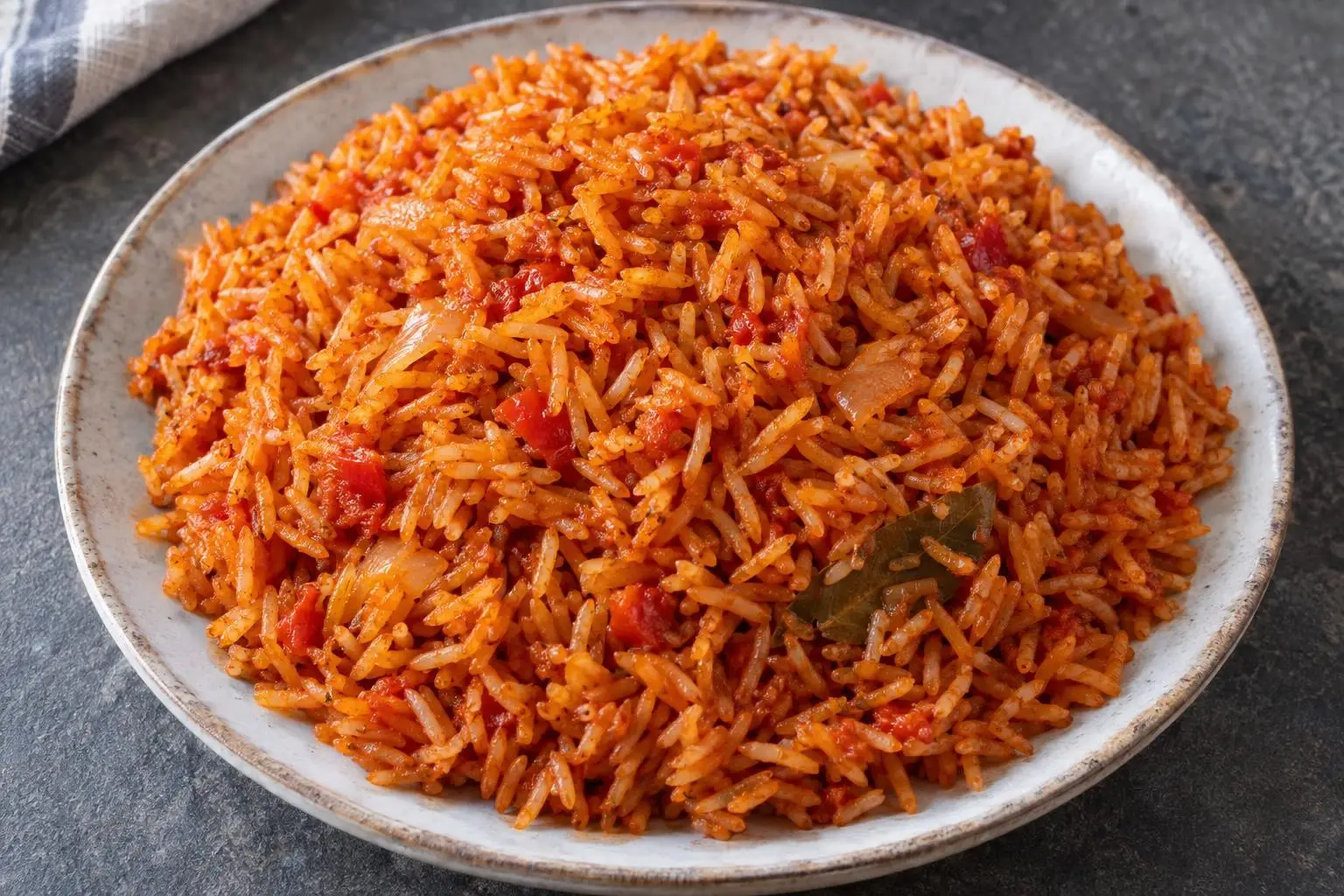
Nigerian jollof rice with tender, separate orange-red grains and a deeply savoury tomato, pepper and onion base. Allow about 1 hour 50 minutes, including resting; extra reduction or rice corrections can extend this.
Advert
Let’s get cooking.
Cook mode
Scale servings, tick off ingredients, and run step timers without losing your place.
Servings
Originally developed for 4 servings.
Ingredient checklist
Method
- No timer needed
Prepare the pepper and chilli. Divide the onion into 100 g roughly chopped and 80 g finely sliced. Rinse the rice in several changes of cold water until substantially clearer, then leave it in a sieve to drain for at least 5 minutes; do not soak. While it drains, blend the tomatoes with their juice, pepper, chopped onion and chilli until smooth, without adding water. Respect the blender's fill limit. Measure the remaining ingredients. Prepare 650 ml hot stock and 150 ml hot water, keeping them separately in covered heatproof jugs or insulated flasks. Wash hands and utensils after handling the chilli; wear gloves if sensitive.
- No timer needed
Heat the oil in the saucepan over medium heat for about 2 minutes, until shimmering but not smoking. Add the reserved sliced onion and fry for 6–8 minutes, stirring, until softened and lightly golden.
- No timer needed
Add the tomato purée and fry for 3–4 minutes, stirring frequently, until it darkens slightly and loses its raw smell. Stir in the curry powder and thyme for the final 30 seconds. Lower the heat if the purée starts catching; do not let the spices scorch.
- No timer needed
Carefully pour in the blended mixture—it may spit—and add the bay leaves. Bring to a steady simmer, then cook uncovered over medium-low heat for 25–35 minutes, stirring and scraping the bottom every few minutes, more frequently towards the end. A splatter guard is useful, but do not close the lid. The finished base should be thick and brick-red, with small beads of oil at the edges; a spoon drawn through it should leave a brief trail. Aim for roughly 450–500 ml of base. If it remains watery, continue reducing before adding the rice.
- No timer needed
Add the stock, scraping up browned—but not blackened—residue, and bring to the boil. Carefully taste a cooled spoonful: it should be well seasoned without tasting aggressively salty. Add up to 3 g salt as needed; start without it if the stock is already salted. Stir in the drained rice and return to a gentle simmer, usually 2–4 minutes.
- 25:00
Cover tightly and reduce the heat to its lowest setting. If necessary, seal the rim with foil beneath the lid, keeping foil away from any flame. Cook for 25 minutes without lifting the lid or stirring. Briefly check grains from the centre and edge: they should be approaching tenderness, although some brands will still have a firm centre.
- 07:00
If the rice is firm and the pot looks dry, pour 50 ml of the reserved hot water evenly over the surface; add none if liquid is still visible. Cover immediately and cook on the lowest heat for about 7 minutes before checking; a further steaming stage generally takes 5–8 minutes. Repeat only if needed, using no more than the reserved 150 ml water. The grains should be tender, with no hard, chalky centre, and no free liquid should remain. If the grains are tender but a little liquid remains, cook uncovered on low heat for 2–3 minutes before resting.
- 10:00
Once the grains are tender and the liquid has been absorbed, turn off the heat and rest, tightly covered, for 10 minutes. Remove the bay leaves, then gently lift and fold the rice with a fork or broad spoon and serve hot. Do not vigorously stir or scrape a scorched bottom layer into the rice.
Chef tips
- The standard schedule includes one further 7-minute steaming stage. Watery tomatoes, slower-cooking rice or additional drying and water corrections will extend it; follow the texture cues rather than rushing.
- Keep the lid closed during the initial steaming stage. Repeated checks release steam and can leave the rice dry but undercooked.
- If the bottom scorches, transfer the unburnt upper rice to another saucepan without scraping the bottom. Finish gently with a little reserved hot water if needed.
- Do not add sugar to compensate for a raw-tasting base: cook the purée and reduce the blended tomatoes properly.
- A thin bottom crust may form, but deliberate heavy scorching is unnecessary. Use a heavy pan and the smallest suitable burner on its lowest setting.
Equipment check
- Heavy-based 4–5 litre saucepan, approximately 22–24 cm across, with a tight-fitting lid
- Blender with at least 1 litre working capacity
- Fine sieve
- Kitchen scales and measuring jug
- Heatproof spoon or spatula
- Kettle
- Covered heatproof jugs or insulated flasks for the hot liquids
- Fork or broad spoon for fluffing
- Optional splatter guard
- Optional foil to improve the lid seal
Nutrition per serving
- Calories560
- Protein11 g
- Carbs94 g
- Fat15 g
Tags
Behind the dish.
Overview
This jollof rice balances concentrated tomato, sweet red pepper, thyme and warm curry spices, with adjustable Scotch bonnet heat. Fry the blended base until thick and oil-speckled before adding the rice: this develops its flavour without leaving the grains swimming in sauce. Makes four substantial main-course portions or six smaller side portions.
Ingredient notes
Use dry long-grain parboiled rice, not ordinary long-grain or microwave rice. Brands vary in absorption, so keep the measured correction water available. Choose a mild Nigerian-style or Madras-style curry powder, not curry paste. Half a Scotch bonnet gives a gentler starting point; removing its seeds and internal ribs reduces but does not eliminate the heat.
Vegetable stock can replace chicken stock. Use genuinely low-salt stock; with standard stock or bouillon, initially omit the added salt. Check stock and spice labels: stock may contain celery, wheat or milk, and curry powder may contain mustard. The dairy-free designation requires stock and curry powder without milk ingredients; vegetarian and gluten-free suitability also depend on those products.
Serving & storage
Serve hot on its own, or in smaller portions with separately prepared chicken, fried plantain or a crisp salad. These optional accompaniments are not included in the ingredients, schedule or nutrition estimate.
For leftovers, divide the rice into shallow containers and cool as quickly as possible, ideally within 1 hour; do not leave it cooling in the cooking pot. Refrigerate at 5°C or colder and use within 24 hours, or freeze promptly once cooled. Thaw frozen portions in the fridge. Reheat only once, until steaming hot throughout, adding a splash of water and stirring to eliminate cold spots.
Related recipes
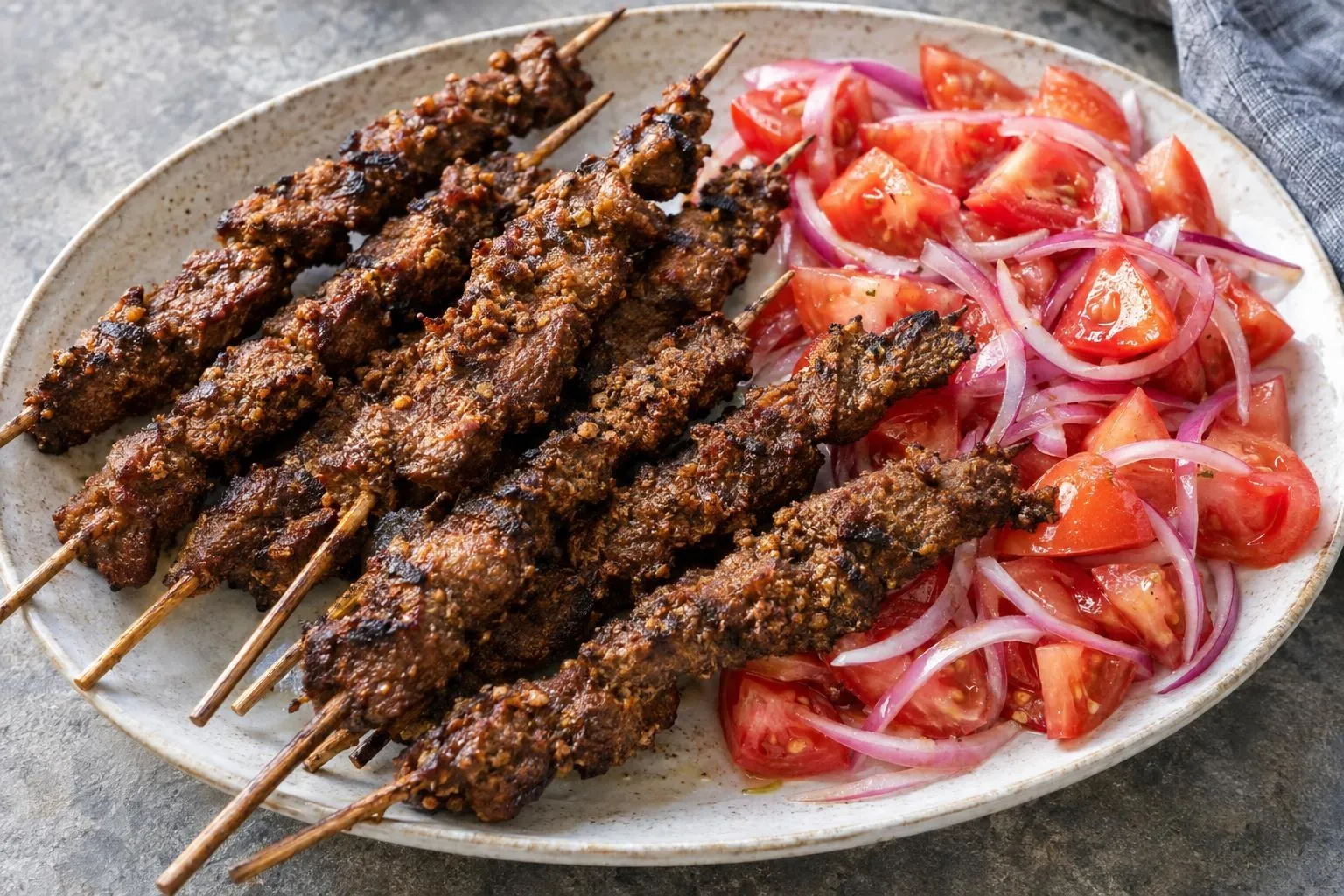
Suya beef skewers with tomato salad
◷ 62 minmedium
Thin beef strips coated in roasted peanuts, ginger and chilli, grilled until cooked through with lightly charred edges. A juicy tomato, red onion and lime salad balances the spicy crust.
Oct 4